
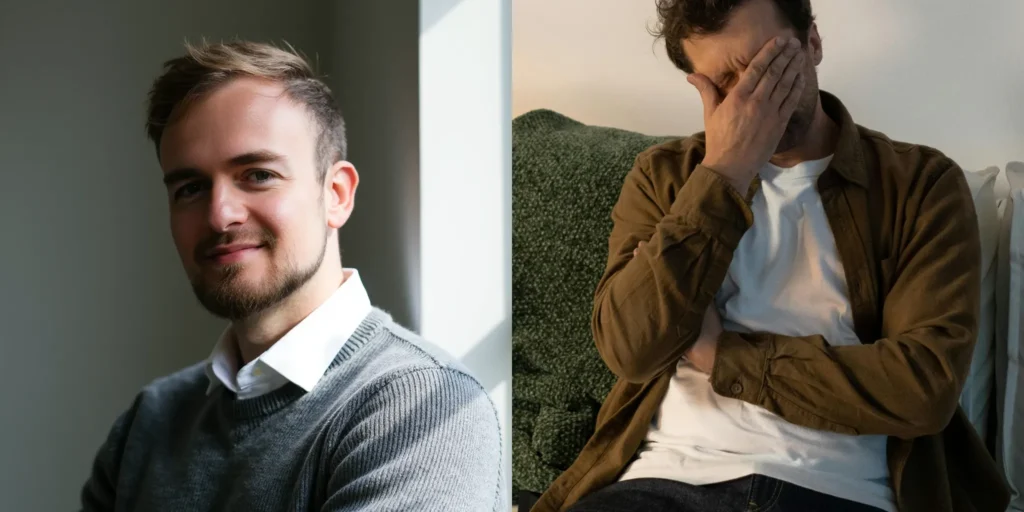
Constant tiredness, brain fog that won’t lift, and the feeling that rest never fully restores you – most people are told to sleep more. Few are told why sleep no longer feels restorative.
You slept seven hours last night. Maybe eight.
You are not doing anything obviously wrong. And yet – you wake up feeling like the night never happened.
The alarm goes off, and your first thought isn’t the day ahead. It is how long it will take until you can lie down again.
By 10 am, the fog has settled in and won’t lift. By 2 pm, you are reaching for the third coffee – not because you want it, but because you need it just to function. The effect barely lasts anymore. Now it just takes the edge off. You have noticed yourself eyeing energy drinks at the checkout.
By evening, the plan you made two weeks ago feels impossible. You cancel. Again.
The gym membership is still active. You keep it because every few weeks you genuinely intend to start again – tomorrow, next Monday, after this project. The energy is never quite there when tomorrow arrives.
In spring, it was seasonal tiredness. In summer, the heat. In autumn, there is a change in light. In winter, it is cold. Another year has passed, and the explanation keeps shifting – but the feeling of being drained stays the same.
At some point, you decided what you needed was a proper holiday. A week somewhere warm. Real rest. And maybe you got it – and for a day or two, it helped. But by the time you were home and unpacking, the heaviness was already back. Your blood tests came back largely within the normal range. Frustrating in its own way – because nothing is technically wrong, and yet everything feels harder than it should. You have tried iron, vitamin D, magnesium, and ashwagandha. Some helped briefly. None provided a lasting benefit.
And underneath all of it – quieter than the depletion itself – is the feeling that you are not quite showing up the way you used to. Not for the people around you. Not for yourself.
If this sounds familiar, I want to say something that most health experts never tell you:
The problem is probably not how much you are sleeping. The problem is that your body can no longer truly recover.
More sleep will not fix it. Neither will another supplement, a better bedtime routine, nor a week on a beach. Because the issue is not what is going into the tank – it is that the recovery system itself is no longer functioning efficiently.
“I’ve Worked With Hundreds of Drained, Foggy, Wired-But-Exhausted People. Almost None of Them Had a Sleep Problem.”

I am a naturopath and functional medicine practitioner. Before that, I was a trained nurse working in healthcare settings for years.
The pattern I kept seeing – in hospital and later in my own practice – was the same: people were not short on rest. Their sleep hours were there. Their bloodwork was largely normal. And yet something was clearly not working.
What was missing was not sleep. It was a recovery. The two are not the same thing.
One case – a project manager in her early 40s – came in after two years of what she described as background depletion that never lifted.
Sleeping seven to eight hours. Cut back on alcohol. Tried magnesium, B vitamins, and an iron infusion. Took two weeks off work and came back feeling the same – as if the rest had never happened. She had almost entirely stopped making social plans – not from wanting to, but because the energy was never there. She told me she felt like she was watching her own life from a slight distance.
She is not unusual. I hear versions of this story regularly.
The details differ. Underneath them, one thing keeps showing up:
Their nervous system is not switching into recovery mode. Not fully. Not when it should.
The physiology that supports recovery – cellular repair, hormonal regulation, and immune maintenance – appears to be functioning less efficiently. Not by laziness. Not by bad habits. By something most tiredness conversations never reach.
So what is actually happening? And why does the standard advice keep falling short?
Your Body Is Not Failing to Sleep. It Is Failing to Recover.
Most advice for tiredness targets sleep problems – earlier bedtime. No screens. Magnesium. Ashwagandha. A better mattress.
These are not wrong suggestions. But they are working on the container – not the system that is supposed to do the restoring.
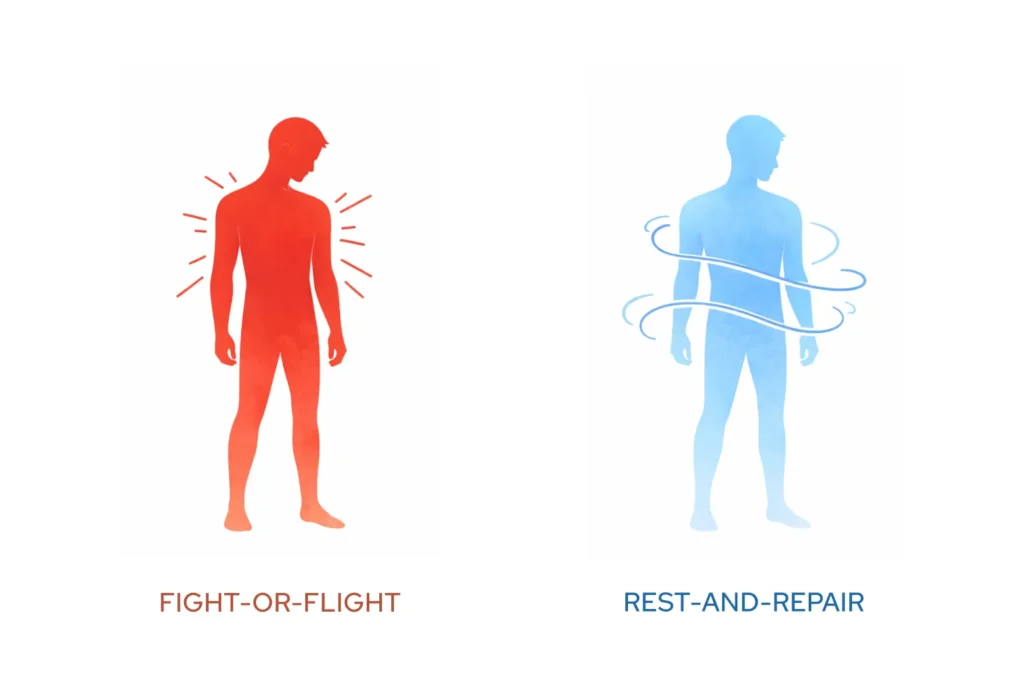
Your autonomic nervous system continuously balances sympathetic and parasympathetic activity. Although both systems are active to varying degrees, one often predominates depending on circumstances.
The first is fight-or-flight – the sympathetic state. The body mobilises. Heart rate rises. Cortisol activates. Digestion slows. Tissue repair is temporarily deprioritised. Every available resource goes toward immediate survival.
The second is rest-and-repair – the parasympathetic state. The body recovers. Heart rate slows. Cortisol drops. Deep sleep architecture forms. The immune system does its maintenance. Repair and maintenance processes increase.
A healthy nervous system moves naturally between these when genuinely needed – rest-and-repair as the default.
The problem is what sustained modern pressure does to that balance.
The inbox never empties. The demands do not have clean edges. The body registers low-level pressure almost continuously – and over time, it adapts. It begins treating mild alert as its normal setting.
When that happens, something important breaks down: even during sleep, the nervous system does not fully shift into rest-and-repair.
Sleep architecture changes. Time spent in slow-wave sleep may decrease. Cortisol, which should be low at night, stays elevated. The immune regulation and tissue repair that depend on deep sleep get compressed or skipped entirely.
You sleep. The hours are there. But you wake up feeling like the sleep did nothing.
Many people wearing a Whoop, Oura Ring, or Apple Watch notice exactly this pattern in their data. Seven or eight hours logged. But the Recovery Score is at 30% or 40%. Deep sleep, a stage associated with many restorative physiological processes, is compressed to 20 or 30 minutes across the whole night. HRV trending downward over weeks. Resting heart rate was elevated at 2 am, when it should have been at its lowest.
The data often reflect how the person already feels: the hours are passing, but recovery is not happening.
That is the cycle. And sleep hygiene does not break it, because the problem is not the sleep environment. It is that the switch into recovery has stopped working.
Here Is the Part That Most People Find Surprising – And Frustrating

Most people dealing with this kind of depletion have already tried a lot.
During the day: a second matcha before 9 am, an energy drink by early afternoon, cordyceps or lion’s mane, someone recommended, a B12 spray, maca root, something from the health food shop that promised sustained energy without the crash.
At weekends: a spa day, a yoga class, Kapalbhati breathing to shake the fog, an infrared sauna.
Some of these things help. Temporarily. Then the heaviness comes back.
The honest reason most of these approaches fall short is not that they do not work. It is that they all require something a chronically depleted person does not reliably have: time, money, a quiet moment, and the mental energy actually to do them.
The sauna requires driving somewhere. The breathing practice requires a quiet room and focus. The holiday requires planning – and if you are running on empty, even booking a trip can feel like one more thing to organise. The supplements require remembering. The yoga class requires showing up.
When tiredness is the problem, every additional thing feels like extra weight.
And that recovery pathway has a name.
The Vagus Nerve: Why Your Body Stopped Knowing How to Rest
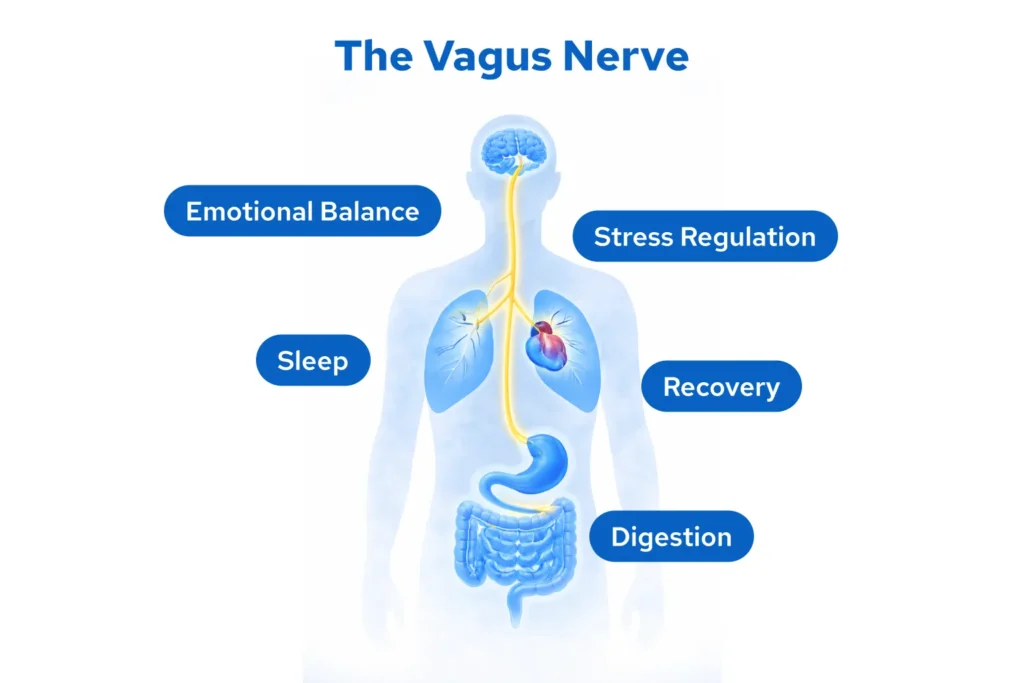
It is called the vagus nerve. And it is one of the key structures that connects almost everything described above.
Running from your brainstem all the way through your heart, lungs, and digestive tract, it acts as the body’s major communication pathway for one specific message: the threat has passed – it is safe to recover now.¹
When vagal tone is strong, the body genuinely shifts into rest-and-repair. Sleep reaches deep restorative stages. Cortisol drops. Repair processes increase.
When vagal tone is low – which may decline following prolonged stress, after viral illness, or simply with years of accumulated pressure – the recovery switch becomes unreliable. The body goes through the motions of rest. But the deep repair does not happen.
**HRV – Heart Rate Variability – is widely used as a non-invasive marker of autonomic function and is influenced by vagal activity.**² It is simply the natural variation between individual heartbeats. A healthy nervous system produces variable, flexible rhythms. A dysregulated one produces rigidity. Many of my clients who use fitness trackers notice chronically low HRV scores. This is not a coincidence. It is the nervous system reporting that its recovery function is impaired.
But there is one more mechanism most people – including many practitioners – are not aware of. And this one explains something that has genuinely confused a lot of my clients:
Why do they feel tired even when they have technically rested?
The answer involves what happens inside the cells.
When the nervous system stays in fight-or-flight, the immune system produces elevated levels of pro-inflammatory cytokines – chemical messengers that were designed for short-term emergencies. When they remain elevated for months or years, something unexpected happens: they begin interfering with the cells’ ability to produce energy.
Think of it like a power cut that never fully resolves. The lights come back on, but the grid is operating at reduced capacity. Your cells are generating less energy than they should, regardless of how much sleep you get. This is why the depletion persists even after a full night’s rest. The problem is not the amount of sleep. It is that the energy production system itself has been quietly suppressed, and sleep alone cannot fix that.
That is why the tiredness keeps coming back. Not because you are not getting enough sleep. Because your cells are not recovering even when you do.
Studies conducted by researchers affiliated with institutions such as Harvard, Yale, and UCL have reported associations between elevated systemic inflammation, suppressed cellular energy production, disrupted sleep architecture, and persistent tiredness that does not resolve with rest alone.³
What makes this relevant beyond tiredness alone is the reach of the vagus nerve itself – the same pathway that regulates the stress response, governs gut motility and digestion, modulates mood, and influences sleep architecture.⁴ Which is why people with dysregulated vagal tone rarely experience tiredness in isolation. They also notice anxious thoughts that will not quiet down, digestive discomfort that worsens under pressure, a mood that feels flat or fragile, and sleep that never feels truly restorative. These symptoms may share common underlying physiological pathways. They are different expressions of the same underlying imbalance.
This raised an obvious question: if the vagus nerve is the switch, is there a way to directly reach it – without surgery, without a prescription, without needing first to achieve a state of calm that the body cannot reliably access?
What I Found After Looking for Something That Actually Reaches the Root
I started asking a different question to my cases. Not what they were doing wrong, but what biological mechanism was actually blocking recovery itself. That search led me somewhere most health experts never look.
It turns out the answer had been developing quietly in scientific research for years. Surgical VNS (vagus nerve stimulation) devices have existed for decades – effective in certain health problems, but not something most people would consider for everyday recovery support.
**What had shifted was the discovery that one specific branch of the vagus nerve – the auricular branch – runs close to the surface of the outer ear. That anatomical fact made non-invasive stimulation possible for the first time.**⁵
This approach is called taVNS – transcutaneous auricular vagus nerve stimulation. Instead of surgically implanting a device near the nerve, a small earpiece delivers precisely calibrated electrical pulses directly to the auricular branch through the skin. The signal travels up to the brainstem – targeting similar neural pathways without requiring surgical implantation, the risk, or the cost.
Other devices claiming vagal stimulation – neck stimulators, vibration gadgets, TENS-based devices – target different sites with substantially weaker evidence profiles.
I was interested. I was also cautious.
The wellness space is full of devices claiming to stimulate the nervous system, but with little solid evidence to back them up. I was looking for peer-reviewed, placebo-controlled research – not consumer marketing. I spent time reviewing the scientific literature before I was willing to recommend anything.
What I found was more substantive than I expected. Among the taVNS devices on the market, one kept appearing in research contexts rather than simply in advertising. Not just one or two studies – but 60+ completed scientific studies in collaboration with institutions including UCL, King’s College London, UCLA, Harvard-affiliated research groups, and the NHS.⁶ It is, by a significant margin, one of the most extensively studied wearable taVNS devices.
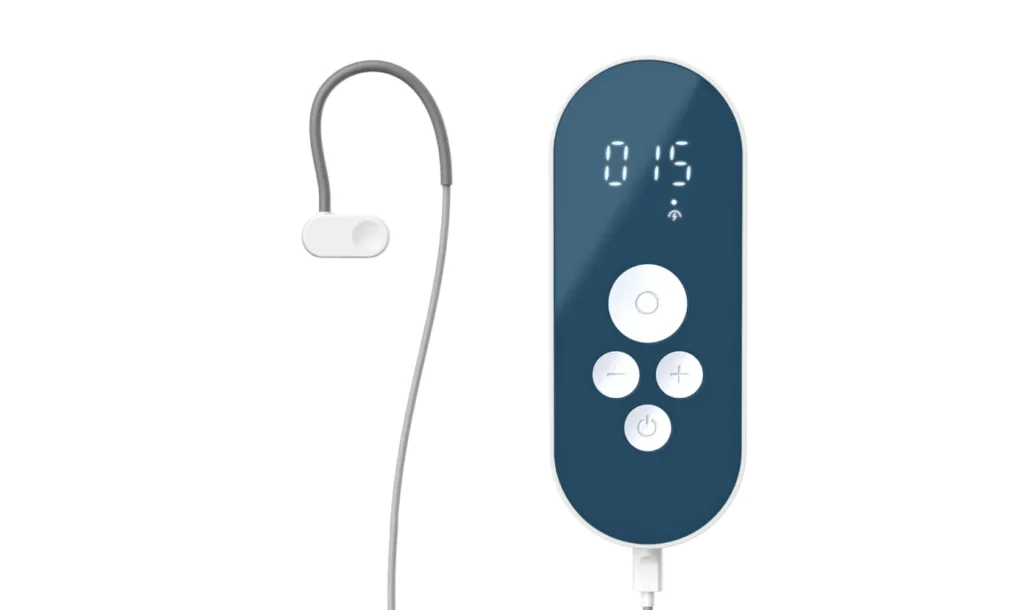
That device is called Nuropod.
CE certification indicates that the device meets applicable European regulatory requirements for safety and performance. That is a meaningful threshold that most wellness gadgets claiming vagal stimulation have not cleared.
This is what the 30 minutes look like
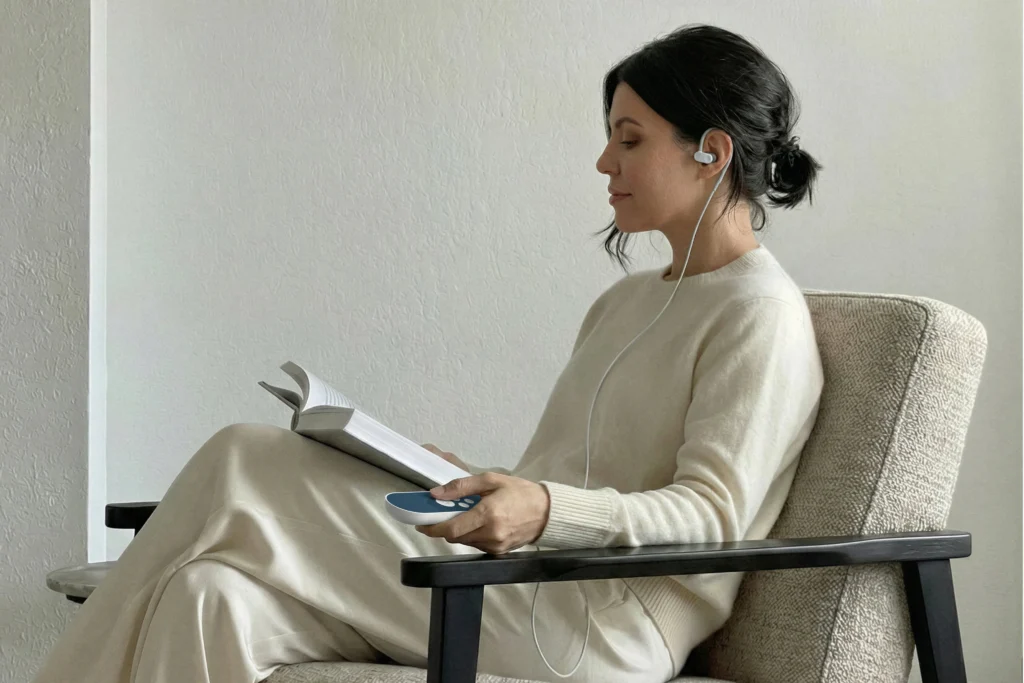
A small device worn on the ear, like an earbud. It delivers a precisely calibrated electrical pulse to the auricular branch of the vagus nerve. One session: 30 minutes.
You can wear it during your lunch break at the office. No quiet room required. No technique to learn. No extra time carved out of an already stretched day.
You can do it while reading, working at a desk, cooking dinner, or winding down in the evening.
The pulse travels directly to the brainstem – designed to stimulate vagal pathways involved in parasympathetic activity that sustained stress has been suppressing.
Not sedation. Not relaxation in the general sense. A direct physiological signal to the nervous system that it is safe to shift into repair mode.
What the Research Shows
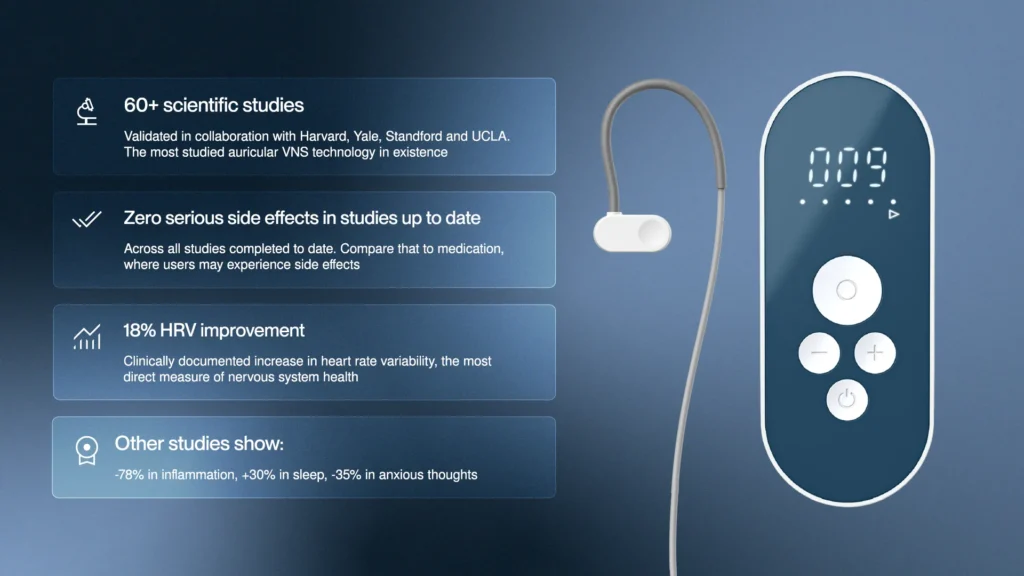
- A 48% reduction in tiredness scores, with participants reporting sustained improvements even one week after discontinuing therapy.
- A 31% improvement in sleep quality - measuring sleep latency, duration, efficiency, and daytime function.
- A 78% reduction in IL-6 - direct suppression of the cytokine that may impair mitochondrial function.
- A 61% increase in vagus nerve activity within five minutes of use - measurable, not theoretical.
What I find scientifically significant is the cytokine result in particular because it addresses the cellular energy mechanism directly – not as an adverse event, but as a primary pathway.
Some participants in published studies have also reported improvements beyond tiredness alone – in anxious thoughts, sleep depth, digestive comfort, and mood. When the underlying regulatory system resumes functioning, the effects tend to be broad.
“After years of being stuck in fight or flight, Nuropod has been essential in restoring my system to normal.” – Deborah Knopf, Trustpilot
“After 2 years of serious sleep issues, I sleep more deeply and longer than ever. On top of that, I feel more grounded during the day.” – Kenny Van Bladel, Trustpilot
“Tiredness lessened and brain fog vanished almost completely.” – Cornelia Krause, Trustpilot
Who Does This Pattern Affect
I see this most consistently in people with desk-based or mentally demanding work – professionals whose nervous system is asked to stay alert from the first notification in the morning to the last message at night, with no clean boundary where the pressure actually stops.
But the same autonomic pattern shows up in very different lives.
Shift workers whose sleep-wake cycles are continuously disrupted. People in caring roles – for children, ageing parents, patients – who give sustained output without adequate recovery built in. People who went through a prolonged period of high stress never quite returned to baseline afterwards.
I also see it regularly in athletes – people who train consistently, monitor their recovery metrics, and still cannot understand why their energy and HRV are not where they should be. Physical state and training does not protect against autonomic dysregulation when the mental and professional load is high.
And increasingly in people over 45, where age-related physiological changes may reduce resilience buffers the body previously relied on.
The common thread is not lifestyle or occupation. It is a nervous system that has been in sustained activation for longer than it was designed to sustain, without enough genuine recovery in between.
A Practical Note Before You Decide
Nuropod is not a replacement for sleep, nutrition, or addressing the underlying cause of the dysregulation.
For people with significant post-viral tiredness, hormonal disruption, or more profound mitochondrial impairment, the underlying work matters, and we address it directly in practice at YourBestHealth.
What Nuropod provides is something the other approaches struggle to deliver reliably: it can be incorporated into daily activities with minimal effort. No focus required. No perfect settings. No extra hour carved out of an already stretched day. You wear it while you live your life – and it is designed to provide targeted stimulation of the auricular branch of the vagus nerve, at the physiological level where the problem actually is.
It is also worth clarifying why the choice of device matters here. Not all devices claiming vagus nerve stimulation are equivalent. The auricular branch is the best-studied external access point to the vagus nerve, a finding validated by peer-reviewed research for reaching the brainstem.⁸ Devices stimulating the neck, or using vibration rather than calibrated electrical pulses, have substantially different evidence profiles. Nuropod’s specific waveform parameters have been investigated across more than 60 published and ongoing scientific studies. This level of investigation provides more evidence than is available for many comparable consumer devices.
Nuropod offers a 30-day money-back guarantee – if you use it consistently for 30 days and notice no improvement in how you feel or in your recovery metrics, you return it. That removes the financial risk of finding out whether your system responds.
If the tiredness keeps returning no matter what you try – if rest does not restore and sleep does not refresh – the question worth asking is not “am I sleeping enough?”
It is: Is my body actually capable of recovering?
Take a different approach to persistent tiredness.
Instead of adding another supplement or chasing another temporary energy boost, consider whether supporting your nervous system could help address an underlying driver of poor recovery.
See how vagus nerve stimulation is being studied for sleep quality, resilience, and tiredness-related symptoms.
This blog post aims to be informational and should not replace professional health advice. Always consult with a health professional for personalised advice.
References
¹ Yaribeygi, H., et al. (2017). The impact of stress on body function: A review. EXCLI Journal. https://pmc.ncbi.nlm.nih.gov/articles/PMC5579396/
² Wolf, V., et al. (2021). Does transcutaneous auricular vagus nerve stimulation affect vagally mediated heart rate variability? A living and interactive Bayesian meta-analysis. Psychophysiology. https://doi.org/10.1111/psyp.13933
³ Breit, S., et al. (2018). Vagus nerve as modulator of the brain–gut axis in psychiatric and inflammatory disorders. Frontiers in Psychiatry. https://doi.org/10.3389/fpsyt.2018.00044
⁴ Bonaz, B., et al. (2018). The vagus nerve at the interface of the microbiota–gut–brain axis. Frontiers in Neuroscience. https://doi.org/10.3389/fnins.2018.00049
⁵ Yap, J.Y.Y., et al. (2020). Critical review of transcutaneous vagus nerve stimulation: Challenges for Translation to Clinical Practice. Frontiers in Neuroscience. https://doi.org/10.3389/fnins.2020.00284
⁶ Kim, A. Y., et al. (2022). Safety of transcutaneous auricular vagus nerve stimulation (taVNS): A systematic review and meta-analysis. Scientific Reports. https://doi.org/10.1038/s41598-022-25864-1
⁷ Clancy, J.A., et al. (2014). Non-invasive vagus nerve stimulation in healthy humans reduces sympathetic nerve activity. Brain Stimulation. https://doi.org/10.1016/j.brs.2014.07.031




Sleeping posture and habits cant only be the things to be blamed.