
My HRV was stuck. Every session I went in under-recovered. This is what changed.
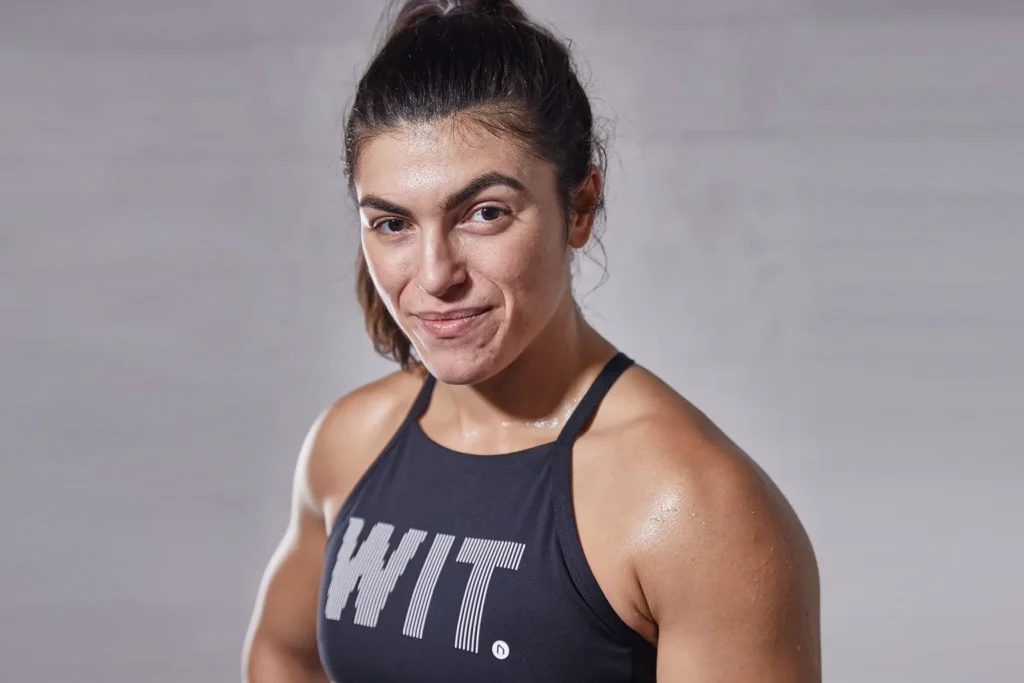
For eighteen months, I had everything in place – training, nutrition, sleep. And yet my body kept failing to recover between sessions.
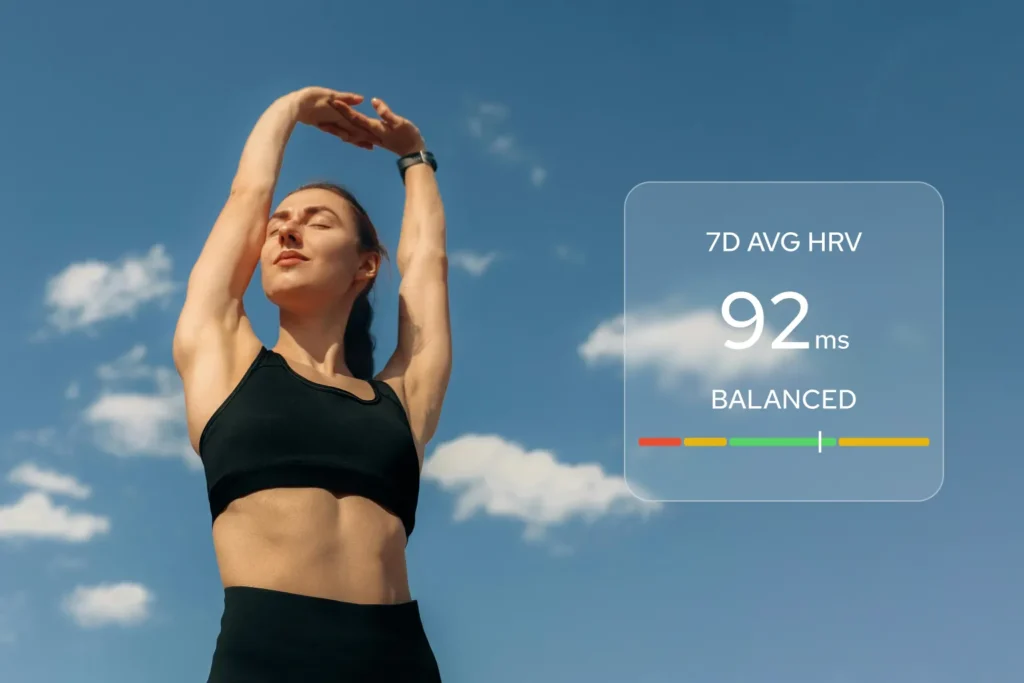
If you track your HRV, you already know what I mean. If you don’t: HRV is the performance metric that shows up on any wearable – Whoop, Oura, Apple Watch. It measures how well your autonomic nervous system is balancing activation and recovery. For athletes, it tells you things no other number does:
- Training readiness: whether your body has actually absorbed the last session or is still under load
- Recovery quality: how well your nervous system is shifting out of fight-or-flight overnight
- Stress accumulation: the total load your system is carrying - training, sleep, emotional pressure, all of it
- Adaptation: whether your body is getting stronger from the work, or just surviving it
Higher is better. But more importantly – stuck means something is wrong with the system, not just the training.
You don’t need to be an elite athlete to relate to this. Maybe you’re not tracking HRV at all. Maybe it’s simpler than that – you’re sleeping but still waking up exhausted. Your brain never fully switches off. You push through the week and the weekend doesn’t restore you. The numbers might be different, but the pattern is the same.
Mine sat around 52. And no matter what I threw at it, it would not move.
There’s a feeling every CrossFit athlete knows – standing over a barbell or at the start of a burpee set and having nothing. Not tired-nothing. Empty-nothing. That was me, going into almost every session for eighteen months.
Cold plunges, saunas, magnesium, breathwork, longer rest days, and earlier bedtimes. Each thing nudged the number slightly for a week or two. Then it drifted back.
The thing is – I wasn’t just carrying training stress.
On top of competing, I also work long shifts as an ICU nurse. Twelve hours at the bedside of critically unwell people. The kind of shift where you hold someone’s hand through the worst moment of their life, drive home, try to be a normal person, and then the next morning you’re supposed to go to the gym and perform.
Before I got on top of this, if I was a button, you could hear static from me, constantly. I was always on. I just didn’t fully understand what that was doing to my recovery – or how to change it.
Here’s what I didn’t fully understand at the time: the body doesn’t distinguish between training stress and life stress. Work deadlines, emotional pressure, disrupted sleep – it all registers the same way. Your nervous system sees it as a load, and your HRV reflects the total picture, not just what happened in the gym.
I’d been treating my recovery like a training problem. But the load I was carrying was bigger than that – and no amount of cold plunges was reaching it.
Then, through research and social media, I came across vagus nerve stimulation. The more I looked into it, the more it kept appearing – athletes, healthcare professionals, people carrying the same kind of compounded load I was. HRV charts that looked like staircases going up.
I was sceptical – but curious enough to try. I decided to run a proper experiment: thirty days, my tracker on every night, and notes each morning. If the number didn’t move, I’d stop.
Here’s what actually happened.
Day 1–4: The Number That Wouldn’t Move
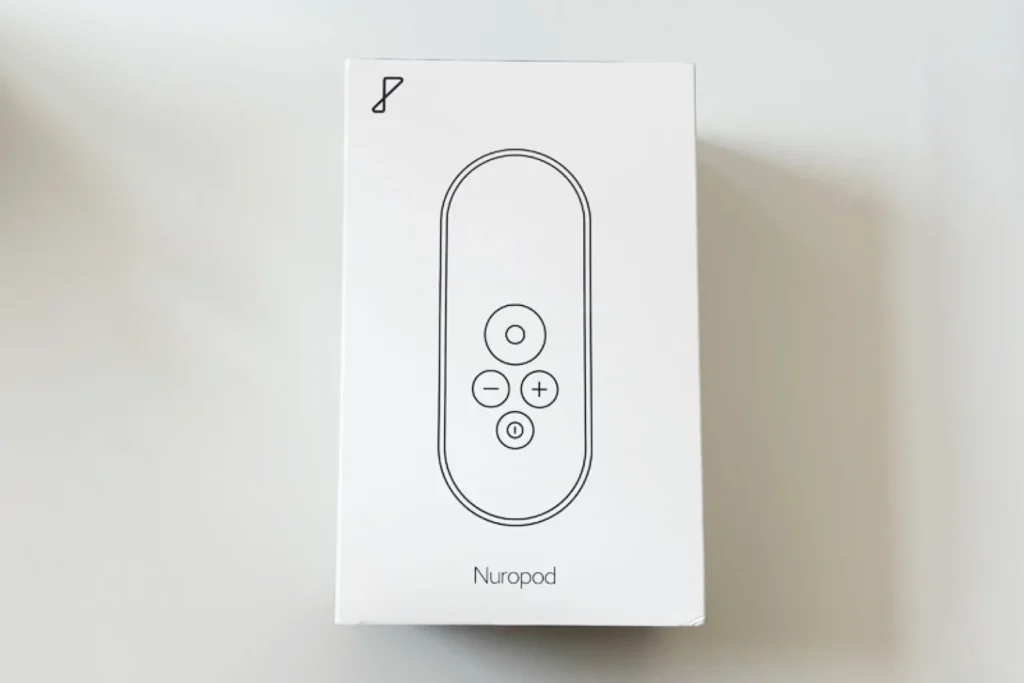
It arrived in a plain white box, smaller than I expected.
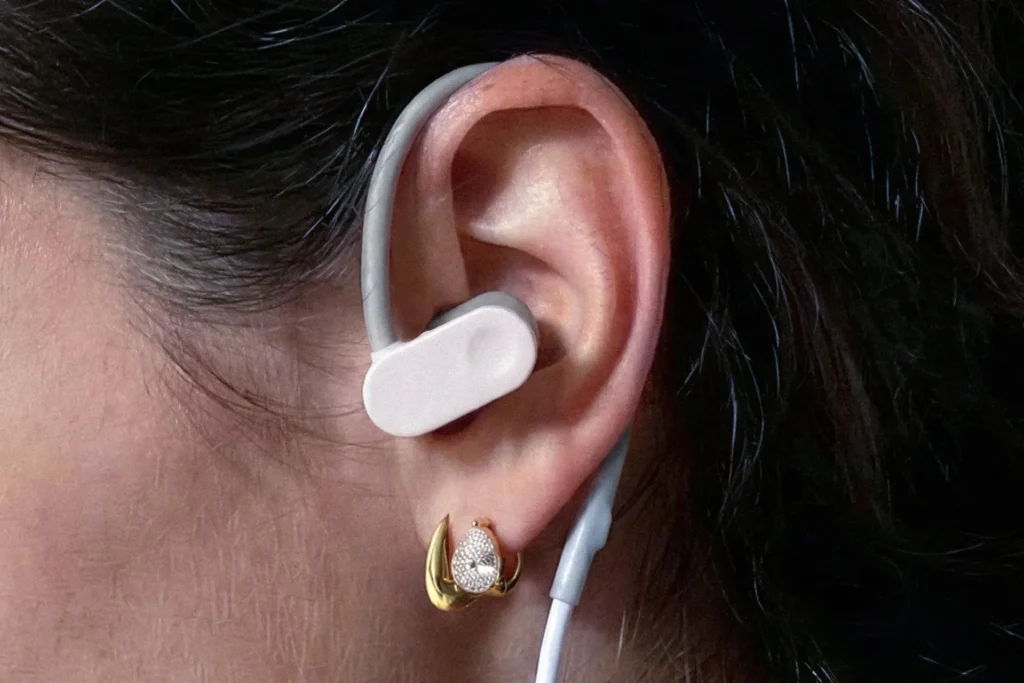
I clipped it onto my left ear while the coffee was brewing, set the intensity to where I could just barely feel it, and got on with my morning. A gentle tingle. Nothing more.
For three days, my HRV did exactly nothing. It read 52, then 51, then 52.
I was already composing the return email in my head.
On day four, I wore it for a full fifteen minutes during my morning admin. Nothing dramatic during the session.
But about twenty minutes after I finished, I noticed something quiet.
My shoulders weren’t up around my ears. My jaw wasn’t clenched. The low-level background tension I carry out of shifts and into the rest of my life – the kind I’d stopped noticing because it had become constant – had eased slightly.
I didn’t feel calm. I just felt like I’d been gripping something I didn’t know I was gripping, and I’d briefly put it down.
That was enough to keep going.
Day 8–12: The Morning the Number Moved
By the second week, I was doing two sessions daily – fifteen minutes in the morning while catching up on messages, thirty minutes in the evening while reading.
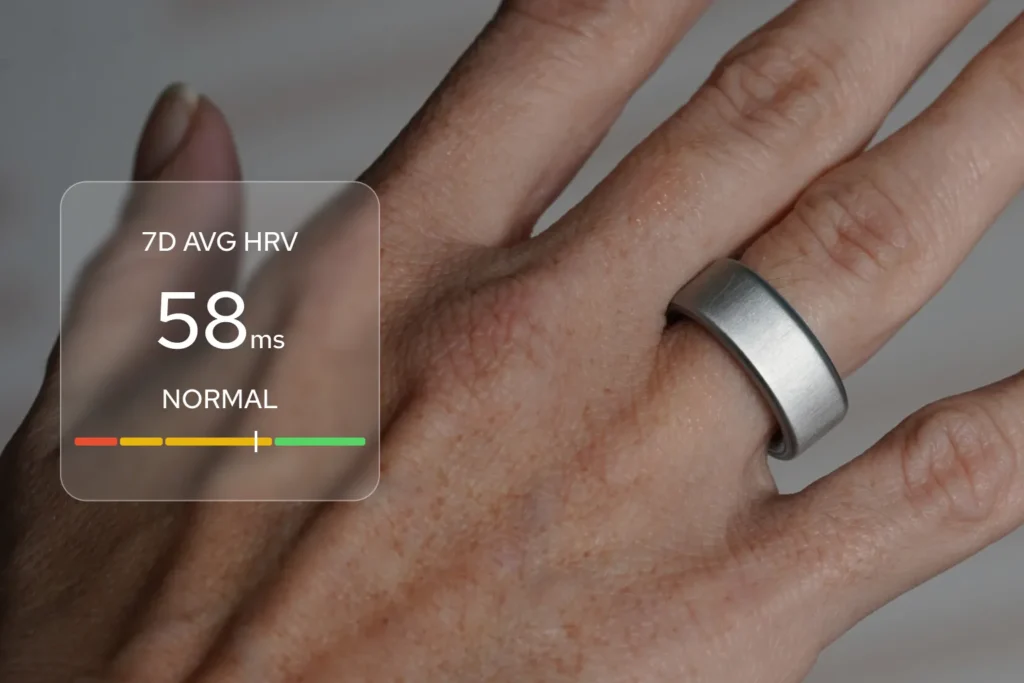
On day nine, my tracker came in at 58.
I want to be honest about how that felt.
I had been stuck at 52 for eighteen months. I’d seen numbers approaching 58 maybe a handful of times – after a full recovery week, never during a competition training block. I assumed it was a glitch. But day ten came in at 57. Day eleven at 59. Day twelve at 60. My weekly average had shifted from 52 to 58.
I started screenshotting every morning because I didn’t trust what I was seeing. In a competition block, a 6-point average shift isn’t a rounding error. That’s the difference between going into a session with something left, and grinding through it on empty.
The physical feeling came about a week behind the numbers.
I was doing the same training volume, working the same shifts, carrying the same load. But I wasn’t ending every day completely depleted. When a difficult shift ended, there was something left in the tank. The gap between one stressor and the next had gotten slightly wider.
In a competition training block, that’s everything.
Day 16–22: Recovery, Sleep, and Something I Didn’t Expect
Recovery between shifts and training sessions had always been the main issue. Going from a long day in ICU into a heavy training day and feeling it for the next forty-eight hours was something I’d started to accept as normal.
In week three, the mornings started changing.
Not dramatically. Just a settled quality that hadn’t been there before – the kind of morning where I didn’t need twenty minutes and two coffees before I felt functional. My muscles weren’t carrying the residual soreness into the next session the way they had been. Repair was actually happening overnight.
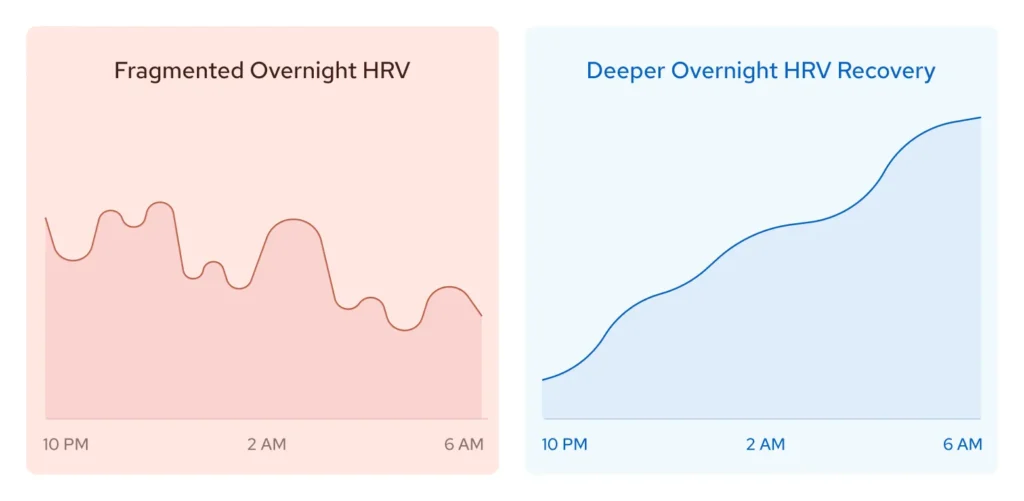
My tracker confirmed it. My resting heart rate overnight had dropped from 62 to 58. For an athlete in heavy training, four beats is not a small number. That gap is where recovery lives – where the next session gets built. My HRV was climbing during sleep – not just on the morning reading, but through the night itself. My nervous system was doing its recovery work in the hours it was supposed to.
And then something I genuinely hadn’t expected.
The irritable gut flare-ups I’d been getting during shifts – the bloating and stomach pain I’d always put down to cortisol and shift stress – had become noticeably less frequent. I hadn’t changed my diet or my routine. The only variable was the device.
The anxious thoughts I’d been carrying home from difficult shifts were quieter, too. Not gone – but sitting differently. Less like they were following me, more like I could actually set them down.
I filed all of this away as something to keep watching.
The numbers were moving. The physical changes were real. But I still didn’t fully understand why – and for someone with a healthcare background, that started to bother me.
Day 23–26: I Went Down a Research Rabbit Hole
By week four I’d stopped questioning whether this was working and started wondering why.
I’ll be honest – as someone who works in healthcare, I’m naturally sceptical of anything marketed as a wellness device. I’d been using it for three weeks without knowing much beyond the basics. Now I wanted to understand the mechanism properly.
I spent a Sunday afternoon reading.
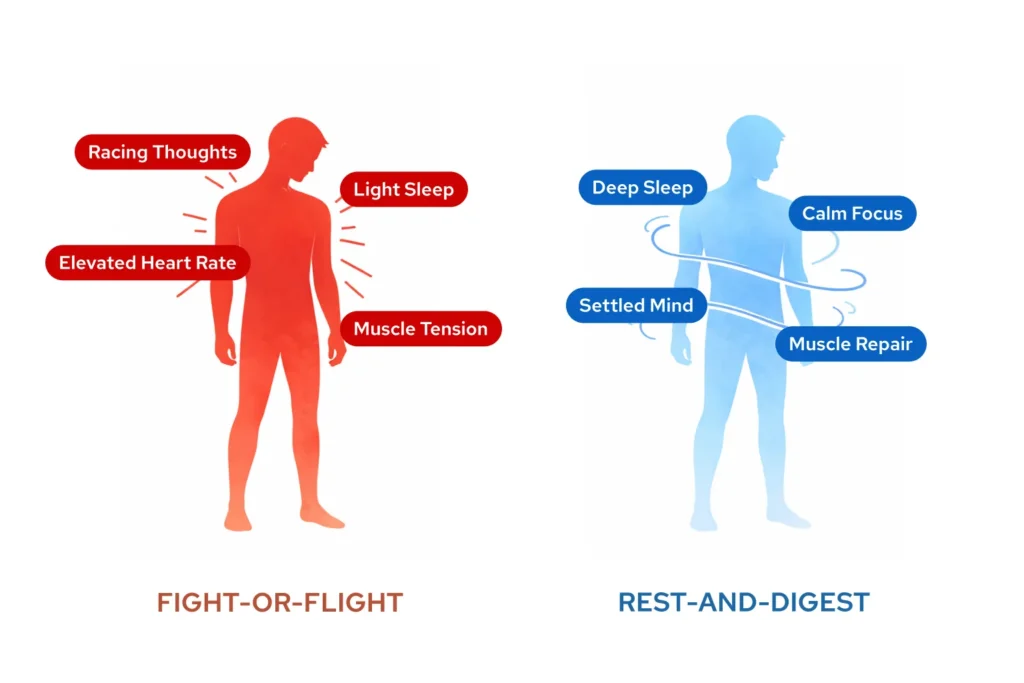
Your autonomic nervous system has two primary modes. Sympathetic – fight or flight – keeps you alert, activated, ready for threat. Parasympathetic – rest and digest – is where recovery actually happens. The vagus nerve is the body’s main pathway for shifting between the two.
It runs from the brainstem through the neck and into the heart, lungs, and digestive system. HRV is essentially a readout of how well this system is functioning.
When vagal tone is strong, the body shifts between activation and recovery fluidly. When it’s reduced – which happens under sustained pressure, physical or emotional or both – the recovery side runs underpowered.
That was what finally explained my number. I’d been treating my HRV like a training problem. But it was a nervous system problem. And those are not the same thing.
My HRV hadn’t been stuck because of overtraining. It had been stuck because my nervous system was carrying a load that breathwork and cold plunges – as useful as they are – weren’t fully reaching on their own. Those things genuinely help, and I still use most of them. But they each need time, space, and consistency to work. And they address one input at a time. If the underlying system is still on alert, the number tends to drift back regardless.
The technology I’d been using was called Nuropod – a CE-marked auricular vagus nerve stimulation device. It sends mild electrical pulses through a branch of the vagus nerve in the outer ear, supporting parasympathetic activity from the brainstem.
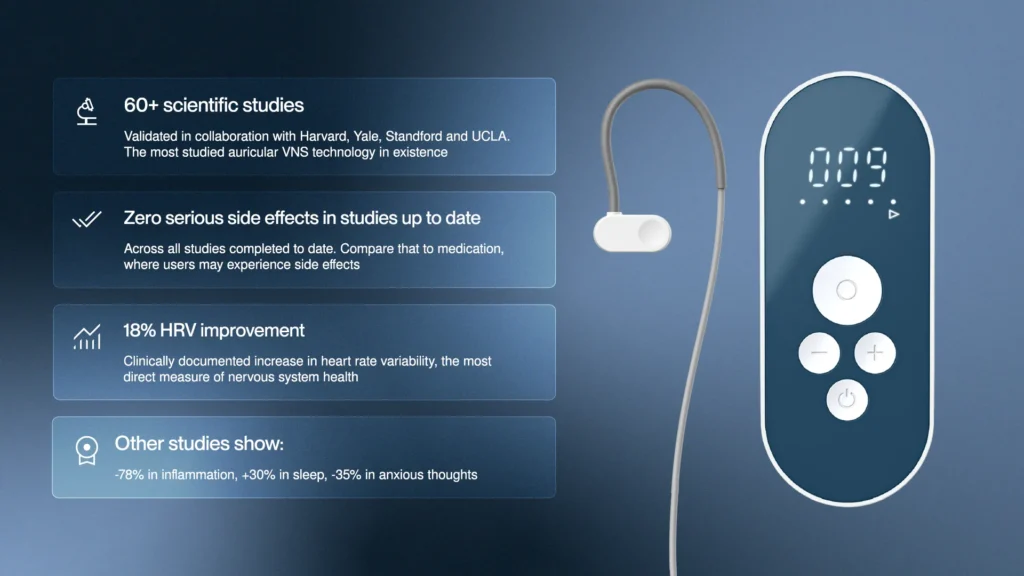
It’s been tested in over 60 independent clinical studies, with collaborations at institutions including Columbia University, King’s College London, and Mayo Clinic. A few numbers stood out:
- +61% increase in vagal nerve activity within 5 minutes of a session¹
- +18% increase in HRV over a study period²
- -35% reduction in anxious thoughts and stress-response reactivity³
- +30% improvement in sleep quality scores⁴
- -48% reduction in reported fatigue, alongside improved energy⁵
I won’t pretend I read everything. But it was enough to satisfy me that what I was seeing wasn’t a good run of days. There was a mechanism. And it mapped exactly onto what I’d been experiencing.
Day 30: What Changed
I’m still in the same training block. Still working ICU shifts. The load hasn’t changed.
But here’s where things landed after thirty days:
- My HRV moved from a 52 average to a 61 average, and it's still slowly climbing. More importantly, for the first time in eighteen months, the number matched how I actually wanted to feel.
- My resting heart rate overnight has dropped four beats
- Muscle soreness is clearing faster - sessions are no longer bleeding into each other the way they were
- My training sessions have more quality in them - I'm hitting the reps I'm supposed to hit, at the intensity I'm supposed to hit them, instead of just surviving the volume
- My recovery between shifts and training days has noticeably improved
- The irritable gut flare-ups during shifts have reduced significantly
- The anxious thoughts I carry home from difficult shifts are quieter
- I'm sleeping the same hours, but waking up feeling like the sleep actually did something
And the one I genuinely didn’t expect.
I used to dread my fifteen-minute morning break at work. Too short to decompress properly, too long to just sit with the weight of a difficult shift. I’d reach for another coffee and get back to it.
Now I clip the device on, sit in our quiet room, and those fifteen minutes have become the thing I actually look forward to. My brain finally has somewhere to go during that break that isn’t just more stimulation.
For someone who used to carry the weight of every shift home without realising it – who was always on, always running static in the background – being able to step out of that and back into my own life more easily is probably the change I didn’t expect to value most.
For the first time in eighteen months of tracking, my HRV chart looks like a staircase going up. But the number is just the readout. What changed underneath it is what actually matters.
Why Recovery Stays Stuck – And What This Actually Does
Here’s the thing most athlete recovery advice misses.
Your body doesn’t distinguish between training stress and life stress. A hard session, a difficult shift, a week of disrupted sleep, years of emotional pressure – your nervous system registers all of it as load. Your HRV reflects the total, not just what happened in the gym.
This is why the standard recovery tools often fall short for people carrying compounded stress – whether that’s athletes with demanding jobs, parents running on broken sleep, or anyone whose life doesn’t pause when training ends.
Breathwork, cold plunges, magnesium – they all have a role, and I still use them. But the fatigue that doesn’t lift after a rest day, the anxious thoughts that follow you home, the slow creep toward burnout – those need something that reaches deeper. Something you can do while eating lunch or reading a book, without carving out extra time you don’t have.
If the nervous system is still running on high alert, the number drifts back regardless. You’re adjusting inputs without addressing the system those inputs are running through.
Nuropod targets that system directly – gentle electrical pulses through the outer ear, up the vagus nerve to the brainstem, supporting a shift toward parasympathetic activity. Not a stimulant. Not a shortcut. A more direct input to the recovery mechanism that everything else is trying to reach indirectly.
If you’re considering trying it, here’s what I wish I’d known before I ordered.
The Practical Side – What It Costs and How to Try It
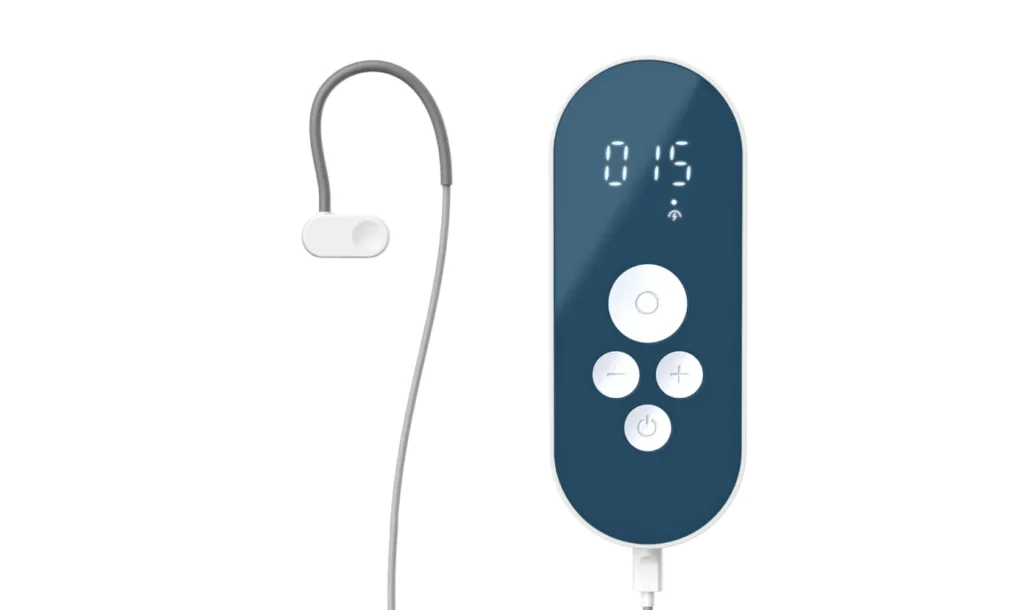
The device costs around $900. It’s not cheap, and I won’t say otherwise.
I found out after purchasing that Nuropod runs a remote research study – you complete some forms, share your data, and receive a subsidy of around $100 off. I wish I’d known before ordering.
What made me commit was the 30-day money-back guarantee. That reduced the risk enough to make me actually try it.
Sessions run from 15 minutes to two hours. The sensation is a gentle tingle – adjustable, not painful.
My current protocol:
- 15 minutes during my morning break at work
- 30–45 minutes after training while eating or resting
- 60 minutes on rest days while reading
You can wear it while working, eating, watching something, reading. Not during workouts or showers.
My Honest Take
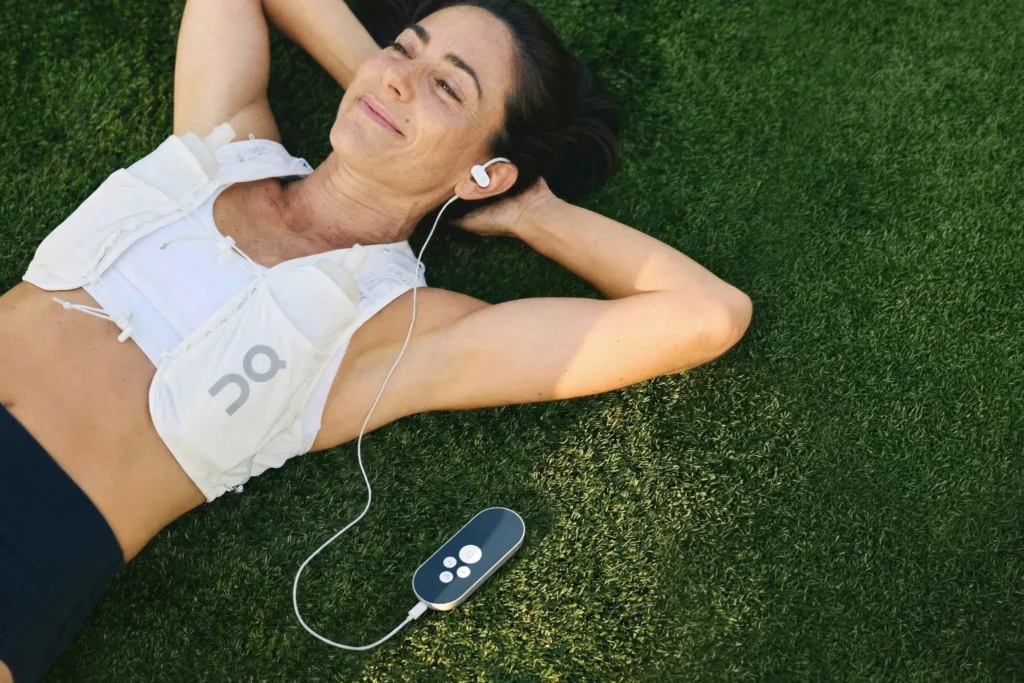
I spent eighteen months trying to move a number that wouldn’t move. Every intervention gave me a small bump that always faded back.
This one didn’t fade.
It hasn’t changed my job or my training demands – that’s not how this works. But it’s changed how my body handles the load I’m already carrying. Recovery is faster. Muscle repair is happening overnight the way it’s supposed to. Sleep is doing its job. The gap between one stressor and the next has widened enough to matter.
And I think that’s the part that’s hardest to explain to someone who hasn’t experienced it. It’s not that the hard things stopped being hard. It’s that I stopped being consumed by them the way I was before.
I’m not unique in this. The same nervous system pattern shows up in people who’ve never set foot in a CrossFit gym – parents running on broken sleep, professionals carrying the weight of demanding careers, anyone who’s spent too long in a state of sustained pressure without enough genuine recovery. The circumstances are different. The load looks different. But the underlying dynamic is the same.
For the first time in eighteen months of tracking, my HRV chart looks like a staircase going up. But the number is just the readout. What changed underneath it is what actually matters.
That’s the most honest summary I can give.
This blog post aims to be informational and should not replace professional health advice. Always consult with a health professional for personalised advice.
References
- Forte G, Morelli M, Grässler B, Casagrande M. Ear your heart: transcutaneous auricular vagus nerve stimulation on heart rate variability in healthy young participants. PeerJ. 2022. https://pmc.ncbi.nlm.nih.gov/articles/PMC9638401/
- Soltani D, et al. Transcutaneous auricular vagus nerve stimulation on baroreflex sensitivity and heart rate variability in healthy subjects: a systematic review. Clinical Autonomic Research. 2023. https://pubmed.ncbi.nlm.nih.gov/36689057/
- Bremner JD, et al. Application of noninvasive vagal nerve stimulation to stress-related psychiatric disorders. Journal of Personalized Medicine. 2020. https://www.ncbi.nlm.nih.gov/pmc/articles/PMC7563188/
- Dolcini J, et al. Effects of transcutaneous auricular vagus nerve stimulation on sleep quality: Randomised controlled trial. 2025.
- Farmer AD, Strzelczyk A, Finisguerra A, et al. International consensus based review and recommendations for minimum reporting standards in research on transcutaneous vagus nerve stimulation (taVNS). Frontiers in Human Neuroscience. 2021. https://www.frontiersin.org/articles/10.3389/fnhum.2020.568051/full




With this Nuropod can surely help me with the phase of my athleticness, hoping it would thrive more
As I do my marathons especially during recovery, this is a huge help and lessens recovery time to do other things or begin training again.