
“In my practice, one pattern comes up again and again: people who fall asleep fine, then wake at the same time every night – mind already running, body already tense. Most of them have tried everything. And most of them have been told it’s just stress.”
You’ve Improved Your Sleep Habits – But Still Can’t Switch Off

You’ve tried just about everything.
Melatonin. Magnesium glycinate. Ashwagandha. You’ve cut caffeine after midday, started getting morning sunlight, established a consistent bedtime, and darkened the room.
Maybe you’ve tried CBT-I. Or a weighted blanket. Or tried resetting your circadian rhythm that someone swore would finally work.
You’ve followed the advice as closely as you can.
And yet.
Somewhere between 2 and 4 in the morning, you jolt awake.
Heart racing. Thoughts are already running. Body tense – as if something just happened, though nothing did.
You breathe. You shift position. You stare at the ceiling. An hour goes by. Sometimes two.
By morning, you’re exhausted. And increasingly frustrated – because you did everything right.
For years, disrupted sleep has been treated as a habit problem. So people fix their habits. They optimise every aspect of their sleep routine – and still find themselves wide awake at 3 am, wondering why nothing seems to help.
But here’s what often gets missed.
Many people assume they’re waking up because they’re still stressed. Yet I often see people whose sleep problems persist long after the most stressful period of their life has passed.
The stress may be over. But the cycle remains.
So what’s going on?
What I See in My Practice
10+ years, hundreds of clients
I’ve been a Cognitive Hypnotherapist for over 10 years, helping people overcome anxious thoughts, trauma, phobias, chronic stress, panic symptoms, sleep problems, and the ongoing effects of significant life stressors.
My work combines cognitive hypnotherapy, PSYCH-K®, NLP, subconscious belief work, and personalised therapeutic techniques.
Over the years, I’ve worked with people recovering from burnout, toxic relationships, prolonged work pressure, grief, health scares, panic attacks, and periods of overwhelm that continued to affect them long after the original stressor had passed.
Across many of those cases, I frequently see the same cycle.
People improve their sleep habits but still struggle to switch off – because the problem isn’t always their bedtime routine. The problem is often the physiological state their body remains in when they try to sleep.
When You’re Doing Everything Right – But Still Can’t Switch Off
Some of the people I work with describe a remarkably similar experience.
They fall asleep without much trouble. And yet:
- They wake during the night feeling instantly alert - thoughts immediately racing, as if no time has passed
- Their thoughts begin racing almost immediately after waking
- They lie awake for an hour - sometimes longer - unable to fall back asleep
- They wake up exhausted, despite spending enough time in bed
This isn’t laziness. It’s not simply poor sleep habits. It’s not a lack of willpower.
Many of them weren’t just stressed. They were the person everyone else relied on. And that kind of responsibility doesn’t simply disappear.
Many of these people have already made changes, reduced their stress, or moved beyond the difficult period that first disrupted their sleep. And yet the response remains.
Because the nervous system doesn’t always recognise that the threat has passed.
Racing Thoughts vs An Alert Nervous System
An important distinction

Many people focus on the symptoms. But the symptoms are not always the root cause.¹
Most people explain their sleep disruption something like this: “I have a busy mind. I think too much. I can’t switch off.”
And at 3 am, that’s exactly what it feels like.
But here’s a distinction I’ve observed repeatedly in practice – one that changes everything about how to approach it.
Most people assume the thoughts are what wake them. What I often see is the opposite.
The body becomes alert first. The thoughts arrive afterwards – occupying the mind once wakefulness has begun that was already open.
It’s the difference between a smoke alarm going off and the smoke itself. The thoughts are the alarm. But the nervous system activation is what started the fire.
And when that distinction is missed, people spend years trying to quiet the thoughts – without ever addressing the state that keeps producing them.
How Survival Mode Can Disrupt Sleep
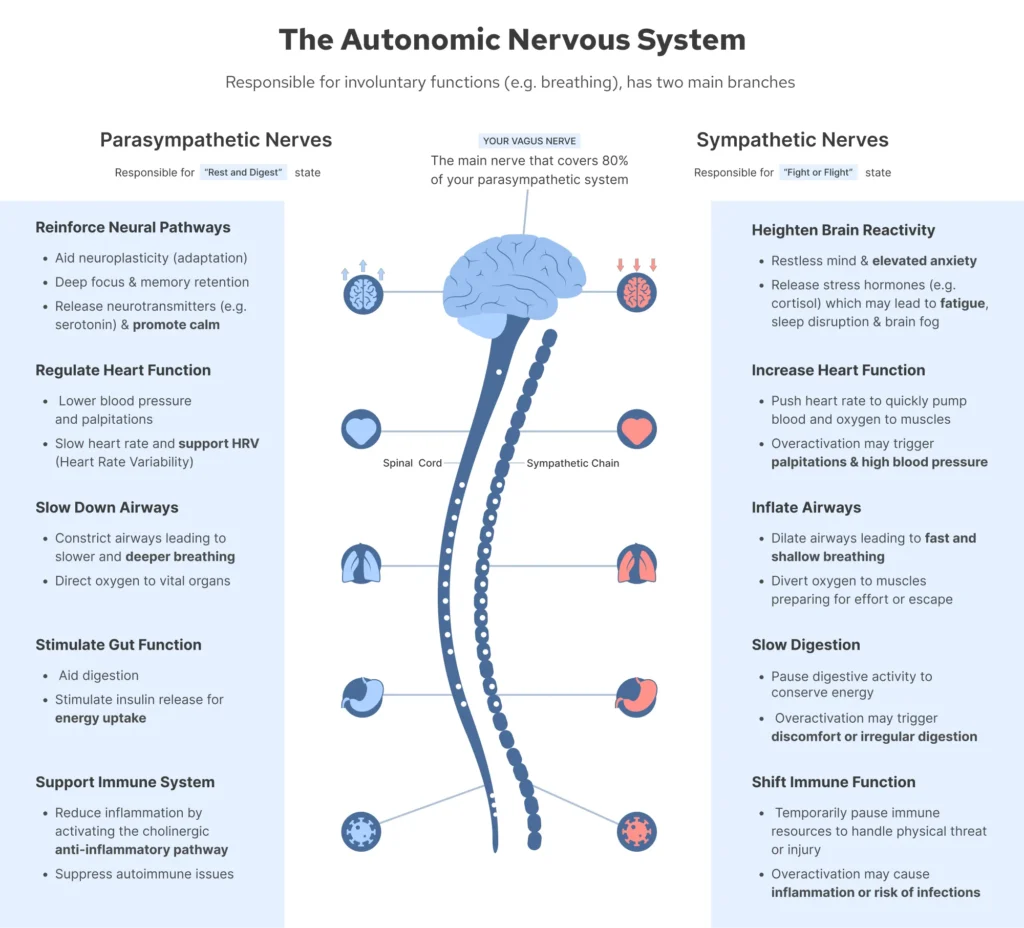
Your autonomic nervous system has two primary modes.²
Sympathetic – fight or flight. Alert, activated, scanning for threat.
Parasympathetic – rest, digest, recover. Calm, restorative. The state where restorative sleep becomes possible.
In a healthy, well-regulated system, you move between the two naturally. As the day ends, the body naturally shifts toward recovery. Sleep deepens into genuine recovery.
But here’s something the nervous system doesn’t do reliably: distinguish between a physical threat and a sustained psychological one.²
It doesn’t interpret stress by how dramatic the cause looks from the outside.
A difficult relationship. Prolonged workplace stress. Financial uncertainty. A health scare. The fear that something bad is about to happen. Years of feeling responsible for everything and everyone around you. The Sunday night dread that arrives before the week has even started.
To the nervous system, all of these are interpreted as ongoing demands – as something to stay ready for.³
And if that state lasts long enough, something shifts. The body begins to treat alertness as normal. The body’s resting level of arousal gradually changes. The nervous system becomes less able to fully let go – even when the original cause has passed, even when you’re exhausted, even when you’ve done everything right before bed.
That’s when many people start describing the same tendency.
Tired. But not settled. Exhausted. But unable to switch off. Ready for bed. But still on guard.
The body lies down. But the system stays on watch.
The Vagus Nerve – Your Body’s Recovery Pathway
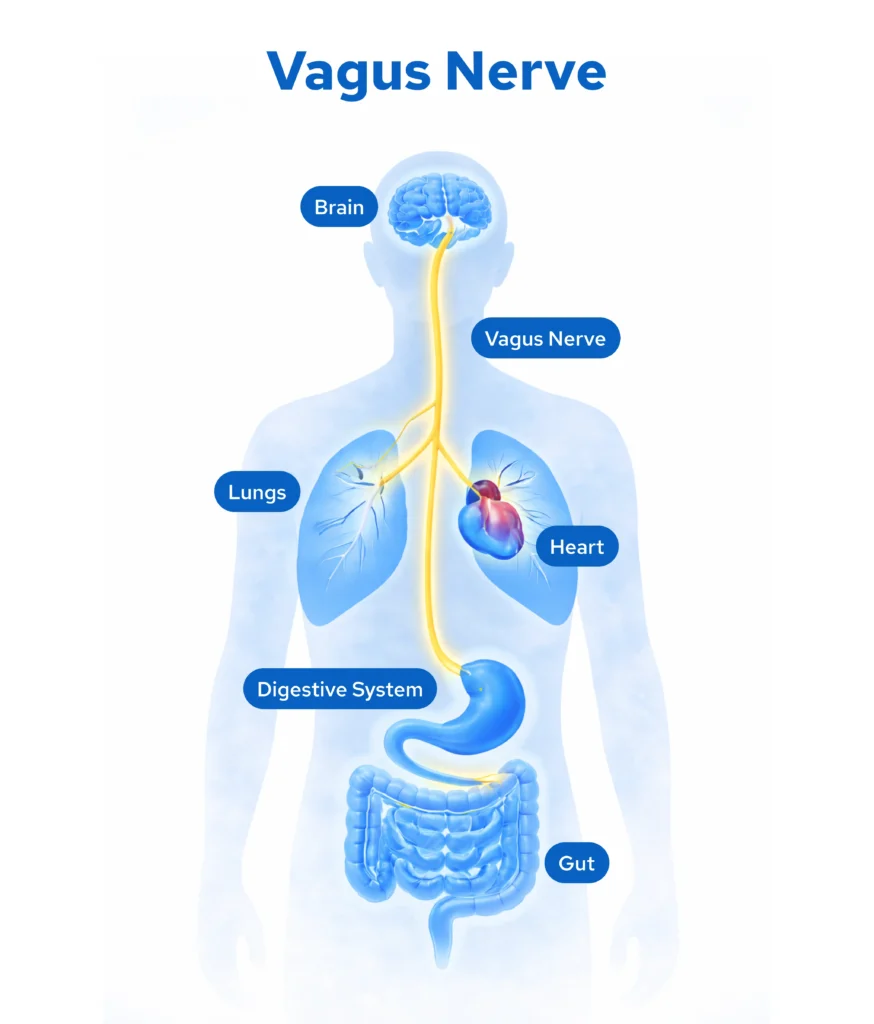
One of the primary pathways involved in shifting the body from alertness to recovery is the vagus nerve.⁴
It runs from the brainstem through the heart, lungs, and digestive system, helping regulate many processes associated with rest, recovery, and emotional regulation.
Think of it as the body’s main signalling pathway for one specific message: “The threat has passed. It’s safe to let go now.”
When vagal tone is strong, the body can move into a restorative state relatively easily. Sleep becomes deeper. Tension releases. Recovery – physical and emotional – becomes possible.
When that pathway is underactive – which commonly develops in people under prolonged pressure – the opposite happens.⁴ The body stays slightly braced. Sleep becomes lighter. Tension lingers into the night.
This is why people with chronically elevated stress often notice not just broken sleep, but a cluster of things occurring together: difficulty relaxing in the evenings, a low hum of tension with no clear source, and waking that feels more like surfacing than drifting.
Many also notice daytime anxious thoughts, persistent tiredness, brain fog, or a general sense of being depleted that no amount of rest seems to relieve. HRV readings, for those who track them, often reflect the same experience – a nervous system that isn’t recovering the way it should.⁵
What the Research Shows
And how I started looking at this differently
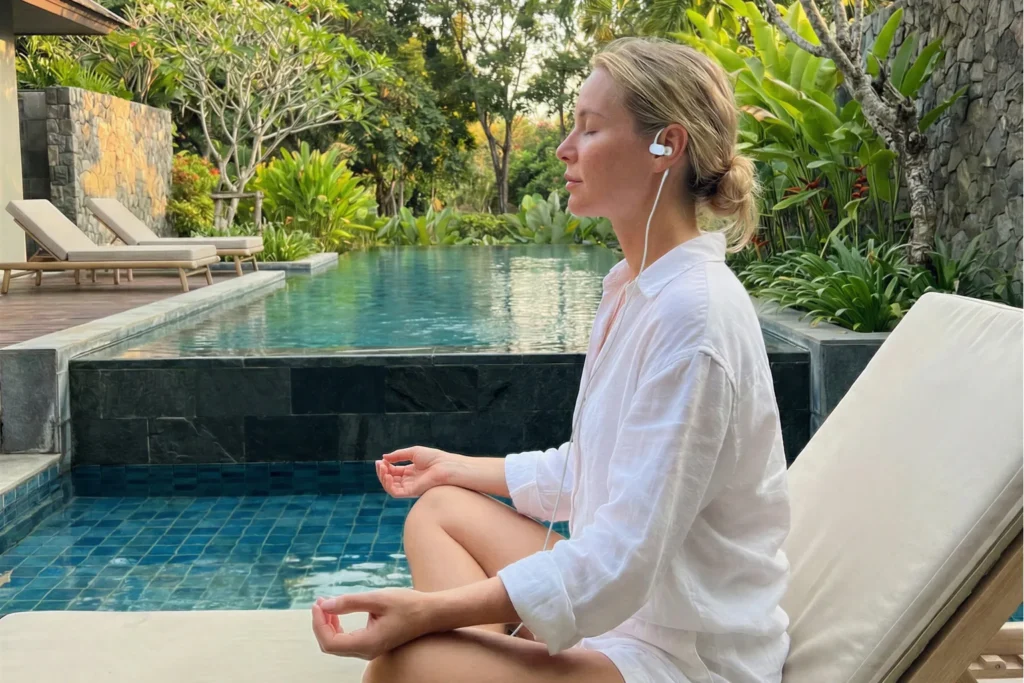
Many of the habits people reach for during stressful periods – breathwork, meditation, yoga, cold exposure – turn out to share something in common. Research increasingly suggests that part of why these practices help is because they support activity along the vagus nerve.⁶
But these approaches have a limitation. They depend on daily consistency and a certain level of calm to begin with. For someone whose nervous system is already highly activated, sustaining them long enough to make a real difference is often the hardest part.
For a long time, more direct vagus nerve stimulation required a medical procedure – surgical implantation of a device near the nerve. Effective in specific medical contexts, but clearly not something most people would consider for disrupted sleep.
Over the last decade, that has changed significantly.
Researchers discovered that branches of the vagus nerve run close to the surface at a specific point on the ear, making non-invasive stimulation possible through gentle electrical pulses applied to the skin.⁶ This approach is called taVNS: transcutaneous auricular vagus nerve stimulation.
I’ll be honest – when I first came across this, I approached it with the same scepticism I bring to most things in the wellness space. There is a lot of noise, and much of it lacks convincing evidence. What persuaded me to look more closely was the evidence supporting this particular device, not just the general concept of vagus nerve stimulation.
Published studies have shown that taVNS can produce:
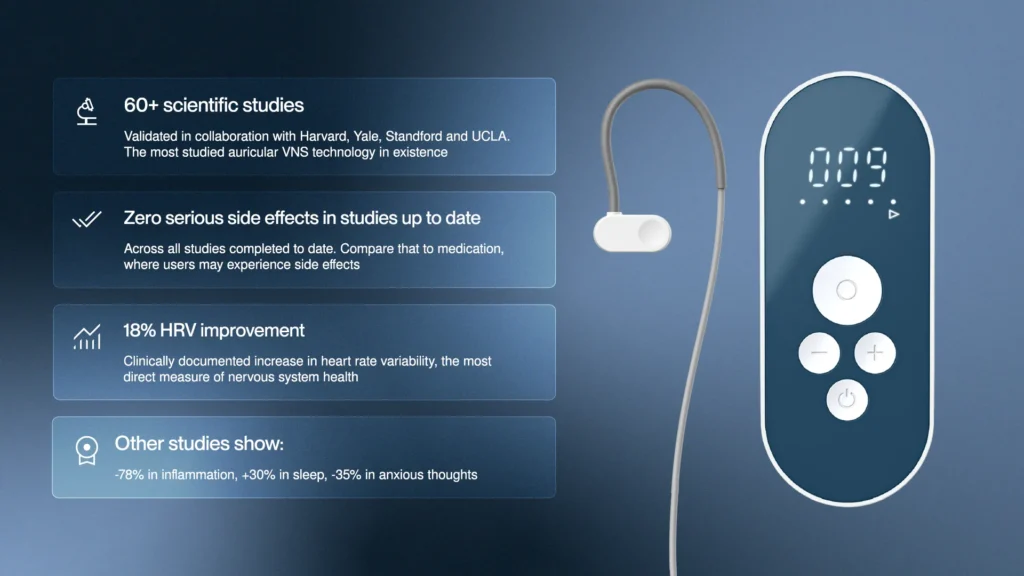
- +30% improvement in sleep quality over a 4-week trial - including fewer nighttime awakenings, faster return to sleep, and better daytime functioning⁷
- +18% increase in HRV - a direct physiological marker of how well the nervous system can shift into recovery mode⁸
- -35% reduction in anxious thoughts scores - reflecting a broader shift in baseline nervous system state, not just surface-level symptom management⁹
These are outcomes from studies targeting the nervous system’s ability to actually shift into a more restorative physiological state – the same physiological foundation that supports recovery when the body is in a regulated state.
One device in particular appeared consistently across multiple studies – consistently, across independent institutions, and in a way that matched exactly what I kept seeing in practice. And that is what led me to Nuropod.
Where Nuropod Fits In (At-Home Support)
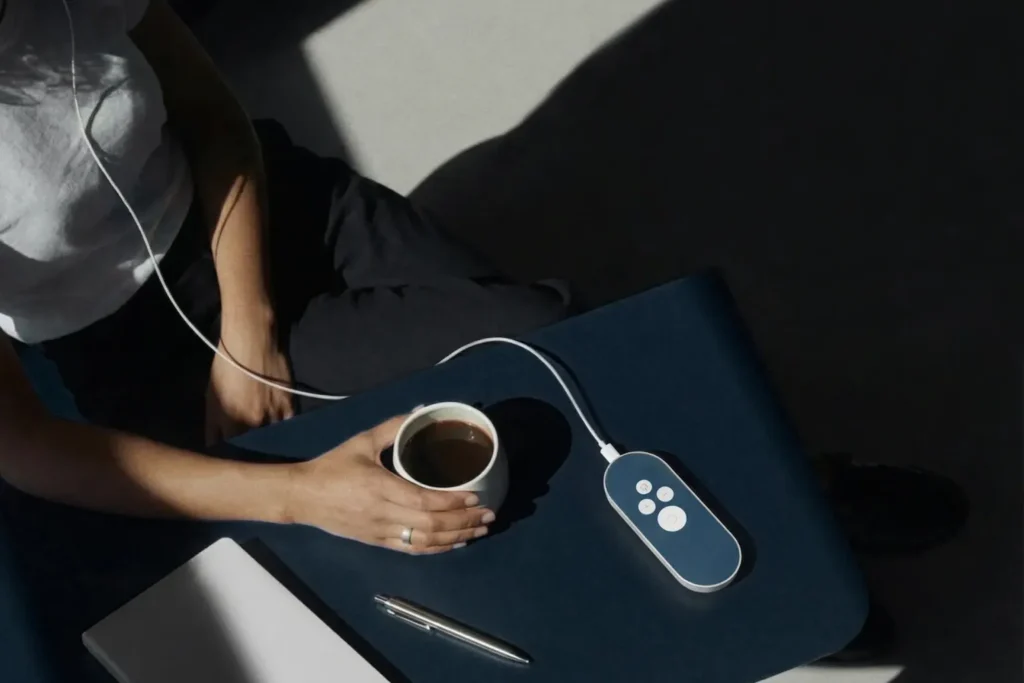
In my practice, I primarily help people address the subconscious symptom profile and beliefs that keep the nervous system stuck in cycles of stress, anxious thoughts, and poor sleep.
For some people – particularly those with busy lives who find it hard to maintain consistent routines – I may suggest a nervous system support tool they can use at home, to complement therapy. One practical advantage is how easily it fits in. You can use it while reading, resting, or winding down – without needing to carve out extra time or change your routine.
The device I kept appearing to was Nuropod.
What it is: A CE-marked taVNS device developed by Parasym – a neurotechnology company with over 10 years of R&D and more than £10 million invested in scientific research. It clips gently to the ear and delivers low-level electrical pulses to the auricular branch of the vagus nerve.
How it works: The pulses are designed to support the body’s ability to shift from alert mode into recovery mode – targeting the same pathway described throughout this article.
Why it caught my attention: It’s been tested in over 60 independent scientific studies, including collaborations with institutions such as Columbia University, King’s College London, University College London, and Mayo Clinic.
Why I suggest it: It is designed to influence autonomic nervous system activity, directly supporting the nervous system’s ability to shift into recovery mode. For many people, the challenge with other approaches isn’t that they don’t work – it’s finding the time and headspace to do them consistently. Nuropod integrates easily into existing routines rather than requiring you to stop.
No prescription required. No special technique to learn. You clip it to your ear during your evening wind-down and wear it for around 30 minutes.
From what I have seen, the people drawn to it come from a wide range of backgrounds. Some are professionals carrying the weight of demanding careers. Others are parents running on broken sleep and emotional overload. Some are athletes whose recovery has plateaued despite doing everything right. What they tend to share is not a job title – it’s a nervous system that has spent too long in a state of sustained pressure without enough genuine recovery.
But for the right person – someone whose nervous system is still running in a state it learned during a difficult period – it can provide a meaningful additional layer of support.
Real-World Use Cases
Based on what I see in practice, this experience tends to be most relevant for:
The High-Responsibility Professional. Capable, reliable, always carrying a lot. The workday ends – but the nervous system never seems to get the message.
The Hyper-Responsible One. Always the person others lean on. Always the one making sure everything is handled. The worry doesn’t stop because the responsibility never does.
The “I’ve Tried Everything” Case. Supplements, sleep apps, meditation, CBT, magnesium, and melatonin. Still exhausted. Still lying awake, wondering why nothing seems to work.
The Sleep That Never Returned to Normal. The burnout eased. The difficult relationship ended. The stressful period passed. But sleep never fully returned to what it had been before.
The Always-On Nervous System. Racing thoughts. Jaw clenching. Restless sleep. Waking unrefreshed. Tired all day – but strangely alert the moment your head hits the pillow.
Who Might Benefit – And Who Shouldn’t Use It
May benefit:
- People struggling with sleep problems, night waking, or non-restorative sleep
- Those who feel exhausted but are unable to switch off fully
- People whose sleep never recovered after a prolonged stressful period
- Individuals experiencing persistent nervous system activation or background tension
Avoid if you:
- Have a pacemaker or implanted cardiac device
- Are pregnant
- Have had a recent serious cardiac event
- Are under 18
Always consult a qualified healthcare professional before starting, particularly if you have an underlying medical symptoms.
A Safe Way to Try It
Nuropod offers a 30-day money-back guarantee – so there’s no financial risk in trying it at home.
A limited number of slots are also available in a subsidised research study, where some participants may receive up to $100 off in exchange for sharing their experiences.
Not everyone struggling with sleep needs the same approach. The key is understanding whether the problem lies in your sleep habits, your circumstances, or a nervous system that never fully returned to recovery mode.
Final Thought: The Question Worth Asking Before You Try Anything Else
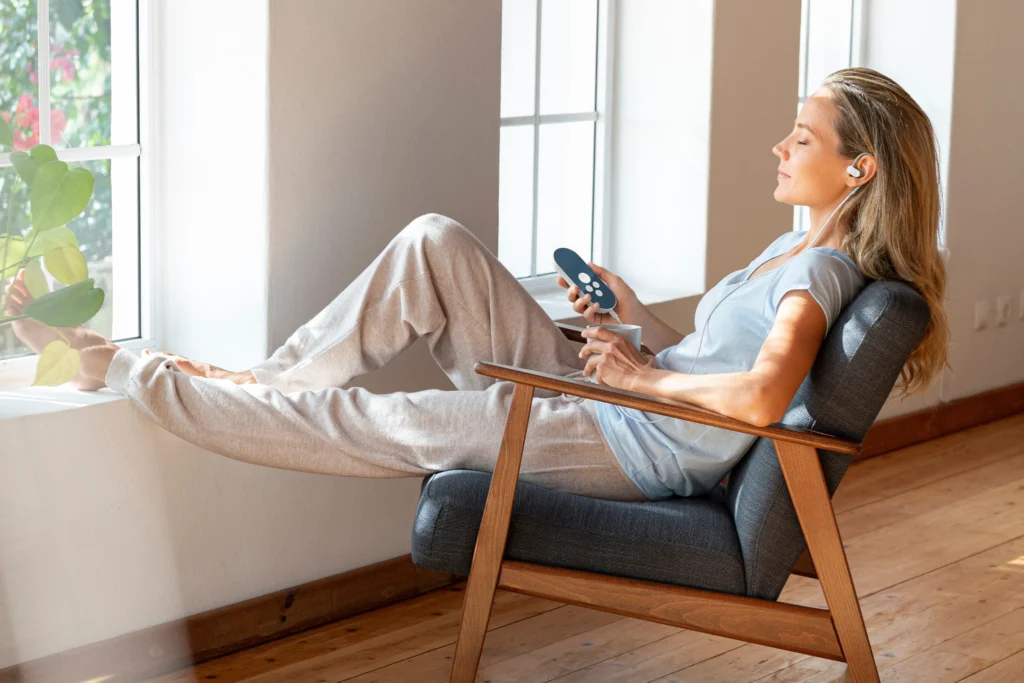
If you’ve spent months – or years – trying to improve your sleep through habits alone, and the same cycle keeps returning, it may be worth asking a different question.
Not: “What am I doing wrong before bed?”
But: “Has my body actually received the signal that it’s safe to stop?”
Because for many people, the problem isn’t a lack of discipline. It’s a nervous system that adapted during a prolonged period of stress – and never fully switched back.
Sometimes, helping the body feel safe again is an important part of the picture.
By supporting the nervous system’s ability to move more easily from alert mode into recovery, you allow your body to do what good sleep is physiologically intended to do: stay asleep, recover deeply, and help you wake up feeling genuinely restored.
This blog post aims to be informational and should not replace professional health advice. Always consult with a health professional for personalised advice.
References
- Thayer JF, Lane RD. Claude Bernard and the heart-brain connection: further elaboration of a model of neurovisceral integration. Neuroscience & Biobehavioral Reviews. 2009. https://pubmed.ncbi.nlm.nih.gov/18771686/
- McEwen BS. Protective and damaging effects of stress mediators. New England Journal of Medicine. 1998. https://pubmed.ncbi.nlm.nih.gov/9428819/
- Chrousos GP. Stress and disorders of the stress system. Nature Reviews Endocrinology. 2009. https://pubmed.ncbi.nlm.nih.gov/19488073/
- Breit S, Kupferberg A, Rogler G, Hasler G. Vagus nerve as modulator of the brain-gut axis in psychiatric and inflammatory disorders. Frontiers in Psychiatry. 2018. https://www.frontiersin.org/articles/10.3389/fpsyt.2018.00044/full
- Shaffer F, Ginsberg JP. An overview of heart rate variability metrics and norms. Frontiers in Public Health. 2017. https://www.frontiersin.org/articles/10.3389/fpubh.2017.00258/full
- Farmer AD, Strzelczyk A, Finisguerra A, et al. International consensus based review and recommendations for minimum reporting standards in research on transcutaneous vagus nerve stimulation (version 2020). Frontiers in Human Neuroscience. 2021. https://www.frontiersin.org/articles/10.3389/fnhum.2020.568051/full
- Dolcini J, et al. Effects of transcutaneous auricular vagus nerve stimulation on sleep quality: Randomised controlled trial. 2025.
- Forte G, Morelli M, Grässler B, Casagrande M. Ear your heart: transcutaneous auricular vagus nerve stimulation on heart rate variability in healthy young participants. PeerJ. 2022. https://pmc.ncbi.nlm.nih.gov/articles/PMC9686410/
- Zheng S, et al. Transcutaneous auricular vagus nerve stimulation improves anxiety symptoms and cortical activity during verbal fluency task in Parkinson’s disease with anxiety. Journal of Affective Disorders. 2024. https://pubmed.ncbi.nlm.nih.gov/38925314/




Hypnotherapy creeps me out, and I would better use my Nuropod device just as usual improvement day by day