
A major new book has put a single nerve at the center of modern health science, from inflammation and mood to sleep and energy.
Here is what that nerve does, why yours might be running below par, and why a gentle electrical signal, delivered at the ear, is drawing growing scientific interest as a way to support it.

A nerve most people never think about is having a scientific moment
For most of medical history, the vagus nerve was a mystery. It clearly ran from the brain to nearly every major organ, but what it truly did stayed out of reach.
In 2025, that quietly changed in the public eye. Kevin J. Tracey, a neurosurgeon and president of Northwell Health’s Feinstein Institutes for Medical Research, published a book called The Great Nerve: The New Science of the Vagus Nerve.
Tracey is not a fringe voice.
As measured and reported in the scientific literature, he is one of the most highly cited living scientists in the world; he holds more than 120 patents, and he is widely described as the founding father of bioelectronic medicine.

His central idea is striking: the vagus nerve carries a built-in healing reflex, a way for the nervous system to switch off inflammation, and learning to work with it may reshape how we treat disease.
He likes to keep the picture simple. The vagus, he has said, works “like the brakes in your car,” tapping the body’s inflammation to slow it down.
What the vagus nerve actually is
In plain terms, the vagus is the longest of the cranial nerves and the main wire of your rest-and-recover system.
It starts in the brainstem, at about the level of your ears, then travels down the neck, through the chest, and into the abdomen, sending branches to the heart, the lungs, and the digestive tract along the way.
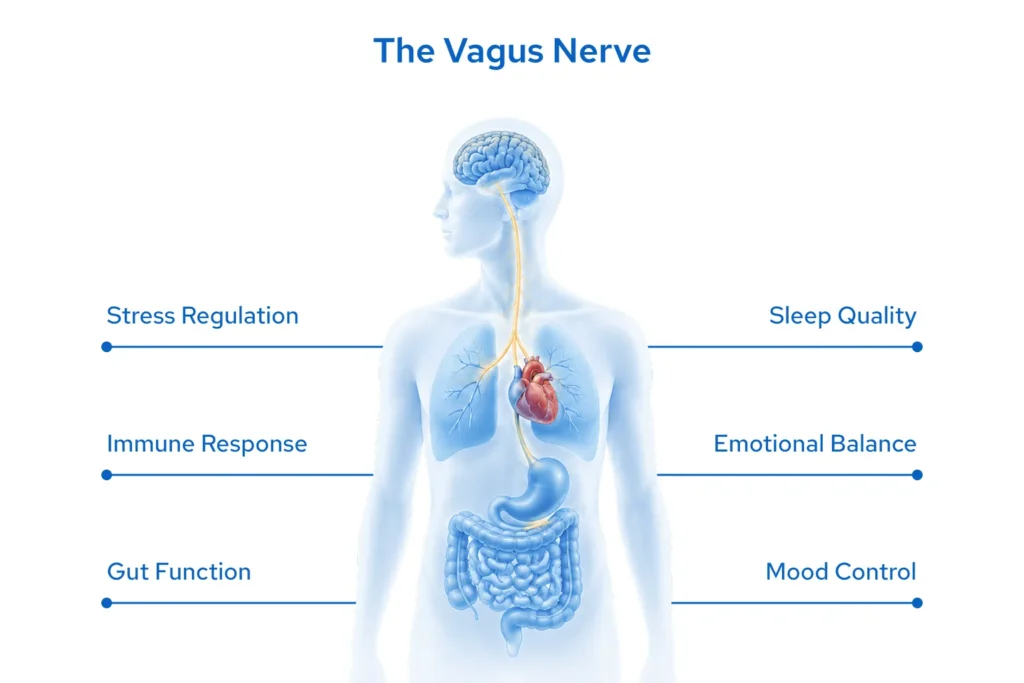
Think of it as two things at once.
It is a brake pedal that lets your body come down out of stress, and it is a two-way cable carrying constant signals between your brain and your organs.
When its tone is healthy, your body can rev up when it needs to and settle again once the moment passes. When its tone is low, that brake is weak, and the system can stay stuck in a state of stress even when nothing is wrong.
Why does one nerve touch so much
Because the vagus reaches so many organs, its influence is unusually broad.
It helps set your heart rate and your breathing, it runs much of digestion, and, as Tracey’s own research first showed, it acts as a brake on inflammation.
It is also the backbone of the parasympathetic nervous system, the rest-and-digest side of your wiring.
That is why researchers connect healthy vagal function to steadier stress, deeper sleep, calmer digestion, and a more balanced mood.
When vagal tone runs low, people often describe a familiar cluster: wired but tired, sleeping poorly, a temperamental gut, a short fuse, and a sense of running hot that never quite switches off.

None of that is a formal diagnosis, and fatigue or gut trouble can have many medical causes. But it is the everyday picture that a well-functioning vagus helps hold in balance.
The discovery that started a new field
Tracey’s place in this story is specific, and worth getting right.
Decades ago, he and his team discovered that the vagus nerve controls what they named the inflammatory reflex: a direct line by which the nervous system can tell the immune system to stand down.
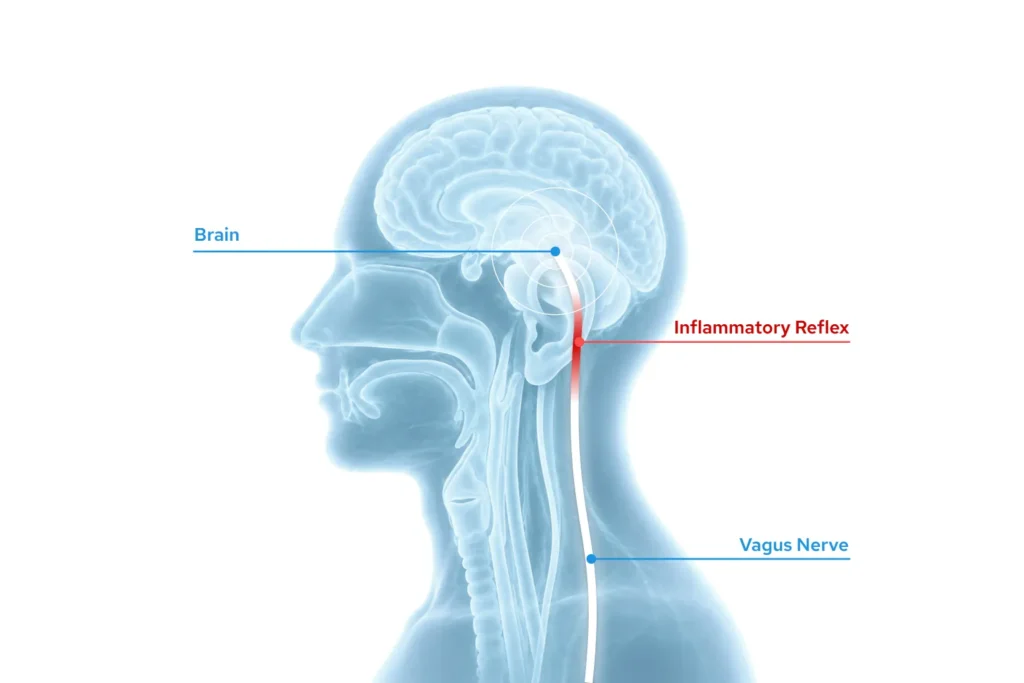
That finding launched bioelectronic medicine, the idea of treating disease with carefully targeted nerve signals rather than drugs.
It has already reached the clinic.
A company Tracey co-founded, SetPoint Medical, received FDA approval for an implanted device that stimulates the vagus nerve in the neck to ease joint pain, and studies are underway in other inflammatory conditions.
That work, to be clear, uses a surgical implant, for serious disease, under close medical supervision. It is the heavy-duty end of the field.
Reaching the vagus without surgery
Here is where everyday interest comes in.
You do not need an implant to influence your vagus. A good part of Tracey’s book is given over to lifestyle strategies, slow breathing, cold exposure, exercise, and meditation, that can support vagal tone naturally.
And there is one more access point that has helped make the vagus a subject of so much recent research: the outer ear.

A small branch of the vagus surfaces in the skin of the ear, which means a gentle electrical signal applied right there can reach the nerve without anything invasive at all. Researchers call this transcutaneous auricular vagus nerve stimulation, and it has become an active, growing area of study.
The evidence here is younger and less settled than the implant research, and it deserves to be read that way. But early randomized studies have begun testing ear-based stimulation for sleep, for the gut, and for stress, and the results so far have been promising enough to keep the studies multiplying.
A gentle, at-home way to support the nerve
For people curious to try this approach, a handful of consumer devices now bring ear-based vagus nerve stimulation out of the lab.
One of them is Nuropod, a CE-certified, non-invasive vagus nerve stimulator that clips to the ear and delivers gentle stimulation in short daily sessions that some people fold into a wind-down routine.
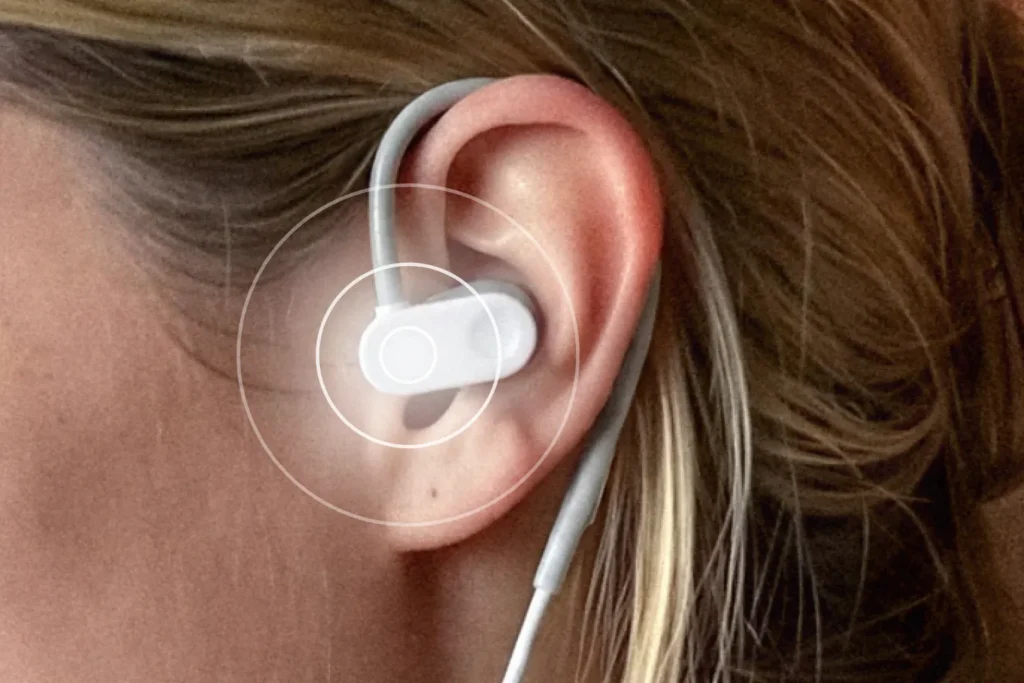
It is not a medicine and not a cure.
Anyone who promises that a device alone will fix your stress, your sleep, or your health while you ignore everything else is overselling it. And vagus nerve stimulation for these everyday uses remains an area of ongoing research, with results that vary from one person to the next.
But if the science of the vagus nerve has left you curious about supporting it directly, a non-invasive device is one accessible place to begin.
If you would like to see how it works in more detail, you can get more information about Nuropod
The bottom line
The vagus nerve spent centuries as an afterthought. It is not one anymore.
A leading scientist has made the case that it carries the body’s own healing reflex. The clinical evidence for stimulating it in serious disease is real and growing. And the gentler, at-home version, delivered at the ear, is now one of the most closely watched questions in the field.
If you are dealing with persistent fatigue, poor sleep, gut problems, or anxiety, the first step is still to rule out medical causes with a qualified professional.
But the humble vagus nerve, and the simple idea of helping it do its job, may be one of the more hopeful stories in health science right now.

References and further reading
- Kevin J. Tracey. The Great Nerve: The New Science of the Vagus Nerve. Penguin Random House, 2025.
- Tracey KJ. “The inflammatory reflex.” Nature. 2002;420(6917):853-859.
- Clancy JA, Mary DA, Witte KK, et al. “Non-invasive vagus nerve stimulation in healthy humans reduces sympathetic nerve activity.” Brain Stimulation. 2014;7(6):871-877. https://www.sciencedirect.com/science/article/abs/pii/S1935861X14002605
- Systematic review and meta-analysis of transcutaneous auricular vagus nerve stimulation for insomnia, 2025. https://www.sciencedirect.com/science/article/abs/pii/S1094715925001448
- Randomized controlled trial of transcutaneous auricular vagus nerve stimulation for constipation-predominant irritable bowel syndrome, 2024. htps://pmc.ncbi.nlm.nih.gov/articles/PMC12398348/
This article is for general education and is not medical advice. Persistent or unexplained symptoms, including fatigue, poor sleep, digestive problems, or anxiety, can point to underlying medical conditions and should be assessed by a qualified healthcare professional. Nuropod® is a CE non-invasive neuromodulation device and is not intended to diagnose, treat, cure, or prevent any disease. Vagus nerve stimulation for everyday stress, sleep, and related uses is an area of ongoing research, and individual results vary. A device is not a substitute for professional care.