
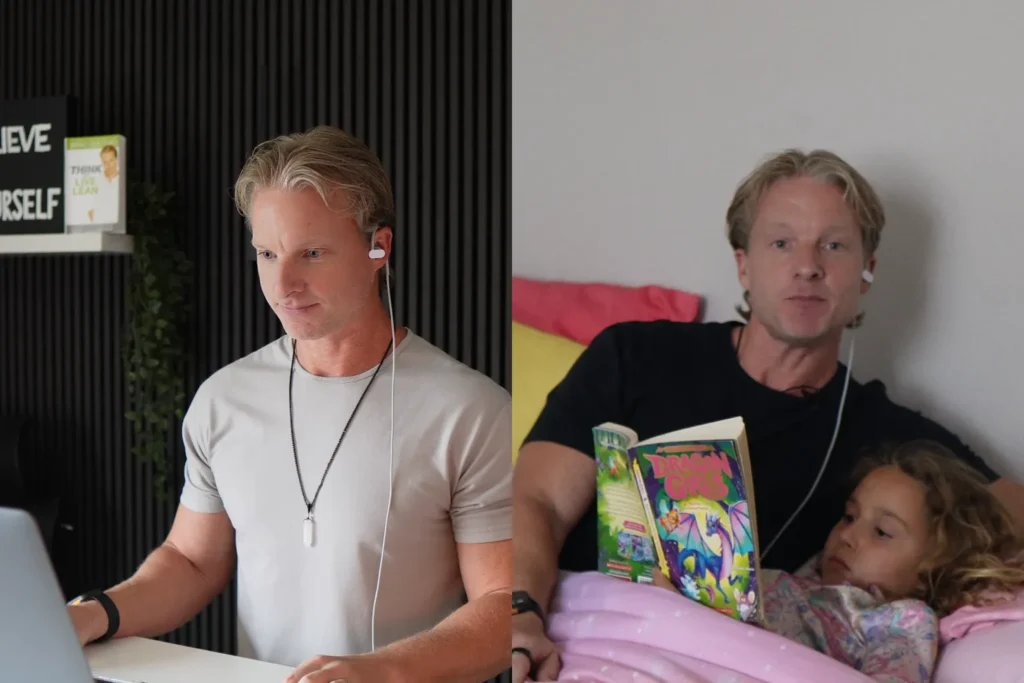
I’ll be honest with you.
For years, I looked completely fine on the outside. Working. Training. Showing up for my family. Hitting my fitness goals.
But internally? My brain wouldn’t stop.
Anxious thoughts that wouldn’t quit. That low hum of something – not panic, not crisis – just a constant background noise that never fully switched off. Racing through tomorrow’s list at 11pm. Waking at 3am for no real reason. Permanently half-on, even during moments that were supposed to feel like rest.
I’m a health and fitness guy. I’ve spent over a decade studying what the body needs. I was doing everything right.
And it still wasn’t enough.
A lot of men are struggling internally more than they let people see. We grow up learning to stay composed, stay productive, stay in control. So instead of processing stress, we carry it.
I thought I was coping. My nervous system clearly wasn’t.
That’s what led me to try Nuropod for 30 days while tracking everything. Here’s what actually happened.
What I Tried Before – And Why Nothing Quite Worked
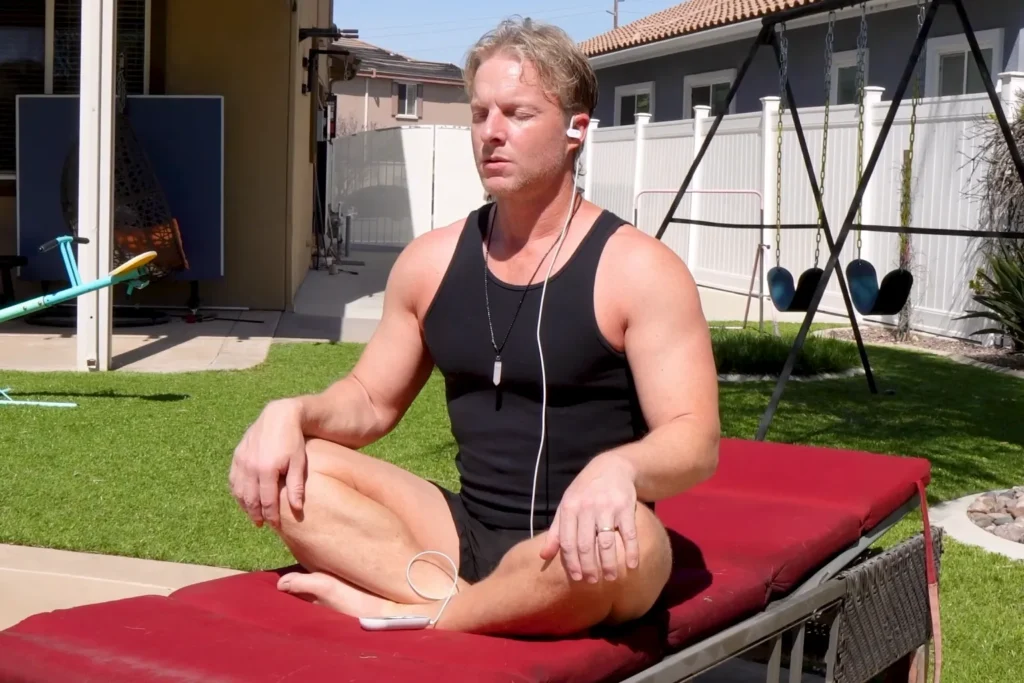
I didn’t come to this cold.
Meditation apps – genuinely useful when I could actually use them. The problem: they require a quiet mind to slow down a busy mind. At 10pm when my head is still processing the day, sitting still is exactly when everything arrives at once. Hard to sustain when you’re already running low.
Supplements – magnesium, ashwagandha, omega-3. Real science behind all of them. But weeks before any meaningful effect, and they address brain chemistry without reaching the autonomic system directly.
Breathwork – effective when consistent. Requires dedicated time, a quiet space, and enough mental calm to slow down. On a back-to-back day with two kids and a full work schedule, that window rarely exists.
More training – counterproductive if the nervous system is already under load. Adding physical stress to an already stressed system doesn’t always help.
Each of these works. The problem is they all require something from a system that’s already running low – time, motivation, the right environment. The harder the week, the harder it is to maintain them.
The autonomic nervous system has two branches – the sympathetic (stress mode) and the parasympathetic (recovery mode). Everything I’d tried was addressing what the first one produces. None of it was directly signaling the second one to activate.
What I was looking for was something that worked at the level of the system itself – without placing another demand on it.
Then I found something I almost scrolled past.
Why I Was Skeptical – And What Changed That
I track HRV (Heart Rate Variability – a measure of how well your autonomic nervous system is recovering) obsessively. It’s one of the clearest data points I have on how well my body is actually bouncing back.
At age 45, my HRV hit an all-time low of 44. Training hard, sleeping well, eating right. Nothing moved it.
When I first heard about vagus nerve stimulation devices, my reaction was predictable: an ear clip that calms your nervous system? Sure.
I’m not someone who chases wellness trends. I read studies. I look at mechanisms.
I’ve spent over a decade working with men on training, nutrition, and recovery. The pattern I keep seeing has almost nothing to do with their programming – and everything to do with what their nervous system is doing underneath it.
What I found with Nuropod was different from what I expected – 60+ completed scientific studies, 150+ internationally recognized research institutions, used by 1,000+ healthcare professionals. That got my attention.
I decided to track everything and give it real time.
Days 1–4: First Impressions
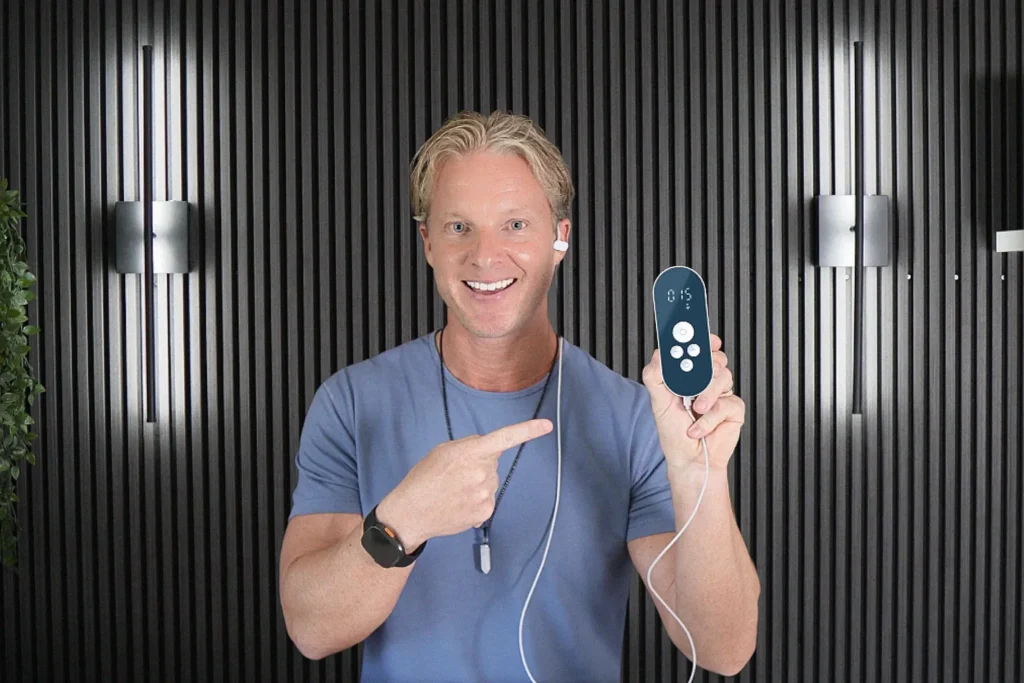
The device arrived in clean packaging. Smaller than I expected – clips to the outer ear like a slightly larger earbud, with a small wire to a control unit.
No app. No gel. No complicated setup. I clipped it on during my morning coffee.
The sensation: gentle electrical tingling. Not uncomfortable. Subtle enough I forgot about it within a few minutes.
Days 1 and 2, nothing dramatic. I kept my expectations low. The first few sessions, honestly, I felt basically nothing – and that’s exactly where most people stop. They expect day-one calm. That’s not how this works.
I made a deal with myself: give it real time, track the data, let the numbers tell the truth.
Day 3, something small happened during my afternoon work block. Grinding through emails – the kind of mental load that usually leaves me wired at the end of day – I noticed my shoulders weren’t up near my ears. My jaw wasn’t clenched. The background noise was quieter.
Not gone. Just turned down.
I almost didn’t register it – which is exactly what made it interesting.
Days 8–12: The Data Started Moving – And One Day It Didn’t
By day 8, I was using Nuropod consistently – 30 minutes in the morning during my first work block, 30 minutes before bed.
My HRV began trending upward. Not dramatically – but consistently.
Around day 10, I actually wondered if I’d convinced myself it was working. The first few improvements were subtle enough that I started questioning whether I was just paying more attention. That’s exactly why I kept tracking HRV instead of relying on how I felt. Feelings can fool you. The trend is harder to argue with.
Then a bad day hit.
Kids were sick. Work exploded. I slept terribly. I remember thinking: maybe this isn’t doing anything. I felt exactly like I had before I started.
I checked my HRV anyway. It was still trending better than my baseline from the previous month. I kept going.
Mid-week, a work crisis hit. Deadline moved, team under pressure. The kind of stress that would normally leave me mentally flat by 3pm.
I stepped away for 20 minutes with the device. Came back still stressed – but able to think. Able to prioritize. I didn’t spiral.
That was new.
Days 16–30: Sleep, the Gym, and the Dad Test
Around day 16, my gut improved. Low-level bloating I’d mostly accepted as normal – noticeably better. The vagus nerve governs the gut-brain axis directly. Knowing that and experiencing it are different things.
Sleep was the clearest shift. I’ve always been a light sleeper – waking at 3am, immediately running through tomorrow’s list. Nothing needs to be done at 3am. My nervous system apparently hadn’t got that message.
Around week three, I started staying asleep. Sleep efficiency scores improved. Recovery scores finally reflected what I was actually doing in terms of rest.
The gym confirmed it too.
Usually after a heavy leg session, the next morning is a write-off – physically and mentally. Week three, I filmed a full workout, hit a solid deadlift session in the afternoon, and woke up the next day actually feeling recovered. Not just physically – mentally. Like I had bandwidth again.
That’s not something I expected from a device I clip to my ear.
But the thing I’m most glad about – was what happened with the kids.
Two young kids. The moments that test you aren’t the big things – it’s the small things, repeated. The bickering. The meltdowns. The fourth time asking for something you already said no to.
Before: tension rising fast. Shorter fuse than I wanted. Snapping in ways I immediately regretted.
Something else I noticed – my patience started to stretch. Those meltdown moments I found myself handling with more calm. Less irritated. More present. More capable of just being there without feeling like I was about to lose it.
My wife noticed before I did. She said: “You seem more present lately.”
I didn’t have a better way to describe it. But she was right.
The Full Picture: What 6 Months of Data Showed
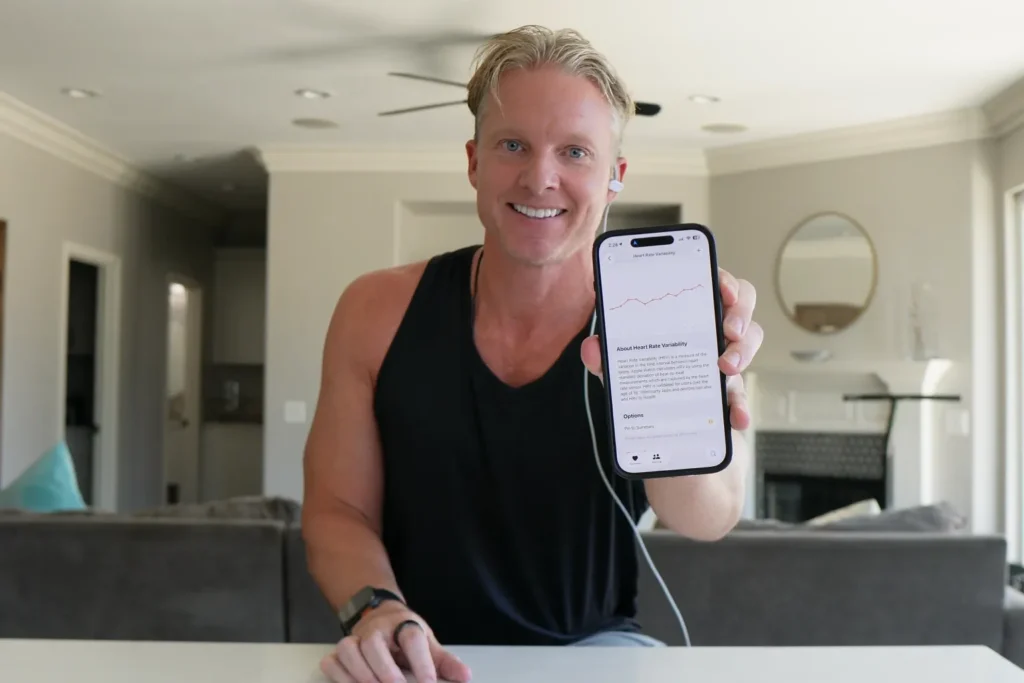
I want to be transparent about the full picture.
Month 2: HRV jumped from 51 to 68. Month 3: crashed back to 55 – basically square one. That’s the moment most people stop. I kept tracking instead.
Month 6: HRV reached 101 – the highest reading I’d logged in years of tracking. Resting heart rate: 48 BPM – a 10-year low. I can’t attribute all of that to Nuropod. But it was part of what changed.
Day 30: What Changed – And What Didn’t
This didn’t remove my anxious thoughts. I still have them. I still have hard days. I’m a high-output person with a full life and real pressure.
But here’s what’s different:
- My nervous system responds to stress differently. Before, anxious thoughts felt like a train that had already left the station. Now I can slow it down.
- My HRV is consistently higher - with meaningful long-term improvement
- I sleep through the night
- My digestion is calmer
- I recover faster from hard training sessions
- More present as a dad and partner - not by trying harder, but because there's more bandwidth
- The short fuse - the irritability I'd written off as just being tired - mostly gone
The shift wasn’t dramatic. It wasn’t overnight. But it was real, measurable, and consistent.
Why It Works: The Short Version
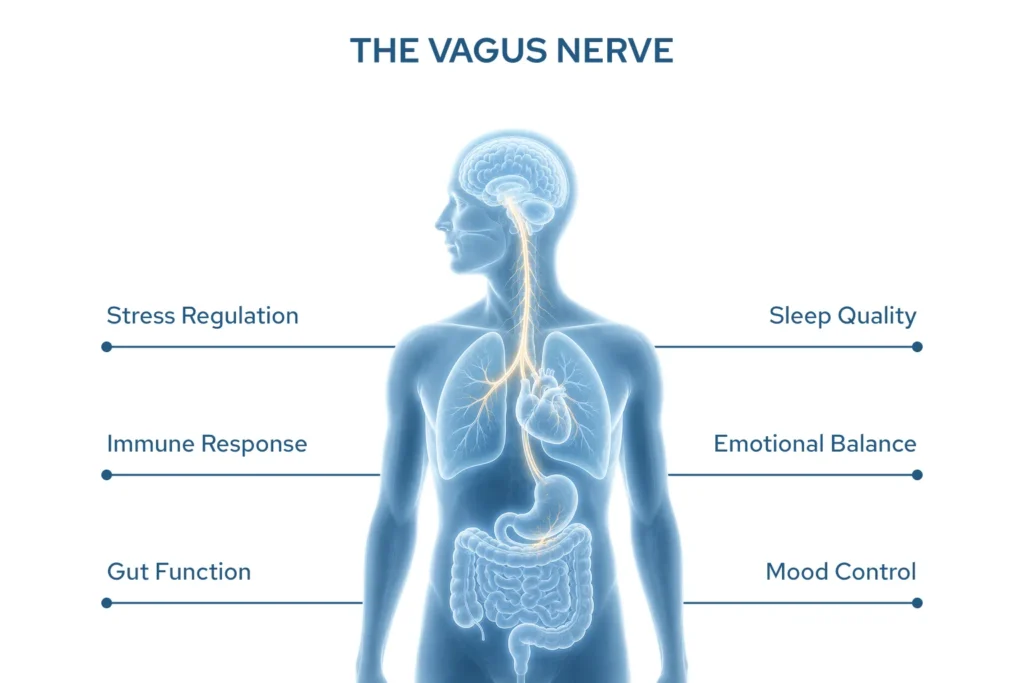
The vagus nerve (cranial nerve X) is the body’s primary parasympathetic pathway – the system that tells your body it’s safe to recover. When vagal tone is healthy, you shift naturally between stress and rest. When it drops – after sustained stress, too much carrying and not enough processing – that shift gets harder. The sympathetic branch stays dominant. Anxious thoughts that should resolve keep cycling.
taVNS (Transcutaneous Auricular Vagus Nerve Stimulation) reaches the vagus nerve through its auricular branch – the only place it surfaces at the body’s exterior, at the outer ear. Gentle electrical pulses stimulate it directly, supporting the parasympathetic shift.
Nuropod uses AVNT™ (Auricular Vagal Neuromodulation Therapy) – CE-certified, 10+ years of R&D, 60+ completed studies, 150+ internationally recognized research institutions.
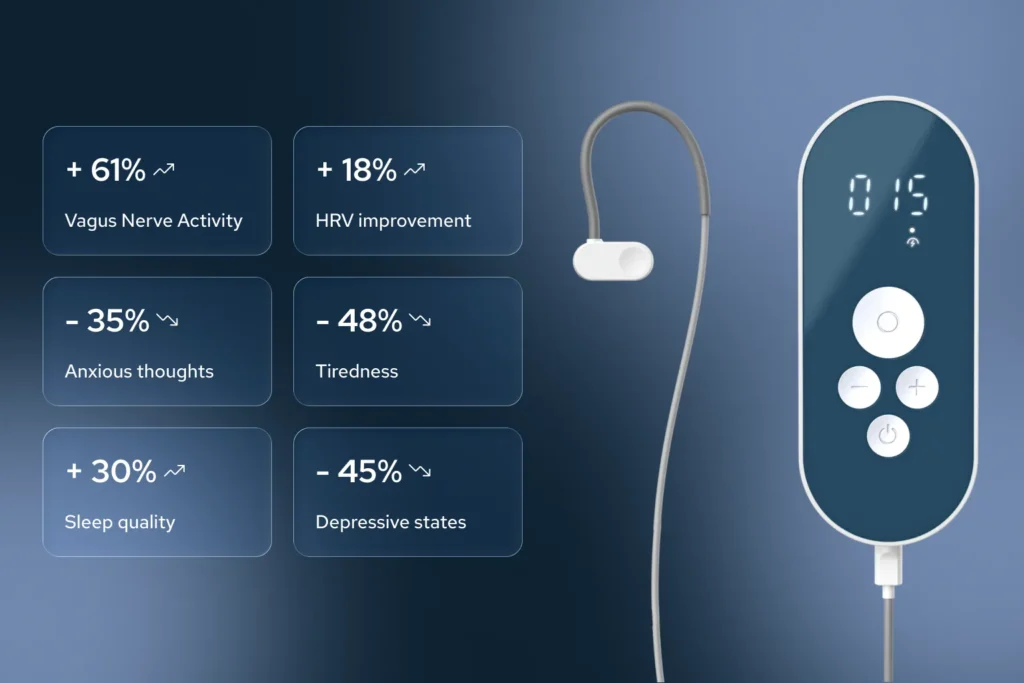
Results from peer-reviewed studies in specific study populations. Figures reflect relative change compared to placebo or baseline. Individual results may vary.
If You’re Wondering What Using It Actually Looks Like Day to Day
Cost: ~$900. Up to $100 research subsidy available – takes 2 minutes to apply.
Guarantee: 30-day money-back – no questions asked.
Setup: Clips to ear. No app. No gel. No prescription. Wired – not wireless.
Sessions: 15 minutes minimum. I do 30 minutes morning, 30 minutes before bed.
Battery: Over a month per charge.
You can use it while:
- Doing the dishes
- Eating lunch
- Folding laundry
- Meal prepping for the next day
- Reading before bed
- Sitting in the first quiet moment of the day
No dedicated setup. No separate window carved out of an already full schedule. That’s the whole point.
Pros and Cons
✅ Pros:
- World's most studied wearable VNS system
- First CE-certified auricular vagal neuromodulation device
- 60+ completed peer-reviewed studies
- Trusted by 1,000+ licensed healthcare professionals
- No app, no gel, no prescription
- Works during everyday activities - 15 minutes minimum
- 30-day money-back guarantee
- Adjustable intensity
❌ Cons:
- ~$900 upfront cost
- Results build gradually - not a day-one fix
- Wired - not wireless
- Only available online
Who Should Try This
Worth it if:
- Your anxious thoughts show up physically - tight chest, jaw tension, mind that won't stop
- You track HRV and it sits consistently lower than your recovery efforts should allow
- Sleep is a problem not from external factors, but because your nervous system won't stand down
- You've tried meditation apps and supplements and found them hard to sustain when you're already running low
- You want to be more present as a dad or partner - not by trying harder, but by having a calmer baseline
- You feel irritated by life and unable to appreciate the things you know you should
Skip it if you want instant results or a replacement for sleep, training, and nutrition. This works alongside those things – at the level underneath them.
Do not use if you have an implanted cardiac device, are pregnant, have had a serious cardiac event in the last five years, or are under 18. Always consult a healthcare professional first.
My Verdict
I came into this skeptical. I’m still skeptical of most things in the wellness space.
But here’s the thing: a lot of men carry more than they show. We’re not taught to process stress – we’re taught to push through it. Learning to regulate instead of just suppressing – that’s not weakness. That’s the smarter play.
At the start of this, my brain wouldn’t stop.
For the first time in years – it finally knew when to.
That’s why I’ll keep using it.
This blog post aims to be informational and should not replace professional health advice. Always consult with a health professional for personalised advice.
References
- Zheng S, et al. taVNS for chronic sleep problems. JAMA Netw Open. 2024. https://jamanetwork.com/journals/jamanetworkopen/fullarticle/2828072
- Yeom JW, et al. taVNS improves sleep quality in chronic sleep problems. Sleep Medicine. 2025. https://pubmed.ncbi.nlm.nih.gov/40398066/
- Soltani D, et al. Effects of taVNS on HRV: systematic review. Clinical Autonomic Research. 2023. https://pubmed.ncbi.nlm.nih.gov/37119426/
- Breit S, et al. Vagus nerve and brain-gut axis. Frontiers in Psychiatry. 2018. https://doi.org/10.3389/fpsyt.2018.00044
- Redgrave J, et al. Safety of taVNS in humans. Brain Stimulation. 2018. https://doi.org/10.1016/j.brs.2018.08.010
The services, content, and products mentioned are intended for informational purposes only. Health Science Institute does not offer medical advice, diagnoses, or treatment recommendations. Always consult a healthcare professional before starting any new health intervention. Individual results may vary.