

A scientifically grounded review of which VNS devices are most relevant for gut-brain regulation, and what the evidence actually supports.
If you’re reading this, you’ve probably already done the work.
The elimination diet, the food diary, the probiotics that helped for a week and then didn’t, the specialist who ran every test, found nothing alarming, and sent you home with a shrug dressed up as reassurance.
And yet here you are: still symptomatic, still unpredictable, still wondering what you’re missing.
Here’s what most people with persistent gut symptoms have never been told:
Digestion doesn’t run itself.
There’s a nerve (the vagus nerve) that acts like a control cable between your brain and your gut. It coordinates how your gut moves food through, how loudly your brain registers ordinary digestive sensations, how your gut’s immune system behaves, and whether your entire digestive tract operates in a calm, regulated state or a reactive, hair-trigger one.
When that nerve is functioning well, your gut is predictable.
When it’s not (after sustained stress, a bad infection, or a prolonged period of illness), your gut can become dysregulated in ways that no elimination diet will ever fully fix.
Which is why some people do everything right and still feel terrible.
This is where vagus nerve stimulation comes in.
VNS devices work by delivering a precise electrical signal to the vagus nerve: essentially nudging your parasympathetic nervous system back toward the kind of tone that keeps gut function settled. The research is still developing, but it’s substantive enough to take seriously, particularly if your symptoms flare with stress, start after an infection, or come packaged with signs that your nervous system (not just your gut) is involved.
But not all VNS devices are built the same.
And if you’re dealing with real, persistent gut symptoms rather than everyday tension, the differences between them matter enormously.
What follows is a review of the five most visible devices on the market – evaluated specifically for gut-brain regulation, not general wellness.
1. Nuropod
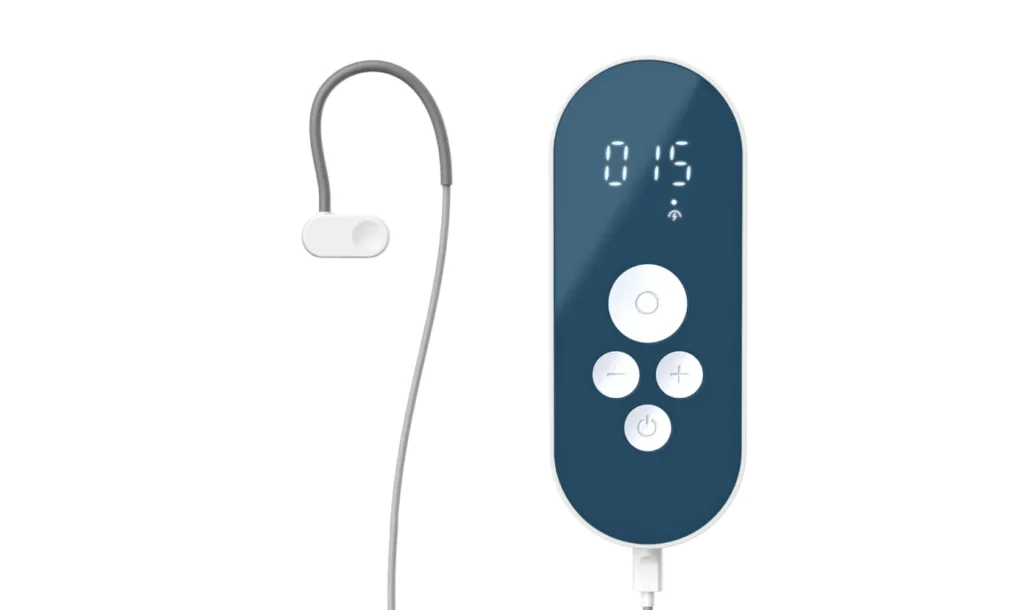
Nuropod is a CE-marked wearable device that delivers a precisely calibrated electrical signal to the auricular branch of the vagus nerve through a small clip worn on the ear.
It is developed by Parasym and uses proprietary AVNT™ technology (Auricular Vagal Neuromodulation Therapy), which has been studied across more than 50 completed scientific studies conducted in collaboration with institutions including Harvard, Yale, UCLA, and Stanford. It is currently the most researched auricular VNS device available without a prescription.
What distinguishes Nuropod from most other devices in this category is both where it stimulates and the depth of evidence that underpins it.
The auricular branch of the vagus nerve in the outer ear is the only location where a branch of a cranial nerve reaches the body’s surface, making it the most anatomically direct access point for non-invasive vagal neuromodulation.
In scientific studies, auricular stimulation using this technology has been associated with measurable improvements in heart rate variability, a validated marker of vagal tone, as well as reductions in visceral hypersensitivity, improvements in bowel regularity, and decreases in tiredness and anxious thoughts that commonly accompany persistent digestive disorders.
These are outcomes that reflect meaningful changes in gut-brain regulation, not simply a general relaxation response.
For people with bowel discomfort who have already addressed the dietary and microbiome side of the picture without achieving full resolution, this distinction matters.
Nuropod is designed to work at the level of the regulatory pathway, specifically the vagal signalling that governs how the gut responds to everything it receives, rather than at the symptom level alone.
It is used for around 30 minutes a day, can be worn during normal daily activities, and requires no prescription or specialist visit.
Nuropod is priced at $900 in the US, and includes a 30-day money-back guarantee. Of the devices currently available in this category, it is the one with the most directly relevant evidence base for gut-brain dysregulation and bowel discomfort, and the one I find most scientifically compelling when vagal regulation appears to be a meaningful part of a user’s picture.
2. Truvaga Plus
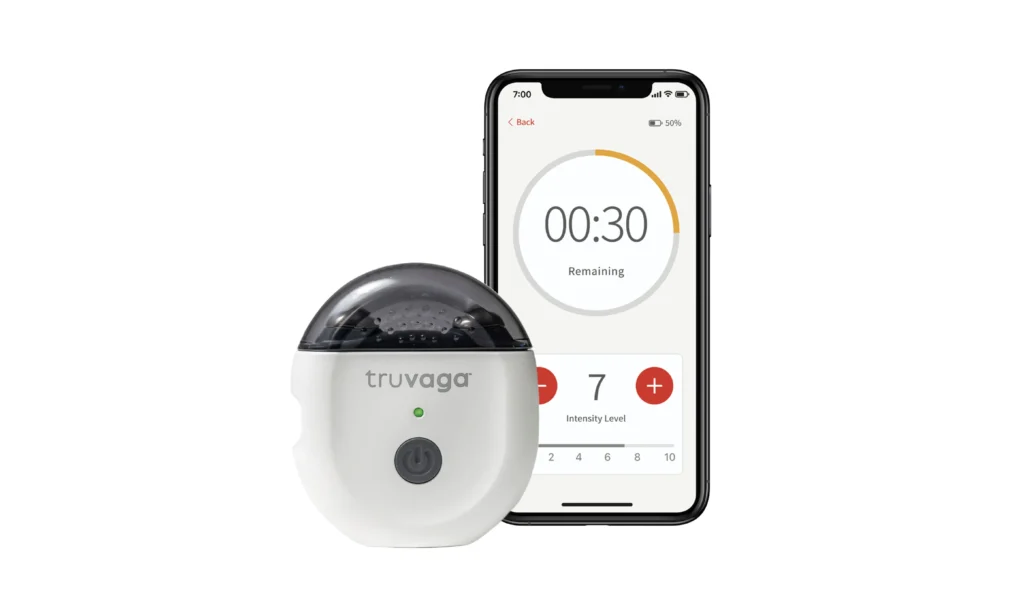
Truvaga Plus is a handheld cervical VNS device, meaning it targets the vagus nerve by placing electrodes against the side of the neck, near the carotid artery.
It shares its core technology with gammaCore, a device that has received FDA clearance for cluster headache and headache.
This gives it a recognisable regulatory lineage, though it is worth being clear that this clearance does not extend to bowel discomfort or functional digestive disorders.
The device is app-connected, rechargeable, and delivers two-minute stimulation sessions at an adjustable intensity. The cervical approach does engage the vagus nerve, but it does so at a location where multiple nerve structures – sympathetic, parasympathetic, and others – run in close proximity.
This makes precise, selective vagal engagement more difficult to achieve than with auricular stimulation, and the commonly reported side effects of cervical devices, including neck muscle contraction, facial droop, and lip pull, reflect this anatomical complexity.
These may be minor considerations for someone using a device primarily for stress management, but they are worth factoring in when the goal is to support a specific regulatory pathway consistently over time.
Published evidence examining Truvaga’s effects specifically on gut-brain regulation or bowel discomfort outcomes is limited. Those considering it for this purpose should approach the evidence gap with realistic expectations. The technology has a legitimate lineage and the device is well-designed for general autonomic support, but its gut-specific evidence base is not comparable to that behind purpose-built auricular approaches.
Truvaga Plus is priced at $499 and requires ongoing purchase of conductive spray. It is a credible option for broader stress and autonomic support, though for bowel discomfort specifically, the cervical access point and the absence of symptom-relevant evidence are meaningful factors to weigh.
3. Pulsetto
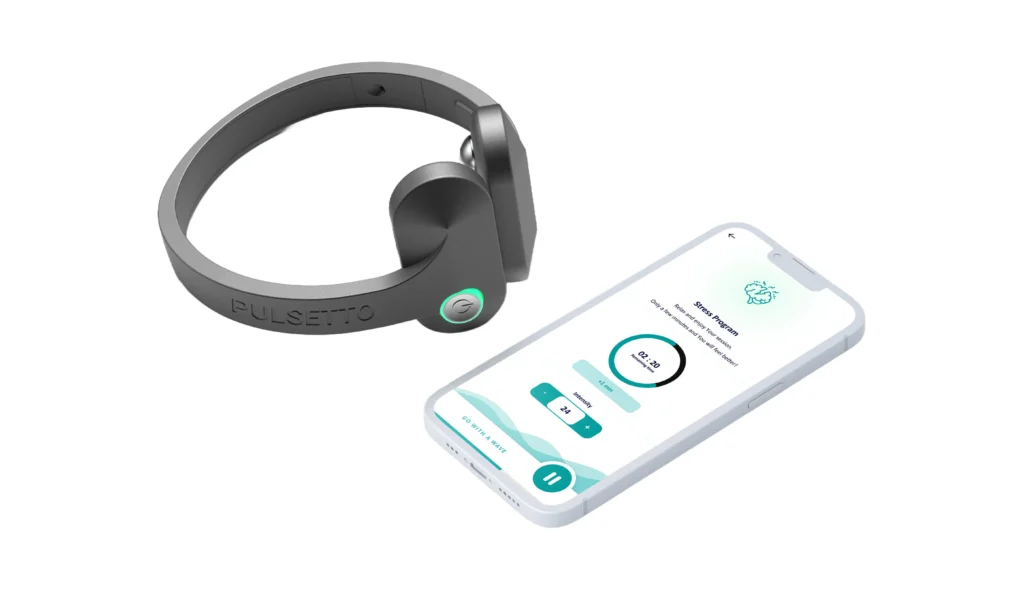
Pulsetto is a cervical VNS device worn as a hands-free collar around the back of the neck. It connects via Bluetooth to a companion app and delivers stimulation across five programmes, each lasting around four minutes.
Its hands-free design is one of its more practical advantages, and at a lower price point than several other devices in this category, it is an accessible entry point for those curious about vagus nerve stimulation.
Like other cervical approaches, Pulsetto stimulates at a point where anatomical selectivity is inherently limited, and the published evidence specifically examining its effects on gut-brain regulation or functional digestive outcomes is not yet available in peer-reviewed form.
The materials currently accessible relate primarily to general stress and relaxation outcomes, and are largely company-commissioned rather than independently reviewed.
For someone managing a chronic health symptom like bowel discomfort, where the goal is to meaningfully influence a specific regulatory pathway over an extended period, this evidence gap is a significant consideration, and one that a lower price point alone does not fully address.
For general stress management and relaxation support as part of a broader self-care routine, Pulsetto offers a practical and comfortable design. For bowel discomfort specifically, it is difficult to make a strong case for it ahead of devices with more directly relevant evidence.
Pulsetto is priced at $269 for the device, with an additional cost of approximately $81 to $102 per year for conductive gel. It is HSA/FSA eligible in the United States.
4. Sensate
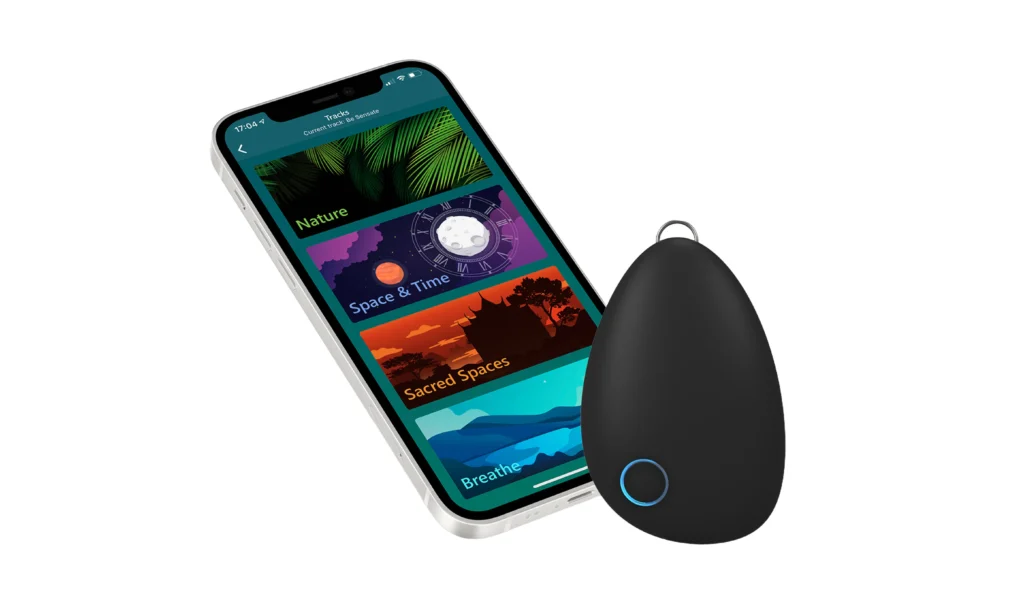
Sensate occupies a different category from the other devices in this review, and understanding that distinction is important before evaluating its relevance for gut symptoms.
Rather than delivering electrical stimulation to the vagus nerve, Sensate uses infrasonic vibration, specifically low-frequency sound waves below the threshold of audible hearing, via a small pebble-shaped device placed on the chest.
The mechanism is one of general resonance and relaxation rather than direct vagal pathway engagement.
Many people find the experience of using Sensate genuinely settling, and from a general stress management perspective it may have a modest and legitimate role to play. However, for someone with bowel discomfort specifically looking to address gut-brain regulatory dysfunction, including impaired motility coordination, visceral hypersensitivity, and altered gut barrier function, Sensate does not operate through the mechanisms that the bowel discomfort-relevant research points to.
No published scientific studies have demonstrated its efficacy for gut-brain dysregulation or functional digestive outcomes, and sternal vibration at this frequency does not engage the auricular branch of the vagus nerve in a meaningful way.
This does not diminish its value as a relaxation tool, but it does mean it belongs in a different category from devices designed for targeted vagal neuromodulation.
If the primary goal is general stress reduction as part of a broader wellbeing routine, Sensate is a comfortable and accessible option. If the goal is specifically to support vagal tone and gut-brain regulation in the context of persistent bowel discomfort symptoms, it is not built for that purpose.
Sensate is priced at $299 for the device, or $349 with a one-year subscription to the Sensate Plus companion app.
5. Neuvana Xen
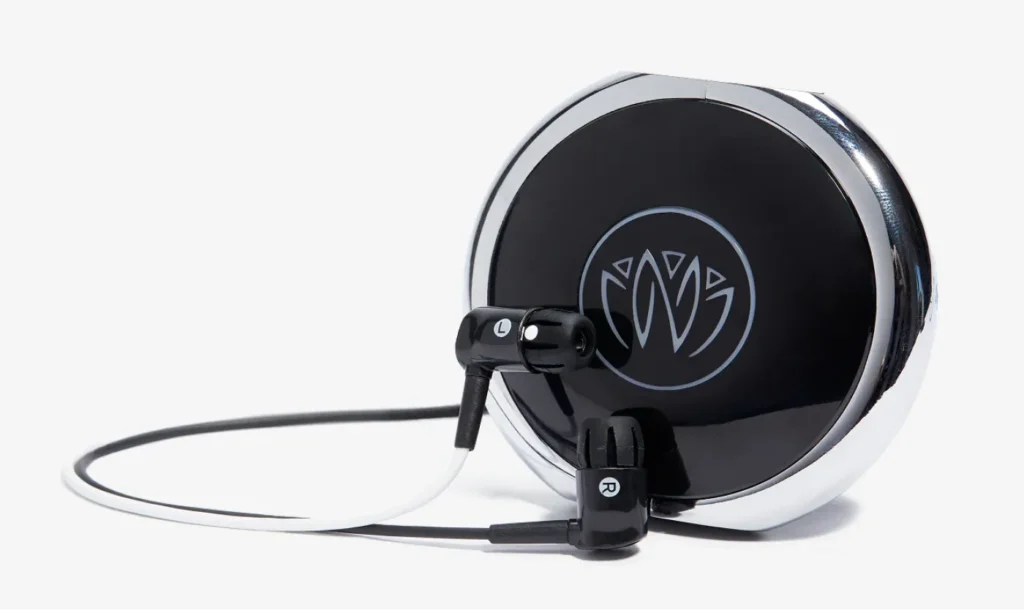
Neuvana Xen takes a distinctive approach: it delivers auricular vagus nerve stimulation through a pair of headphones, targeting the left ear via micro-pulse electrical stimulation.
The device connects to a companion app that allows users to sync the stimulation with music or ambient sound, and the intensity is adjustable, making it one of the more enjoyable-to-use devices in this category from a daily experience standpoint.
As an auricular device, Xen targets the same general access point, the outer ear, that the most studied VNS approaches use.
This is a meaningful distinction from cervical devices and worth acknowledging.
However, the published evidence base behind Xen’s specific technology is considerably more limited than that behind purpose-built, certified auricular devices, and its positioning sits more firmly in consumer wellness than scientific application.
The calibration of stimulation parameters, including waveform, intensity, duration, and precise anatomical placement, matters significantly in whether auricular stimulation meaningfully engages the relevant vagal pathway, and these variables are not as thoroughly documented or independently validated for Xen as they are for devices with a deeper scientific research lineage.
For someone drawn to auricular stimulation and looking for a more accessible, lifestyle-oriented starting point, Xen is a thoughtfully designed product with a pleasant user experience.
For someone with bowel discomfort specifically seeking to support gut-brain regulation through vagal neuromodulation, the evidence gap relative to more scientifically validated auricular devices is a relevant consideration when making a decision.
Neuvana Xen is available in several bundles ranging from $449 to $499, depending on the accessories included.
Choosing the Right Device for Gut Symptoms
Not every VNS device is relevant for gut symptoms.
Many of the devices in this space are designed for the general wellness market, people looking to take the edge off stress, sleep a little better, feel a little calmer.
That’s a legitimate use case, but it’s a different one.
The gut-brain dysregulation underlying persistent bowel symptoms is a specific physiological picture. The vagus nerve’s role in gut motility, visceral sensitivity, and localised immune regulation means that addressing it meaningfully requires more than a device that promotes general parasympathetic activity:
- The access point matters
- The stimulation parameters matter
- The evidence base matters, and not just evidence for vagal stimulation broadly, but evidence for the outcomes that are actually relevant here.
These distinctions are easy to miss when devices are compared on price and appearance alone.
What separates the more scientifically credible options from the rest comes down to three things: how directly the device accesses the relevant vagal pathway, how precisely the stimulation is calibrated, and how substantive the published evidence is for digestive and gut-brain outcomes specifically.
A device with strong evidence for anxious thoughts reduction is not automatically a device with strong evidence for bowel symptom management.
The overlap exists, but it isn’t guaranteed.
It’s also worth saying that VNS, however well-chosen, works best within a broader gut-brain support strategy rather than as a standalone intervention. If this is something you’re seriously considering, a provider familiar with the gut-brain axis is better placed than most to assess whether it’s a relevant addition to your current approach, and what to reasonably expect from it.
With that context established, here’s how the five most visible devices currently available compare when evaluated specifically through the lens of gut-brain regulation.
The information in this article is provided for educational purposes and does not constitute specific medical advice or substitute for professional diagnosis or treatment. Always consult your healthcare provider before beginning any new intervention, particularly if you have a complex medical history or are taking medication. Individual results may vary.




Nuropod for me is the best use and no doubt it can do the same for others in this case.
I do most certainly agree with this one, for I myself is also using the device.