
Scientists call it the body’s hidden ‘calm switch.’ And if yours isn’t working properly, it could be the reason behind your bloating, gut flare-ups, and irritable gut symptoms.

If you’ve ever secretly unbuttoned your pants under the dinner table…
Or sat through a meeting trying to hide the fact that your stomach feels like it’s about to burst…
Or mapped out the nearest bathrooms before leaving the house…
Then you know gut issues aren’t just uncomfortable — they can be humiliating.
The Strange Mystery of “Stress Bloat”

You didn’t overeat. You didn’t touch that plate of beans or bread you usually blame.
And yet… your stomach feels like a balloon. Tight. Uncomfortable. Sometimes visibly swollen — as if you’re months pregnant.
If you live with irritable gut issues, you know this feeling all too well.
Bloating can strike out of nowhere.
Painful cramps can make you hunch over at your desk.
And the timing often feels cruel: right before an important meeting, a social gathering, or even on an empty stomach.
Health professionals may have told you “it’s stress.” And you may have rolled your eyes — because how can stress make your belly swell when you haven’t eaten?
But here’s the surprising truth: Stress can trigger bloating sensations even without recent food intake by disrupting gut motility, increasing visceral sensitivity, and altering gut–brain signaling.
And the reason comes down to a single, overlooked nerve.
The Gut–Brain Superhighway Most People Ignore
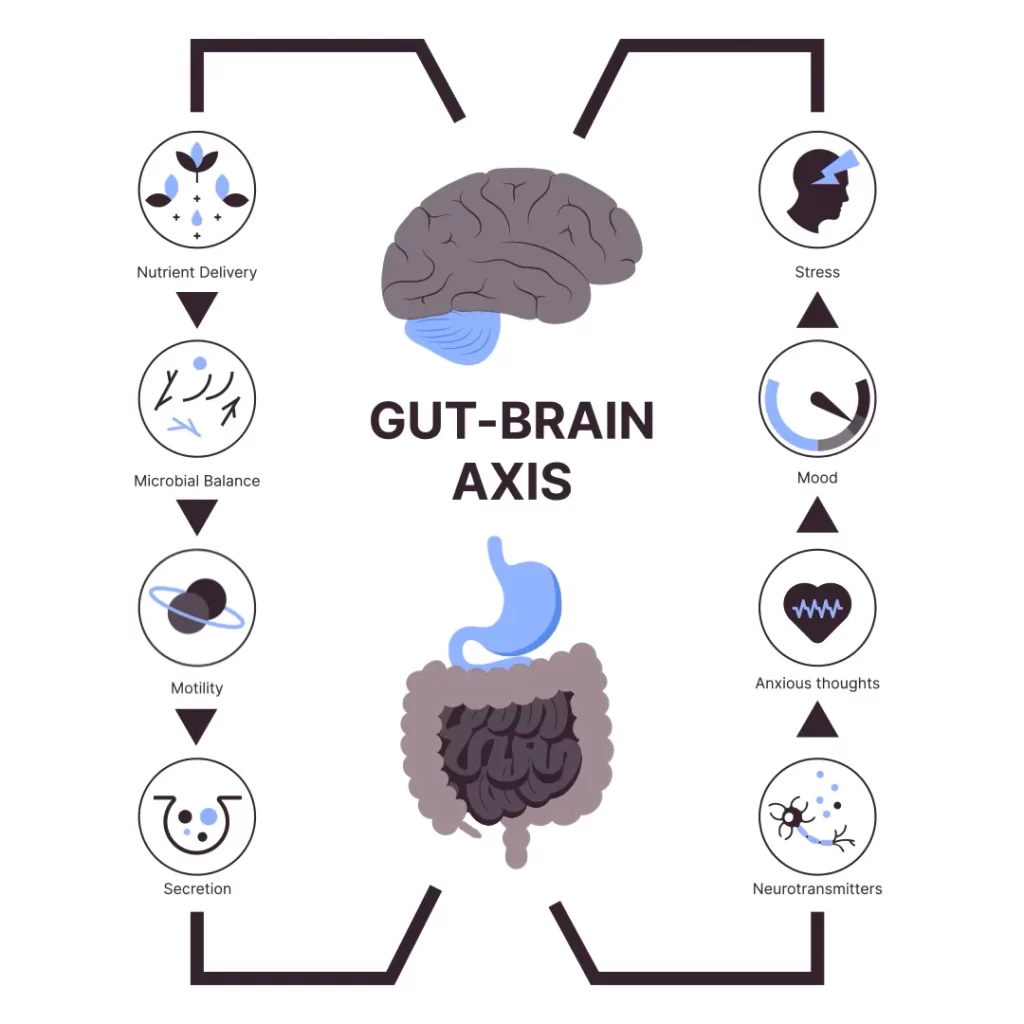
Your gut isn’t just a food tube. It’s connected directly to your brain through something scientists call the gut-brain axis.
Think of it as a 24/7 phone line between your digestive system and your nervous system.
At the center of this connection sits the vagus nerve — the body’s “rest-and-digest” switch.
When your vagus nerve is active, digestion hums along smoothly. Stomach acid is released on cue, your intestines contract rhythmically to move food, and your gut bacteria stay in balance.
But when the vagus nerve has reduced vagal tone (impaired parasympathetic nervous system activity)?
- Altered gastric emptying and gut motility can contribute to reflux, abdominal pressure, and bloating sensations.
- Your intestines can spasm or stall → causing alternating constipation and diarrhea.
- Stress may influence the gut microbiome indirectly, which can contribute to gas production and gastrointestinal discomfort in susceptible individuals.
- Inflammation can rise → amplifying pain and cramping.
And here’s the kicker: Chronic psychological stress is one of the most significant factors associated with reduced vagal tone.
That’s why so many notice flare-ups when life gets intense. It’s not just “in your head.” Stress literally turns off the nerve that controls digestion.
And the hardest part?
Most people don’t talk about it.
Because how do you explain to friends that you’re canceling plans because of bloating… or that you can’t enjoy a simple meal without fear?
Doesn’t just hurt your stomach — it chips away at your confidence, leaving you feeling alone with a problem no one seems to understand.
The Science Behind Stress-Related Bloating
Research on the gut–brain axis shows that stress activates the sympathetic nervous system while reducing parasympathetic (vagal) activity. This shift can alter gut motility, increase visceral hypersensitivity, and amplify the perception of abdominal distension — even in the absence of food intake.
This mechanism is particularly relevant in functional gastrointestinal disorders, where symptoms are driven more by nervous system regulation than structural disease.
Why Other Solutions for Irritable Gut Disappoint
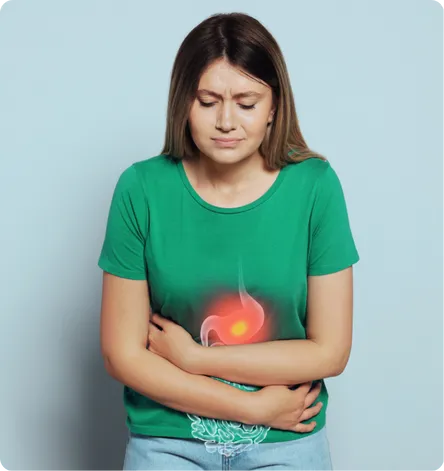
If you’ve blamed yourself — wondering if you ate the wrong thing, if your gut is just too sensitive, or if you’ll ever get better…
You should know this: it’s not your fault.
Stress literally shuts down the vagus nerve, the switch that tells your gut how to function. When that nerve is suppressed, no amount of dieting, probiotics, or pills can give lasting relief.
If you’ve struggled with, you’ve probably tried everything:
- Restrictive diets (low-FODMAP, dairy-free, gluten-free)… which help sometimes, but leave you constantly worried about food.
- Supplements and probiotics… maybe they ease things for a while, but symptoms creep back the moment stress hits.
- Over-the-counter pills… antacids, laxatives, anti-diarrheals — they manage flare-ups, but never prevent them.
- Prescription meds… often only work for subsets of sick people and come with brain fog or adverse events.
- Yoga, meditation, hypnotherapy… calming, but hard to stay consistent with when your gut’s in knots.
The problem is, most of these approaches focus only on the gut.
They rarely address the control system — the nervous system itself.
Which means symptoms keep coming back.
A Breakthrough That Targets the Root
What if, instead of fighting flare-ups meal by meal, you could reset the nerve that tells your gut how to function in the first place?
That’s exactly what a new class of therapies is designed to do.
And leading the way is a device called Nuropod.
Meet Nuropod
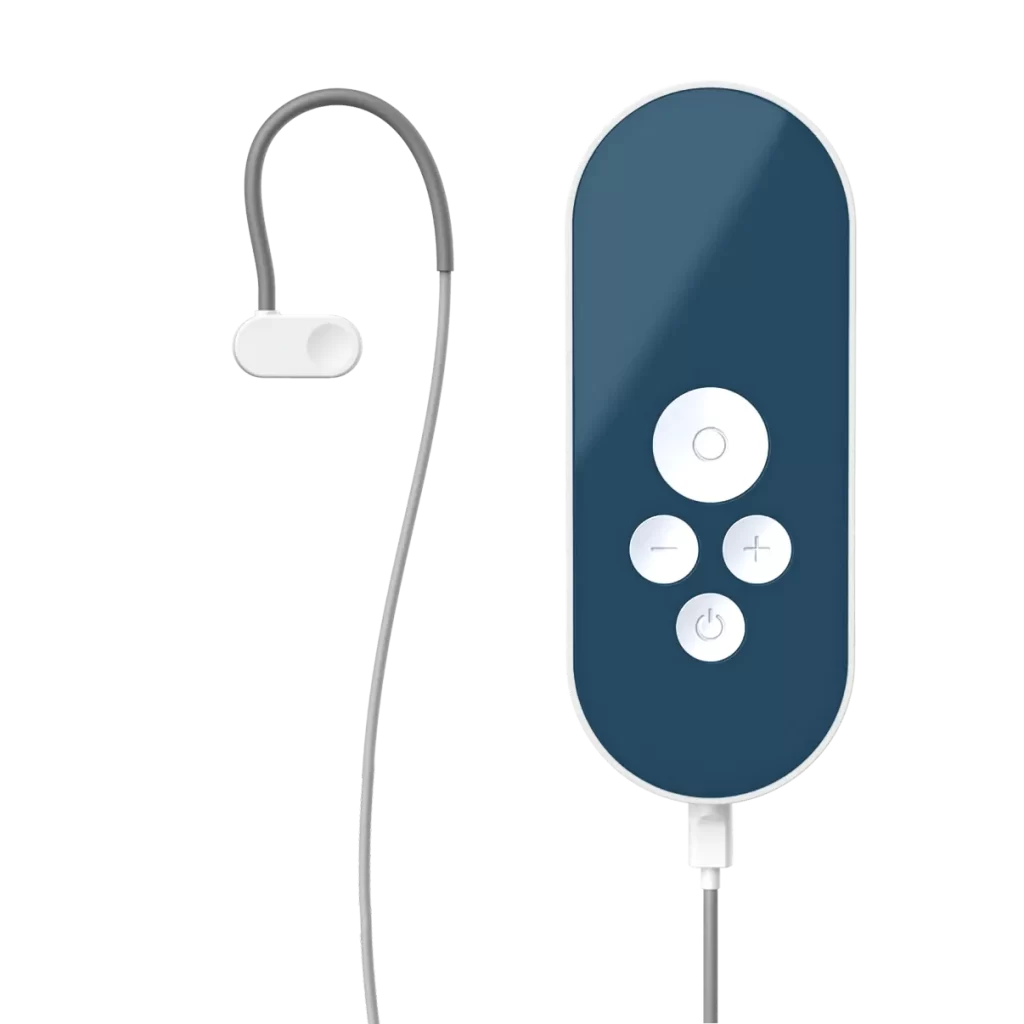
Nuropod is the only wearable vagus nerve stimulation device that has received regulatory clearance in select regions
- Uses patented microcurrent technology to stimulate the vagus nerve safely through a small ear clip.
- Just 30 minutes a day helps shift your body out of fight-or-flight and into rest-and-digest.
- Supported by a growing body of scientific research on transcutaneous vagus nerve stimulation (tVNS), recommended by 1,000+ health professionals and health experts.
- Non-invasive, drug-free, and cleared as a certified wearable device.
In simple terms: Nuropod “wakes up” your vagus nerve, helping your digestive system calm down and function normally again.
How It Works (Explained Simply)
Nuropod delivers low-level electrical stimulation to the auricular branch of the vagus nerve, a pathway involved in regulating parasympathetic nervous system activity.
By gently stimulating this pathway, the therapy aims to support vagal tone and promote a shift away from chronic fight-or-flight activation toward a calmer physiological state associated with digestion and recovery.
Over repeated sessions, this neuromodulatory approach may help improve stress resilience, digestive comfort, and overall autonomic balance.
While vagus nerve stimulation has shown promise in improving symptoms related to stress and gut–brain interaction, it is not intended to diagnose, treat, cure, or prevent any disease, including irritable gut. Individual responses may vary.

Who Is It For?
Nuropod has been life-changing for people who:
- Struggle with bloating, cramps, constipation, diarrhea.
- Notice flare-ups when stressed, even without eating.
- Feel like they’ve “tried everything” and nothing has given lasting relief.
- Are tired of living in fear of bathrooms, flare-ups, or social embarrassment.
- Want a natural, drug-free solution that addresses the root cause.
What Real People Are Saying

“I can honestly say that within three days, the nausea began to subside and everything else followed on from then and I’ve been using it for about six months now and I feel like a different person.”
– Rohana
“I would highly recommend giving it a go.”
– Suzi, acupuncturist working with people with poor digestion and Irritable gut issues
“For my digestion, I had issues with Irritable gut and I did get some improvement on the irritable gut..”
– Vegard
Nuropod vs. Other Solutions
Solution | Addresses Root Cause? | Adverse Events | Scientifically Proven? | Ease of Use |
Restrictive Diets |
|
|
| Hard |
Probiotics / Supplements |
|
|
| Easy |
Medications |
|
|
| Moderate |
Meditation / Yoga |
|
|
| Requires consistency |
Nuropod |
|
|
|
|

 Common
Why Now?
Gut issues affect millions — and most are stuck managing symptoms instead of fixing the cause.
Nuropod offers a different path: reset the nerve that controls digestion itself.
That’s why more and more health professionals are recommending it, and why demand is surging.
Right now, Nuropod is available only through the official website — not on Amazon or third-party sellers.
Gut issues don’t appear overnight — and they don’t disappear overnight either.
That’s why quick fixes fail.
Nuropod isn’t a one-time pill.
Each daily session helps retrain your nervous system, so the benefits build over time.
The longer you use it, the more your body remembers how to stay calm, digest smoothly, and keep flare-ups from coming back.
Try Nuropod Risk-Free
Every order is backed by:
- 30-Day Money-Back Guarantee — try it at home, no risk.
- 2-Year Warranty — peace of mind included.
- Support from Healthcare Professionals — expert guidance available.
Final Word
If bloating appears during stress, occurs without clear dietary triggers, or fluctuates alongside anxious thoughts and tension, the cause may lie beyond the gut itself.
Increasing evidence suggests that the nervous system, particularly vagal regulation, plays a meaningful role in digestive comfort.
Approaches that support nervous system balance may offer an additional avenue for symptom management alongside dietary, medical, and lifestyle care.
Always consult a qualified healthcare professional to determine what approach is appropriate for your individual health needs.
Ready to calm stress bloat at its source?
If your symptoms flare when life gets intense – not just when you eat – it may be time to support your nervous system, not just your gut. Discover how Nuropod can help restore calm, digestion, and confidence with a simple daily routine.
Take the first step toward lasting relief – naturally, safely, and risk-free today.
This blog post aims to be informational and should not replace professional health advice. Always consult with a health professional for personalised advice.
Sources
- Bonaz B, Sinniger V, Pellissier S. Vagus Nerve Stimulation at the Interface of Brain–Gut Interactions. Cold Spring Harbor Perspectives in Medicine. 2018 Sep 10;9(8):a034199.
- Veldman F, Hawinkels K, Keszthelyi D. Efficacy of vagus nerve stimulation in gastrointestinal disorders: a systematic review. Gastroenterology Report [Internet]. 2025;13. Available from: https://academic.oup.com/gastro/article/doi/10.1093/gastro/goaf009/7979382
- Zhu Y, Xu F, Lu D, Rong P, Cheng J, Li M, et al. Transcutaneous auricular vagal nerve stimulation improves functional dyspepsia by enhancing vagal efferent activity. American Journal of Physiology-Gastrointestinal and Liver Physiology. 2021 May 1;320(5):G700–11.




Interesting read! I’ve been blaming food all this time, not stress
I thought only acidic foods or beverages causes these bloating
Didnt expect that even these thoughts can make you bloat, no wonder even Im not eating anything at all or doing a lot of exercises