What my husband Brad and I discovered after years of doing everything right as parents – and still not recovering.
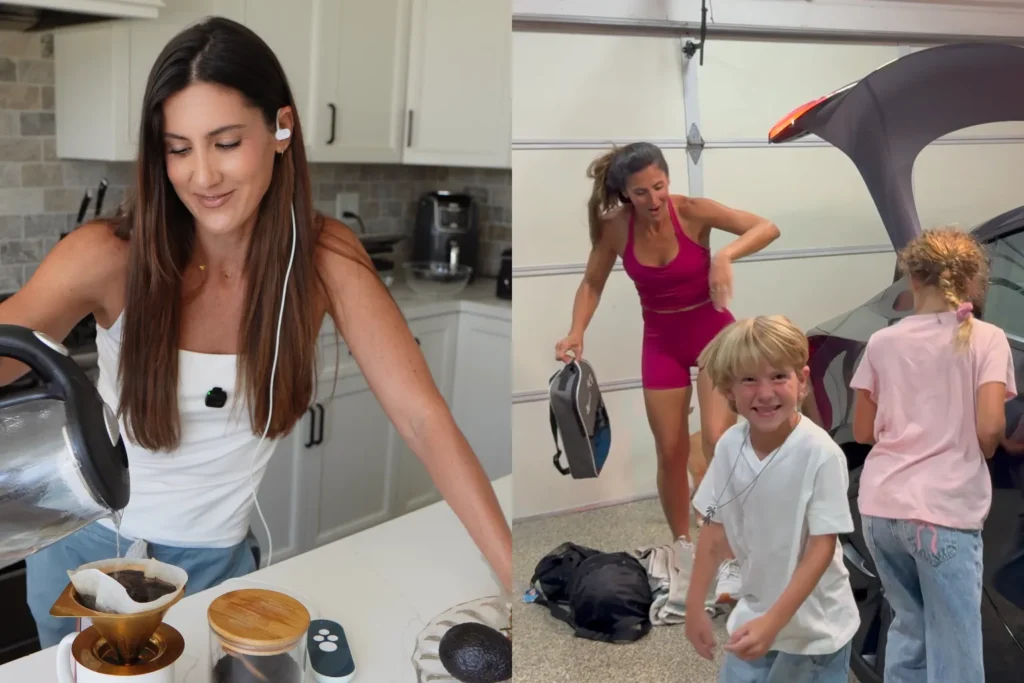
Why cutting caffeine, adding supplements, and “balancing my hormones” didn’t resolve my tiredness, and the other factors I started paying attention to.
For a while, hormones were my explanation for everything.
The puffiness some mornings, heavy before the day had even started. The exhaustion that didn’t match anything I was doing. The short fuse over nothing: snapping at my kids over something that wouldn’t normally bother me, then feeling terrible about it an hour later.
It’s the explanation everyone hands you once you’re a mom. Tired? Hormones. Moody? Hormones. Puffy? Hormones.
So I did what most women do. I went looking for the fix.
- I cut the morning coffee.
- I added apple cider vinegar.
- I skipped the harder workouts for a while, just in case they were making things worse.
- I tried the supplements everyone swears by.
And the puffiness still came back. The exhaustion still showed up on the days it had no business showing up. And the guilt after yet another snappy moment with my kids stayed.
I’m a fitness coach, and I’ve spent over a decade working with women on training, nutrition, and recovery. I see this exact pattern constantly: women doing nearly everything right, and still feeling exhausted, overwhelmed, and emotionally off. Hormonal changes can contribute to these symptoms, but they aren’t the only possible explanation. As I paid closer attention to my own patterns, I started wondering what else might be contributing.
Does Any of This Sound Like Your Week?
If you’ve been told “it’s just your hormones” and you’ve already tried the usual fixes, you might recognise some of this:
- You're tired in a way that doesn't match how much you actually did
- Your sleep happens, but you still wake up flat
- You're short with the people you love and feel awful about it afterwards
- The house finally goes quiet, and your brain starts running the tomorrow list
- You've changed your diet, your workouts, or your supplements, and nothing really changed
I’m not saying hormones aren’t involved. They are, and that’s worth taking seriously. I’m saying that for a lot of us, there’s a second piece that almost nobody talks about.
It’s Not a Lack of Willpower
Here’s what I want you to hear first, because I wish someone had told me.
If you’ve tried everything and you’re still exhausted, that is not a failure of discipline. You didn’t “not try hard enough.” You didn’t do it wrong. Most of us in this spot are doing a lot, usually for everyone else, and then blaming ourselves because the fixes stopped working.
That guilt is its own weight. Every missed supplement, every skipped workout, and every snapped sentence at the dinner table becomes one more thing to feel bad about. And feeling bad about it doesn’t help the exhaustion.
My Symptoms Weren’t Following My Cycle. They Were Following My Calendar.
When I actually paid attention, my symptoms didn’t move in step with my cycle the way I expected. They seemed to track more closely with how demanding my week was. Coaching clients back to back. A kid up sick in the night. A week where I never quite got a full evening to myself.
I noticed that particularly demanding stretches often coincided with worse sleep and mood, although that didn’t rule out a hormonal contribution.
That’s a pattern in my own life, not a rule for every woman, and I’m not telling anyone to stop tracking their cycle. But it changed the question I was asking.
The old belief: “My hormones are the problem, so I need to fix my hormones.”
The new question: “How long is my body staying ‘on’ after the stressful part of the day is already over?”
That made me wonder whether I’d been blaming the wrong thing, or at least looking at only half the picture: not just what was demanding my energy, but whether I was getting enough opportunity to recover afterwards.
The Missing Link Between Rest and Recovery
Resting and feeling recovered aren’t always the same thing.
You can close the laptop, put the kids to bed, sit on the couch, and get seven hours of sleep, yet still wake up feeling tired. That experience can have several explanations, including disrupted sleep, ongoing stress, medical symptoms, medications, and hormonal changes.
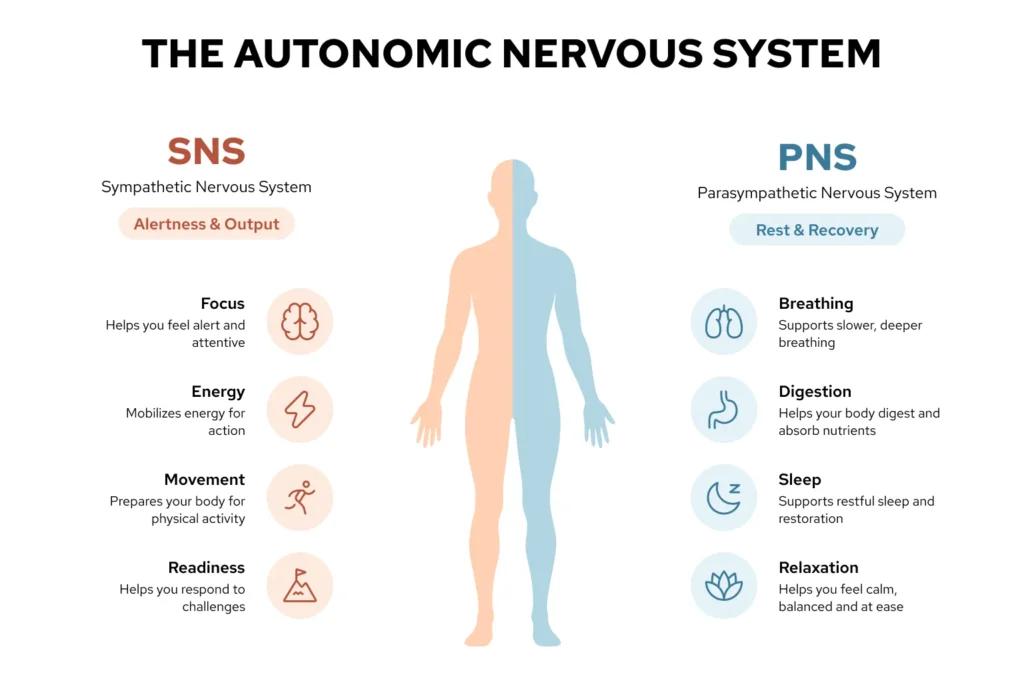
Your autonomic nervous system helps regulate functions you don’t consciously control, such as heart rate and digestion. It has two major branches:
- The sympathetic nervous system (SNS) helps the body respond to demands and prepare for action.
- The parasympathetic nervous system (PNS) supports functions associated with rest and digestion.
Neither is the enemy. You need both, and their activity shifts depending on what your body is doing. Stress and poor sleep can affect how you feel, but symptoms alone cannot tell you whether your autonomic nervous system is functioning abnormally.
For many moms, that second part is the one that gets stuck. It’s like a car that’s parked but still idling. The house is quiet, the kids are asleep, and your body hasn’t gotten the message that it’s allowed to stop.
One of the body’s main pathways for that “you can stand down now” message is the vagus nerve. It’s one of the body’s main communication lines between the brain and the organs involved in stress and recovery, including the heart, lungs, and gut. It’s a central part of how the body shifts toward the brake.
Which is exactly where the usual advice runs into trouble.
Why “Fixing” It Starts Feeling Like Another Job
Here’s the irony. When a woman is already stretched thin, the advice she gets just adds to her to-do list.
And I want to be clear: these things genuinely work. I use most of them and coach most of them. The problem isn’t whether they work. It’s whether a depleted person can do them consistently.
- Supplements and diets are one more thing to remember, and they work on chemistry and food, not on how long your body stays activated after a hard day.
- Exercise and stretching need energy and time you may not have, and on the hardest weeks they're the first things to get cut.
- Breathwork, meditation, and cold showers need quiet, preparation, and enough bandwidth to do them properly. Try deep breathing while someone is asking for a snack.
- Cutting back is sound advice, but it assumes there's something you can actually drop.
The problem wasn’t necessarily that these approaches didn’t work. It was that trying to maintain too many changes had become another job. You miss two days. Then four. Then the routine disappears, and what was supposed to reduce stress becomes one more reason to feel like you’re not doing it right.
That made me ask a practical question: could I explore another approach to stress management without turning it into another task I had to perform perfectly?
What Made Me Look Into the Vagus Nerve
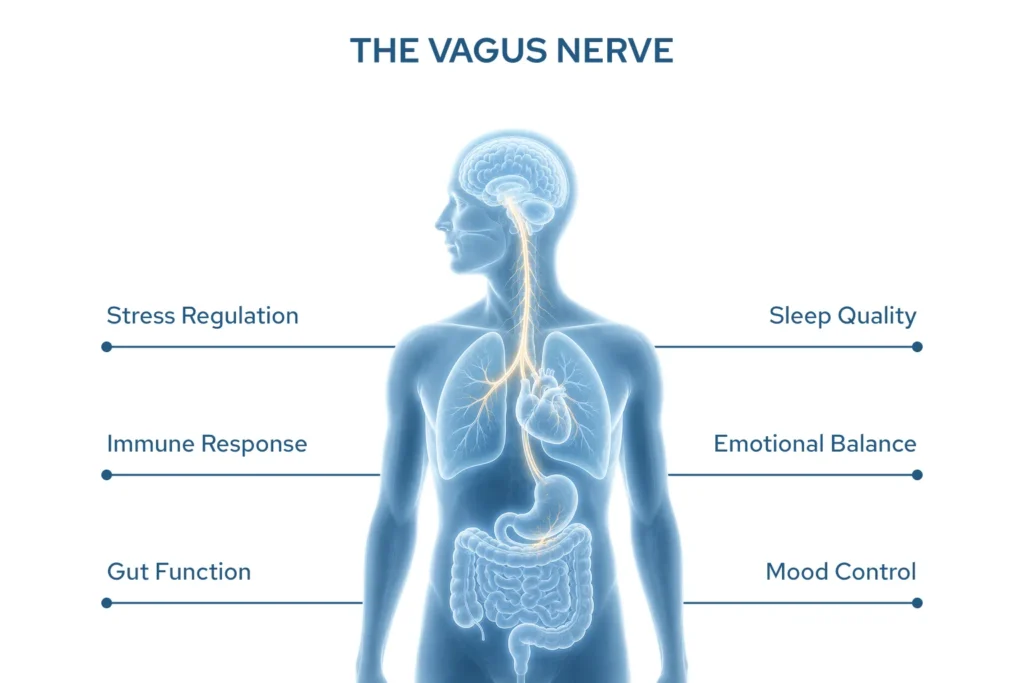
I evaluate health claims for a living, and I’m naturally sceptical of anything promising to “balance your hormones” or “fix your cortisol” with one simple trick. I’ve watched that promise get sold a hundred different ways.
What interested me was the research into non-invasive vagus nerve stimulation. Researchers have developed techniques that apply electrical stimulation to areas of the external ear innervated by the auricular branch of the vagus nerve. This approach is called **transcutaneous auricular vagus nerve stimulation (taVNS).
I want to be straight about what the evidence supports. In one placebo-controlled study, healthy young adults who used this kind of ear stimulation showed a measurable increase in HRV (Heart Rate Variability, the variation in time between heartbeats, a common marker of how flexibly your nervous system responds) and in a marker of vagal activity compared with the placebo group.¹ A systematic review has also looked at taVNS and HRV more broadly.²
That’s evidence for the mechanism, not a claim that it fixes your hormones.
So I went looking for the device with the strongest research behind it, not the one with the loudest claims.
The 30-Minute Routine I Use
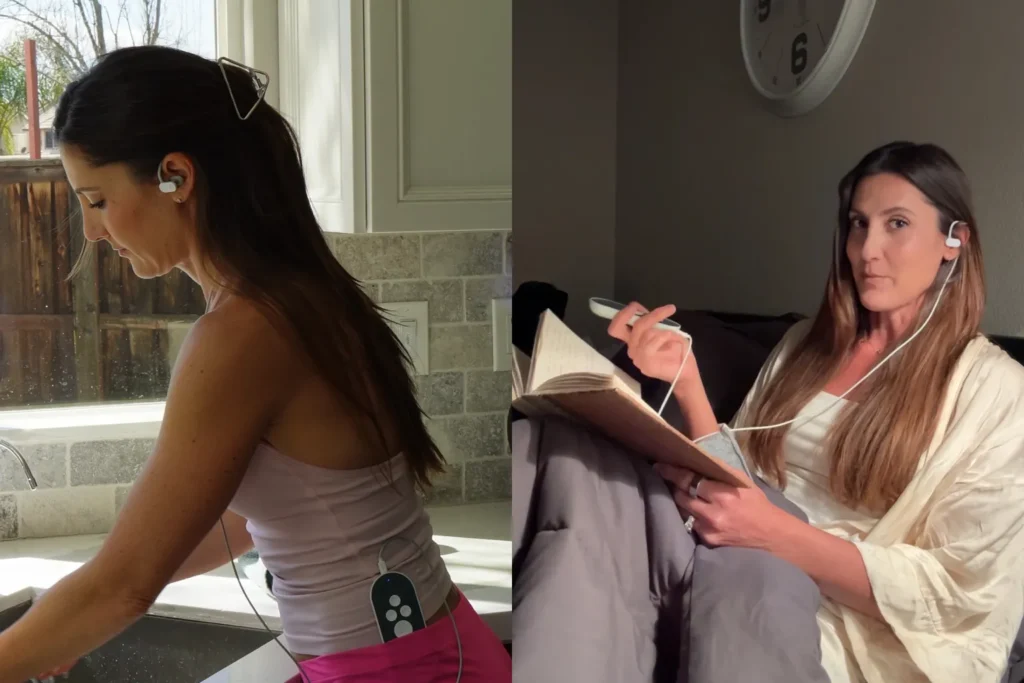
Before I wrote a word about it, I tried it myself. What interested me was the combination of three things: a non-invasive stimulation approach, research into its possible physiological effects, and a routine that seemed simple enough to fit into a real day with two kids.
The device is called Nuropod.
Nuropod uses the company’s proprietary AVNT™ (Auricular Vagal Neuromodulation Technology) approach to deliver electrical stimulation through an electrode placed on the external ear, targeting an area associated with the auricular branch of the vagus nerve. The precise effects of ear-based stimulation depend on the device and protocol, and the external ear has overlapping sensory nerve supply. The device is wired, and its manufacturer says it can be used during everyday activities.
Here’s how I set it up:
- Clip it on and switch it on. Adjust the intensity to a light, comfortable sensation rather than pushing it higher.
- Pick a window before you start. The plan that survives is the one that doesn’t require a daily decision.
- Attach it to something you already do. Ironing, eating lunch, washing dishes, hanging laundry, meal prep, reading in the evening.
- Aim for 30 minutes a day, in two sessions. Fifteen minutes is the minimum per session. I do fifteen in the morning and fifteen in the evening, right after the kids are finally down.
- Keep it regular, not perfect. A missed day matters far less than the overall rhythm.
Traditional active practice | Nuropod | |
Dedicated time | Often | Can overlap with daily tasks |
Quiet environment | Helpful for some practices | Not required |
Technique to learn | Often | Minimal setup |
Phone or app | Sometimes | No |
Works alongside other methods | Yes | Yes |
It doesn’t fix a busy life. I checked. It’s also not a hormone therapy, and I’m not claiming it changes anyone’s hormone levels. It doesn’t replace sleep, strength training, good nutrition, or the supplements that genuinely help, and I wouldn’t trust a device that claimed it did. It sits alongside all of that as one layer, without asking me to carve out another appointment in my day.
What the Research Says
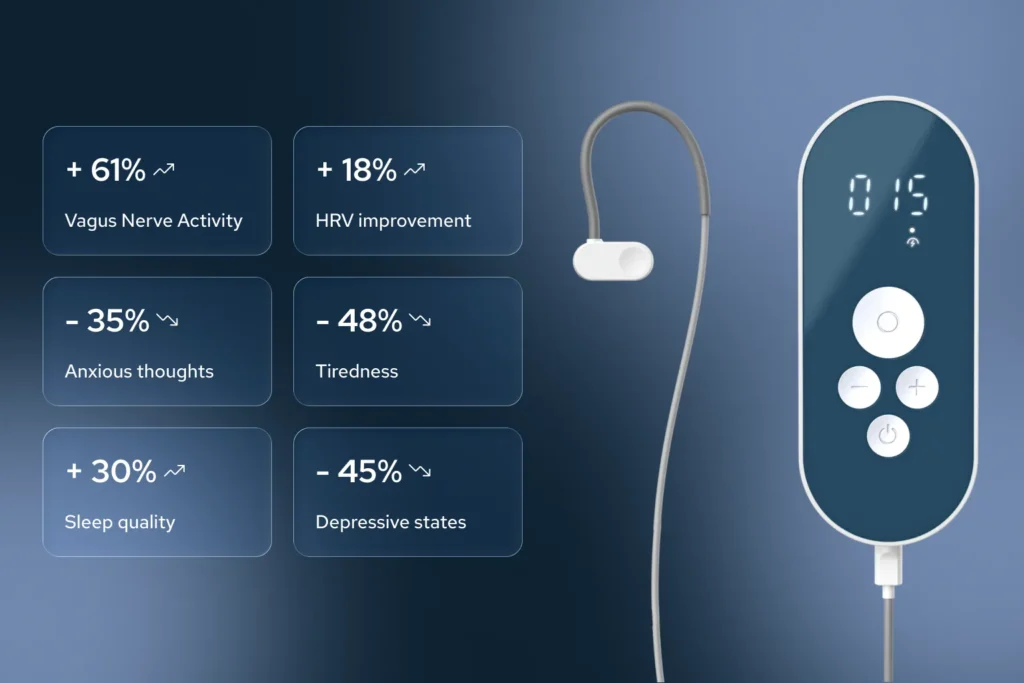
- +61% HF power, a marker of vagal nerve activity¹
- +18% HRV¹
- +30% sleep quality, in a small study of people with widespread pain³
These come from specific study populations, so I wouldn’t promise the same outcome to every busy mom. The HRV and vagal activity figures come from healthy young adults. The sleep figure comes from a small, uncontrolled pilot in people with widespread pain, so it shouldn’t be generalised to everyone.³
Nuropod’s technology is backed by 60+ completed studies across 150+ research institutions, and it’s recommended by more than 1,000 licensed healthcare professionals. That’s a very different proposition from “I saw a vagus nerve gadget on social media.”
Promising research should make us interested, not careless.
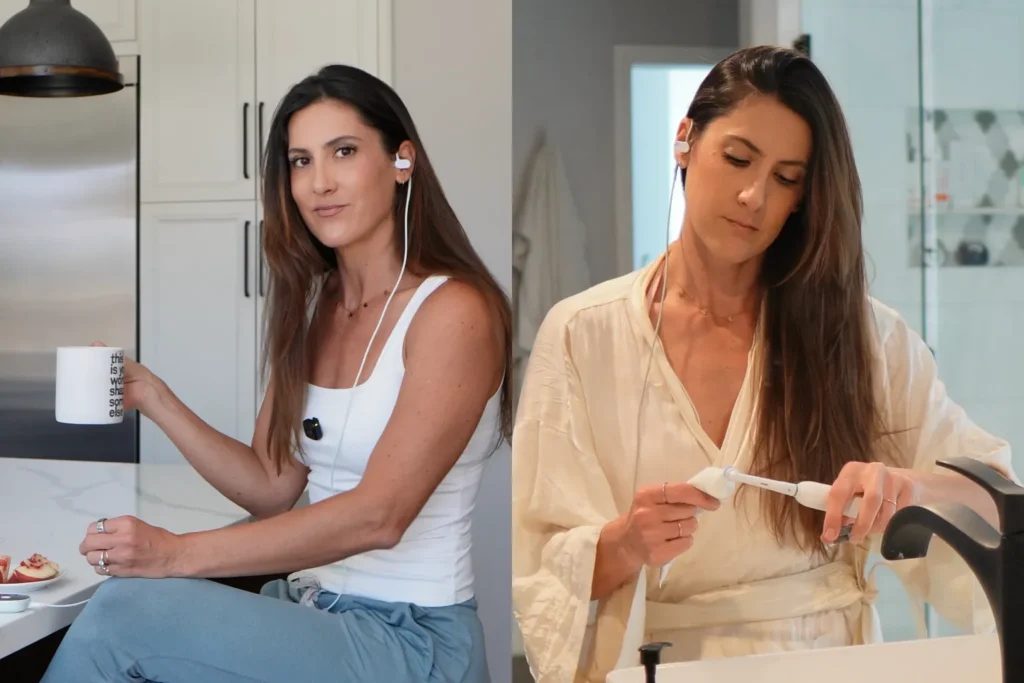
So what did I actually notice?
What I Started Noticing
I wasn’t looking for an overnight transformation. That’s not how I think about recovery.
Remember what I started with? Here’s what shifted for me:
- The evenings: the house goes quiet, and my brain switches off more easily instead of running a mental to-do list.
- The exhaustion: the flat, heavy days showed up less often in the weeks that used to flatten me.
- The short fuse: I snapped less over small things, and felt less guilty afterwards.
It wasn’t dramatic in any single week. But I stopped treating every off day as a hormone problem to solve with another supplement, and started giving my nervous system thirty minutes a day to come down.
Who I Think This Is Worth Exploring For
- The mom who's been told "it's just your hormones" by everyone from her group chat to her own health professional, and has a nagging feeling that's only part of the story.
- The woman who's tried every hormone-balancing tip online and still can't explain why nothing quite lands.
- The person balancing training, work and family responsibilities who wants to consider how sleep and stress management fit into their overall wellbeing.
- The coach or high-performer who tracks everything about her body but has never thought about nervous system recovery as another part of the picture.
Who This Isn’t For
This isn’t for you if you’re dealing with a diagnosed hormonal symptom that needs medical management, or if what you’re carrying feels bigger than stress. That needs a health professional, not a device. I’m not telling you this replaces getting your hormones actually checked when something feels genuinely off.
Do not use if you have an implanted cardiac device, are pregnant, have had a serious cardiac event in the last five years, or are under 18. Always consult a healthcare professional first.
The Price, Put Honestly
Nuropod is about $900. That’s a real number, and I won’t pretend otherwise.
Spread over the first year, that’s about $75 a month, or roughly $2.50 a day. Compare that with what many of us already spend, month after month, on supplements and the next “balance your hormones” product that doesn’t quite land. A device you use every day is a different kind of math.
Try It Out
- 30-day money-back guarantee, enough time to see whether it changes how your weeks actually feel
One honest consideration: it isn’t an overnight change, and results vary from person to person. I’d treat it as one layer of support, not a shortcut.
The Missing Link Isn’t Another Hormone Fix
If you recognised yourself in two or more of the signs at the start of this article, the missing link may be worth a look.
I still track my cycle, and I still think hormones matter. I also learned to pay attention to my calendar.
Because sometimes the answer isn’t another supplement. Sometimes it’s worth looking at how well your body recovers after a demanding day.
EXCLUSIVE OFFER FOR OUR READERS: Get 5% Off Nuropod From Our Editorial Team!
References
- Geng D, et al. The effect of transcutaneous auricular vagus nerve stimulation on HRV in healthy young people. PLoS ONE. 2022. https://doi.org/10.1371/journal.pone.0263833
- Soltani D, et al. A systematic review of the effects of transcutaneous auricular vagus nerve stimulation on baroreflex sensitivity and heart rate variability in healthy subjects. 2023. https://pubmed.ncbi.nlm.nih.gov/37119426/
- Dolcini J, et al. Vagal nerve stimulation and fibromyalgia: an additional therapeutic option. Clinical and Experimental Rheumatology. 2025;43(6):1095-1104. PMID: 40576705. https://doi.org/10.55563/clinexprheumatol/johqvo
This article reflects my personal experience and professional evaluation of the evidence. This article is published in partnership with Nuropod. I may receive compensation from purchases made through links in this article. This is not medical advice, always consult a healthcare professional before starting any new health intervention. Individual results may vary.