
And a Simple Daily Practice to Support Nervous System Balance
You’ve cleaned up your diet. You’ve added supplements. You try to get 7–8 hours of sleep.
And still… something feels off.
- You wake up groggy, like the night never happened.
- You push through the day foggy, irritable, and wired
- Your gut acts up for no clear reason.
- Your watch keeps flashing “low HRV.”
- Even workouts feel heavier than they should.
It’s easy to think these are separate problems.
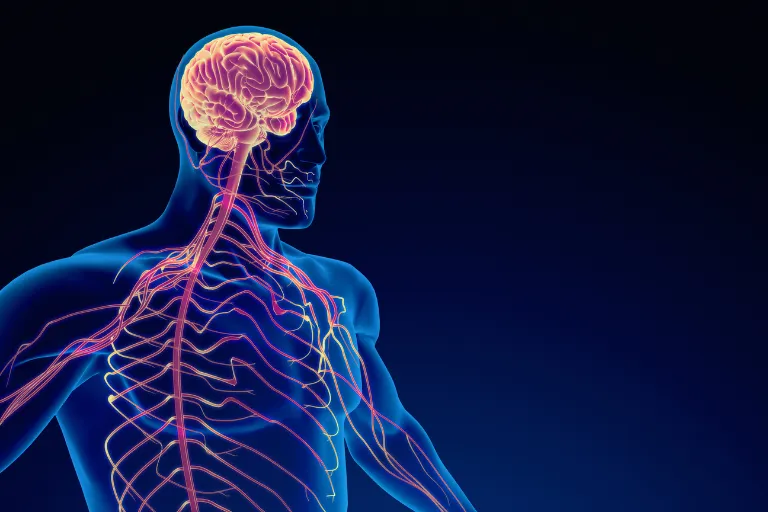
But an increasing body of research suggests a common contributing factor: nervous system imbalance.
When the body’s regulatory pathways that balance stress and recovery remain biased toward high alert, multiple systems may be affected over time.
You can sleep, eat, train, and supplement all you want… but until that system can downshift, you stay flat.
Here are seven surprising ways nervous system dysregulation hijacks your health — and how people are beginning to reset it.
#1. Stubborn Tiredness That Rest Doesn’t Fix

You sleep. You rest. You skip the gym.
And yet you wake up unrefreshed — dragging through the morning, bargaining with the alarm.
This isn’t a motivation issue. It’s your alert system buzzing between alarms. Your body never fully drops into recovery mode, so even sleep feels shallow.
Micro-reset today: Before bed, try 3 minutes of longer exhales. Inhale softly for 4, exhale for 6. That extra-long exhale is a signal: we can power down now.
#2. Sleep That Looks Long… But Feels Short

Eight hours in bed doesn’t guarantee you’ll feel restored. When your nervous system hovers in overdrive, deep sleep may become more fragmented. You clock the hours but miss the depth.
That’s why so many people say, “I sleep but wake up foggy.”
Micro-reset tonight: Set a lights-down time and hold it (weekends included). Dim lights 60 minutes before bed. Step outside for morning light within 30 minutes of waking. These tiny anchors cue your system to sync its clock.
#3. Racing Thoughts & “Stress Autopilot”

Ever notice your mind spinning even on the sofa?
That’s a telltale sign of dysregulation.
Your nervous system is designed to toggle between stress and recovery.
But if the toggle is stuck, thoughts race, muscles stay tense, and calm calm may feel harder to access.
Micro-reset anytime: Two words: nasal breathing. 10 quiet breaths through your nose, slow and low, can drop the volume on that inner static.
#4. Digestion Ups and Downs

Your gut is wired directly to the nervous system. When the control pathway is jammed open, digestion slows or spasms. Heavy meals feel heavier. Random foods “set you off.”
This is one reason nervous system balance is often reflected in digestive comfort, including bloating, cramping, or irregular digestion.
Micro-reset at meals: For your first five bites, put cutlery down between each. Chew longer than feels normal. This small pause signals safety to your gut.
#5. Low HRV & Flat Recovery Scores
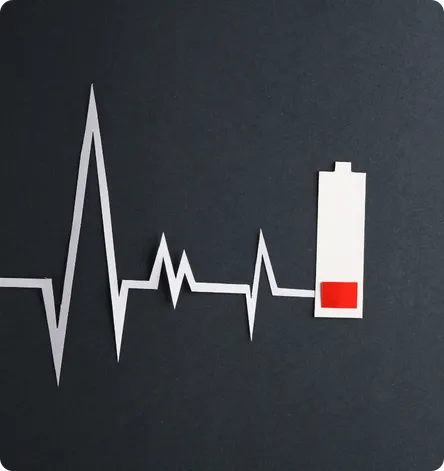
If you track with Oura, Whoop, or Garmin, you’ve probably seen it: your HRV graph flat or consistently low. This may reflect reduced recovery flexibility.
One triathlete put it perfectly: “I do all the right things — sleep, nutrition, training balance — and my HRV is still flat. Honestly, I don’t get it!!”
What’s happening? The nervous system isn’t switching gears smoothly. The built-in downshift is under-expressed, so your body can’t bounce back.
Micro-reset this week: Insert two 5-minute “buffers” in your workday: stand, sip water, slow exhale, glance out a window. Small signals add up.
#6. Inflammation That Lingers

That low-grade “everything aches” feeling? It’s not in your head. Prolonged stress signalling may influence inflammatory pathways, particularly when recovery signals are underrepresented.
Micro-reset: Draw a caffeine line. Cut it after 2 p.m. Late-day stimulants fuel the buzz that keeps inflammation on.
#7. Brain Fog & Short Fuse
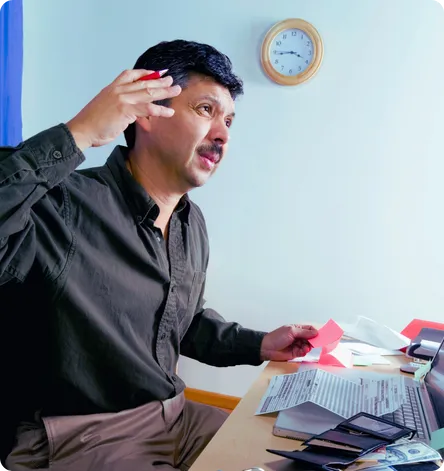
When the nervous system is stuck in alert mode, your working memory shrinks. You start tasks but don’t finish them. You reread the same sentence three times. Your fuse shortens with family or coworkers.
People often describe it as “walking through mud” or “multi-starting instead of multitasking.”
Micro-reset: Try a 20-minute single-task timer. Pick one thing. Close other tabs. Put your phone in another room. Stop when the timer ends. You’re retraining your brain to focus on doable chunks.
The Common Thread: A Control Pathway Stuck in Overdrive
Different symptoms, same lever.
Tiredness. Poor sleep. Gut chaos. Low HRV. Foggy brain. Aches. Anxious thoughts.
Many of these symptoms may share common regulatory pathways that decide when your body is in stress vs recovery. When it’s stuck in high idle, you can stretch, supplement, and self-care… and still feel flat.
So the real question is: how do you teach your body to downshift — consistently, on purpose, every day?
Meet Nuropod: A Daily Reset for Your Nervous System
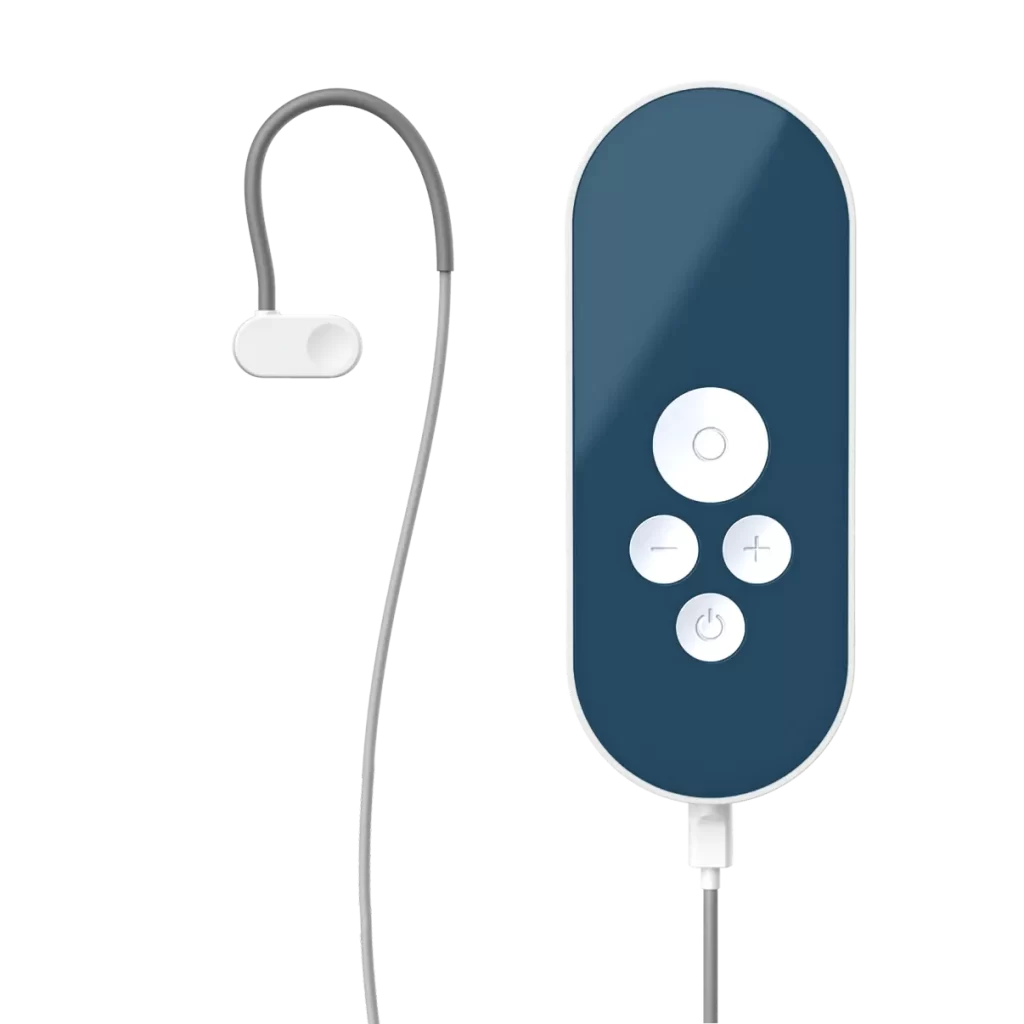
Nuropod is a small, non-invasive device designed to support the parasympathetic nervous system activity.
How it works (plain English):
A comfortable clip sits on your ear’s tragus. For 30–60 minutes, Nuropod sends gentle micro-pulses to the auricular branch of the vagus nerve — the pathway your body uses to shift into its calm-and-restore setting.
It’s like gentle physical therapy for your nervous system. You clip in, press start, and go about your day. Read. Plan. Watch a show. No gels. No drugs. No downtime.
What people often notice:
- During sessions: a quieter baseline — like the volume knob turning down.
- In the first weeks: sleep feels deeper; mornings less like a wall.
- With consistency: steadier days, fewer spikes, and a recovery profile that looks more flexible.
Why it’s different:
This isn’t another app reminding you to relax. It targets the control pathway itself — giving your system a physical nudge to recover.
How to Use It (Zero Friction)
- Clip the electrode to your ear (seconds).
- Press start. Adjust until you feel a light, soothing tingle.
- Carry on — emails, reading, winding down.
- Repeat daily. Most start with one 30-minute session; some add a second in the evening.
Habit tip: Pair it with something you already do (morning calendar check, evening chapter). Habits stick when they piggyback.
Picture the Difference in Your Day
- You wake without bargaining with the alarm.
- Coffee becomes a choice, not a crutch.
- Work feels doable — not like a wall.
- That 2 p.m. dip? Softer.
- Dinner lands lighter.
- Evenings aren’t hijacked by racing thoughts.
- And your wearable finally shows what you feel: a more flexible baseline.
That’s the point. Not to chase perfection. To give your body back the capacity it was designed to have.
Your Simple Next Step
- Pick one or two micro-resets from above and try them today.
- Consider adding a daily practice that supports nervous system downshifting.
You don’t need to overhaul your life to feel better.
Start by supporting the system that decides when your body can recover.
Explore gentle, daily ways to help your nervous system downshift.
See how Nuropod supports calmer days, deeper sleep, and steadier recovery.
Learn how it works and check availability today.
We’re so confident you’ll notice a difference that every device comes with a 30-day money-back guarantee. Use it daily, see how your clarity, energy, and sleep respond — and if you’re not satisfied, simply return it for a full refund. No questions asked, no hassle.
Sources
- Wang Y, Zhan G, Cai Z, Jiao B, Zhao Y, Li S, et al. Vagus nerve stimulation in brain diseases: Therapeutic applications and biological mechanisms. Neuroscience & Biobehavioral Reviews. 2021 Aug;127:37–53.
- Chen Z, Liu K. Mechanism and Applications of Vagus Nerve Stimulation. Current Issues in Molecular Biology [Internet]. 2025 Feb 14;47(2):122. Available from: https://www.mdpi.com/1467-3045/47/2/122
- Jin Z, Dong J, Wang Y, Liu Y. Exploring the potential of vagus nerve stimulation in treating brain diseases: a review of immunologic benefits and neuroprotective efficacy. European Journal of Medical Research [Internet]. 2023 Oct 19;28(1):444. Available from: https://pubmed.ncbi.nlm.nih.gov/37853458/#:~:text=Recent%20studies%20have%20found%20that
This blog post aims to be informational and should not replace professional health advice. Always consult with a health professional for personalised advice.
Share via:



Been hearing a lot about vagus nerve recovery lately.
I’ve tried vagus nerve exercises—surprisingly helpful.