
If you’ve tried every mindfulness app and breathing technique but still feel anxious – it’s not your fault, and here’s the scientific reason why…
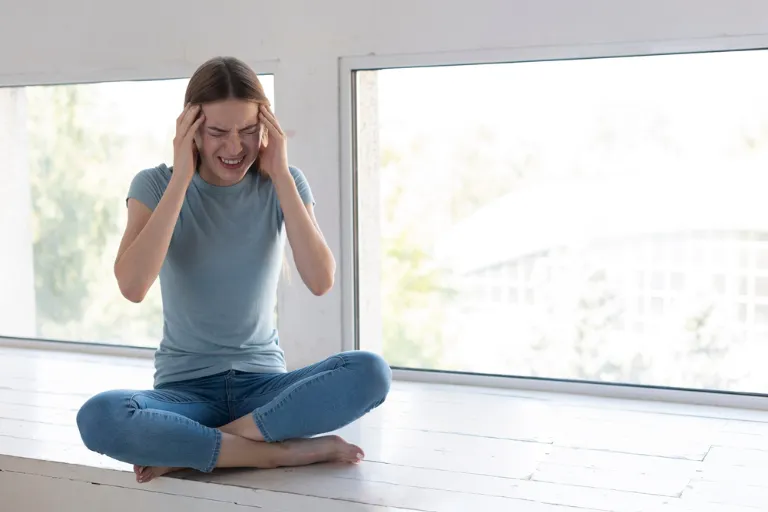
Why Meditation Can Be Challenging for Some People with Long Anxious Thoughts
You shouldn’t feel like a failure because meditation doesn’t calm your racing mind.
Downloaded apps shouldn’t make you more frustrated with yourself.
Following guided breathing shouldn’t leave you feeling more anxious than before.
Sitting still with your thoughts shouldn’t feel like torture.
Here are four nervous-system–related factors that can make meditation difficult during chronic anxious thoughts, and an approach that may help support regulation when the system is stuck in overdrive.
#1. Your Anxious Thoughts are Too “Loud” for Meditation to Override
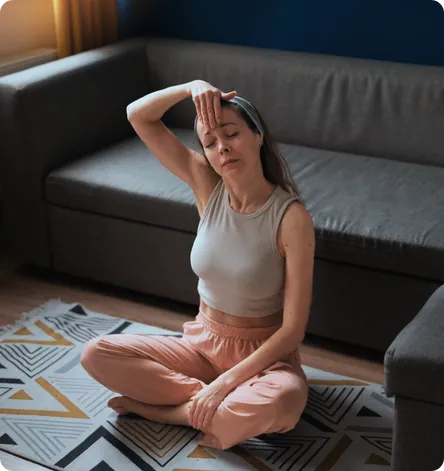
For months, you felt like a broken person because meditation made your anxious thoughts worse instead of better.
Every app promised that 10 minutes of mindfulness would calm your racing thoughts, but you would sit there with your eyes closed while your brain screamed about deadlines, replayed embarrassing conversations from three years ago, and convinced you were definitely having a heart attack.
Then I learned about “arousal threshold” – basically, how activated your nervous system is at any given moment.
Think of your anxious thoughts like a screaming fire alarm going off in your house.
Meditation is like trying to have a quiet phone conversation with your mom while that alarm blares at full volume right next to your ear.
The conversation (mindfulness) might be exactly what you need, but you literally cannot hear it over the noise (anxious thoughts).
For people with mild stress, meditation works beautifully – their internal “volume” is low enough for gentle techniques to be effective.
But when you’re in chronic anxious thoughts mode, your nervous system is operating at such high intensity that conscious breathing and mindfulness can’t access the deeper control centres.
It’s not that meditation is bad – it’s that your anxious thoughts are too severe for meditation’s gentle approach.
You need something powerful enough to turn down the “volume” first, then meditation actually becomes possible.
You’re trying to meditate while anxious: “Just breathe… just breathe… WHY ISN’T THIS WORKING?!”
#2. Meditation Requires the Exact Brain Function That Anxious Thoughts Destroy

Here’s the cruel irony that no mindfulness teacher tells you: meditation requires sustained attention and emotional regulation – the exact mental capabilities that anxious thoughts can temporarily impair.
It’s like being told to use a ladder to escape a flooding basement, but the flood has already washed the ladder away.
When you’re anxious, your prefrontal regulatory functions (the part of your brain responsible for focus and rational thinking) can become less effective under sustained anxious thoughts. Your amygdala (fear centre) takes over and scatters your attention in every direction, looking for threats.
Meditation apps cheerfully instruct you to “focus on your breath” when anxious thoughts has literally disabled your ability to focus on anything for more than 3 seconds. You sit there trying to count breaths – “One… two… wait, did I lock the front door? What if that text from my boss means I’m getting fired? One… no, was I on two? Why can’t I do this simple thing?”
You’re being asked to use a mental muscle that anxious thoughts has temporarily paralysed.
This creates a frustrating cycle: you need calm focus to meditate successfully, but you need to meditate successfully to achieve calm focus.
It’s not a character flaw – it’s basic neuroscience. During heightened anxious thoughts, the brain may struggle to sustain the cognitive tasks that meditation relies on.
You need a way to restore basic nervous system function first, then meditation becomes not just possible, but actually enjoyable.
#3. Your Nervous System Interprets “Sitting Still” as Danger (The Stillness Paradox)

This one blew my mind: for people with chronic anxious thoughts, sitting still and “going inward” can actually trigger more anxious thoughts, not less.
Your hypervigilant nervous system interprets stillness as vulnerability – like a prey animal stopping to rest while predators might be nearby.
In nature, animals only relax when they’re absolutely certain the environment is safe. Your anxious nervous system never gets that “all clear” signal, so forced stillness feels threatening instead of peaceful.
Think about it: when you’re anxious, do you naturally want to sit quietly with your thoughts?
Or do you want to move, pace around the kitchen, reorganise your closet, scroll through your phone, fold laundry – anything to avoid being trapped alone with that buzzing, uncomfortable energy crawling under your skin?
Your nervous system is trying to keep you moving because it thinks you’re in danger.
Meditation asks you to do the opposite of what your survival instincts are screaming at you to do.
This is why so many anxious people report that meditation makes them feel “trapped,” “agitated,” or “more aware of how bad they feel.”
It’s not that you’re “bad at meditation” – your nervous system genuinely perceives the meditation posture as risky.
You need to signal safety to your nervous system first, then stillness becomes naturally appealing instead of threatening.
It’s important to note that many people do benefit from stillness-based practices, particularly when anxious thoughts are mild or when appropriate guidance and support are present. Individual responses to meditation vary widely.
#4. Meditation Works on the “Software,” But Your Problem Is in the “Hardware”

Here’s the technical explanation that changed everything for me: meditation works at the cognitive level (thoughts and awareness), but chronic anxious thoughts is primarily a nervous system hardware problem.
It’s like trying to fix a computer that keeps crashing by changing the screensaver – you’re working on the wrong layer entirely.
Meditation teaches you to observe anxious thoughts without getting caught up in them. That’s valuable for people whose anxious thoughts is primarily psychological.
But for chronic anxious thoughts sufferers, the problem isn’t the thoughts themselves – it’s that your nervous system is stuck in a biological state that automatically generates anxious thoughts 24/7.
Your vagus nerve (the main “calm down” nerve) has become so weak that it can’t override your sympathetic nervous system (fight-or-flight mode).
Mental techniques alone may not be sufficient for everyone during periods of significant physiological arousal.
It’s like having a car with faulty brakes and trying to stop by gripping the steering wheel harder and visualising the car slowing down. The problem isn’t your mental focus – it’s that the actual brake pads are worn out and need replacing.
Meditation is an excellent tool for mental hygiene, but it can’t repair a nervous system that has become chronically dysregulated.
You need direct intervention at the biological level first, then meditation actually has something to work with.
What Actually Works When Meditation Fails
After trying 47 different meditation apps (yes, some of us counted), you discovered something that changed everything: non-invasive auricular vagus nerve stimulation, a method being studied for supporting autonomic regulation.
Instead of trying to think your way out of anxious thoughts, you could directly activate the biological system responsible for calm.
It’s like having a master key that unlocks your nervous system’s natural relaxation response – no meditation skills required.
Something that could target your vagus nerve through precise electrical pulses delivered via your ear.
Within minutes, you could feel your nervous system downshifting from high alert to genuinely calm – something months of meditation had never achieved.
Here’s what made it different:
- Designed to be easy to use – and not dependent on sustained focus or practice.
- Didn't require focus– could watch TV or work while using it.
- Actually lowered the "volume" – made meditation possible for the first time.
- Fixed the hardware – supported improved nervous system regulation over time.
Why This Approach May Address Common Challenges with Meditation
- Problem #1: Direct neuromodulation may help reduce physiological arousal during heightened anxious thoughts states.
- Problem #2: Works automatically without requiring focus or attention skills.
- Problem #3: Can be used while moving around and staying active.
- Problem #4: Targets the biological hardware that generates anxious thoughts, not just the mental software.
Meet Nuropod – The Meditation Alternative That Actually Works for Anxious Thoughts
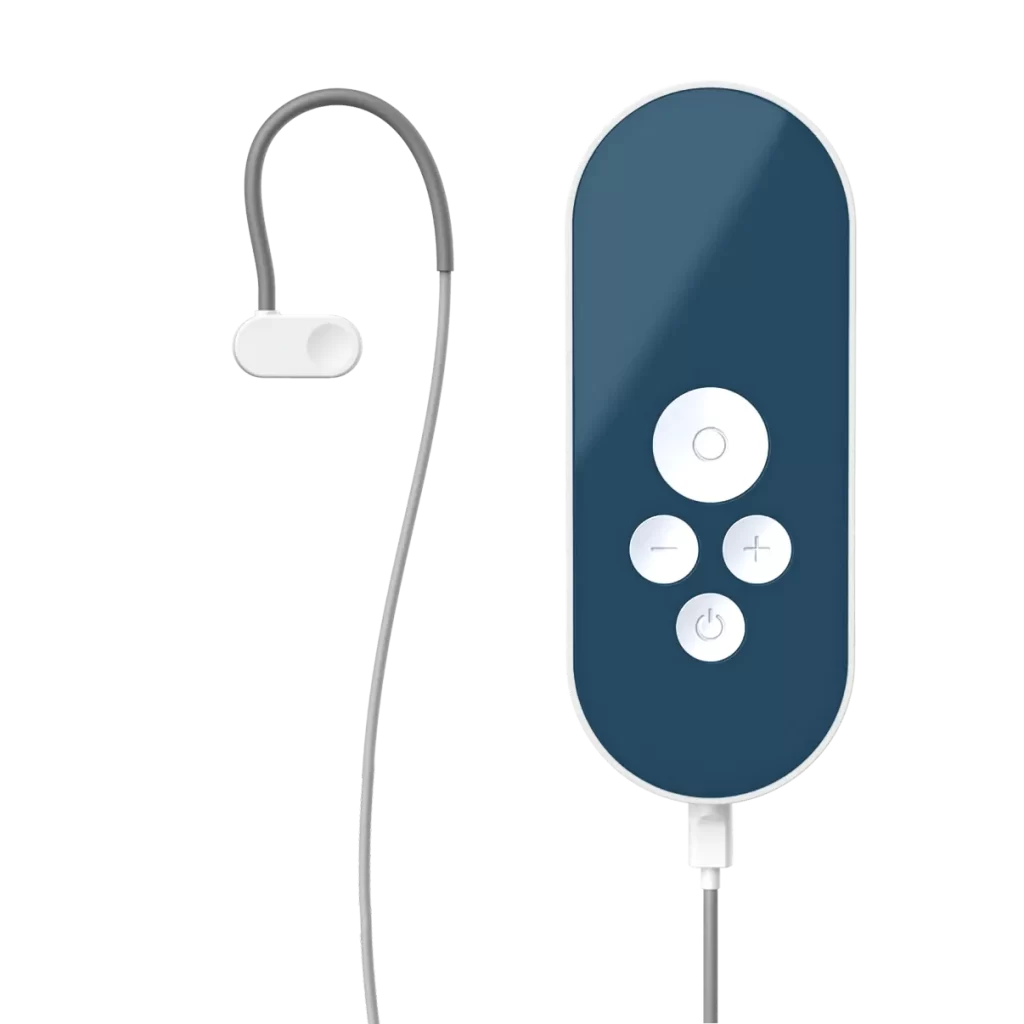
Nuropod is a general wellness product that delivers targeted electrical stimulation to your vagus nerve through a comfortable ear clip.
Unlike meditation, it doesn’t require any mental effort, focus, or sitting still – it works automatically while you go about your normal activities.
Developed through 50+ scientific studies, Nuropod represents what many anxious people have been searching for: a way to access deep calm without having to “earn it” through perfect meditation practice.
How It Works (No Mental Effort Required)
- Clip and Go
Attach the small device to your ear – takes 10 seconds, completely comfortable. - Automatic Activation
Gentle electrical pulses activate your vagus nerve directly, bypassing conscious effort. - Nervous System Shift
Your body naturally downshifts from fight-or-flight to rest-and-digest mode. - Natural Calm
Experience the deep relaxation that meditation promises but couldn’t deliver.
The Scientific Evidence
Auricular vagus nerve stimulation has been explored in a growing body of peer-reviewed research examining its effects on autonomic regulation, stress response, and physiological markers associated with relaxation. While individual responses vary, studies suggest potential benefits when used consistently as part of a broader anxious thoughts-management approach. No serious adverse events have been reported in published scientific literature to date.
They Also “Failed” at Meditation But…

“I tried so many meditation apps, but could never quiet my mind. My anxious thoughts would just get louder when I tried to sit still. With Nuropod, I actually feel my nervous system calming down automatically.”
– Sarah, Former meditation sceptic
“What I have noticed when I started using Nuropod is that it instantly soothes my nervous system. It’s not like meditation where you have to work at it – it just gradually calms you down.”
– Derek, Anxious Thought sufferer
“I felt like such a failure because meditation made my anxious thoughts worse. Finally, something that actually works without requiring me to be ‘good’ at relaxing.”
– Michael, Busy professional
Perfect for People Who Struggle with Traditional Meditation
- Can't sit still – use it while walking, working, or doing chores.
- Racing mind – works without requiring mental focus.
- Time constraints – 30 minutes while multitasking beats 20 minutes of dedicated meditation.
- Meditation anxious thoughts – no pressure to "do it right".
- Inconsistent practice – does not rely on building meditation skills or sustained mental effort.
Finally, An Alternative to Meditation That Actually Works
You can solve your anxious thoughts without having to become a meditation master… Or get every penny of your money back.
For too long, you’ve been told that meditation is the “right” way to manage anxious thoughts – downloading app after app, setting timers for 10 minutes of “mindful breathing,” and feeling like a failure every time your mind wanders after 30 seconds.
You could finally stop forcing yourself through frustrating meditation sessions and start directly fixing your nervous system instead.
Imagine feeling genuinely calm without having to earn it – no more sitting cross-legged fighting with your racing thoughts, no more guilt about skipping your “daily practice,” no more wondering why everyone else seems to find peace while you just feel more agitated.
Your order is completely protected by our bulletproof 30-day money-back guarantee.
That’s a full month to experience what happens when you work with your nervous system directly instead of trying to meditate your way around it.
If you don’t experience better anxious thoughts relief than any meditation app has ever provided, we’ll refund every single dollar with no questions asked – that’s our promise to you.
A 30-day return policy allows you to assess whether it is suitable for you.
You can stop feeling guilty about “failing” at meditation and start succeeding at actually being calm.
Click the button below to check availability now.
Still forcing yourself to meditate while anxious thoughts run the show?
If breathwork and mindfulness haven’t worked for you, it may be time to support your nervous system directly, without effort, focus, or sitting still. Discover how Nurosym™ helps calm your body first, so real relief becomes possible.
Stop failing at meditation. Start feeling calm, try Nuropod risk-free today.
This blog post aims to be informational and should not replace professional health advice. Always consult with a health professional for personalised advice.
Sources
- Fincham GW, Strauss C, Montero-Marin J, Cavanagh K. Effect of breathwork on stress and mental health: A meta-analysis of randomised-controlled trials. Scientific Reports [Internet]. 2023 Jan 9;13(1). Available from: https://www.nature.com/articles/s41598-022-27247-y
- Bentley TGK, D’Andrea-Penna G, Rakic M, Arce N, LaFaille M, Berman R, et al. Breathing practices for stress and anxiety reduction: Conceptual framework of implementation guidelines based on a systematic review of the published literature. Brain Sciences [Internet]. 2023 Nov 21;13(12):1612. Available from: https://pmc.ncbi.nlm.nih.gov/articles/PMC10741869/
- Diao Z, Zuo Y, Zhang J, Chen K, Liu Y, Wu Y, et al. Transcutaneous auricular vagus nerve stimulation alleviates anxiety-like behaviors in mice with post-traumatic stress disorder by regulating glutamatergic neurons in the anterior cingulate cortex. Translational Psychiatry [Internet]. 2025 Aug 23 [cited 2025 Sep 27];15(1). Available from: https://www.nature.com/articles/s41398-025-03535-9
- Fanselow MS. Fear and Anxiety Take a Double Hit From Vagal Nerve Stimulation. Biological Psychiatry. 2013 Jun;73(11):1043–4.
Share via:



I appreciate how this article focuses on realistic, everyday solutions instead of complex methods.
Very insightful and easy to follow. A great reminder that small daily habits can really help manage stress.