
If you’re tracking your heart rate variability, you already know something important: your body is trying to tell you something.
Maybe your HRV has been trending downward for weeks. Or perhaps you noticed it drops after stressful days, poor sleep, or intense workouts. You’re not imagining it, these patterns are real signals from your nervous system.
Heart rate variability measures the tiny changes in time between your heartbeats. When that variability is high, it means your body can adapt. It can shift from “go mode” to “rest mode” smoothly. It recovers faster and it handles stress better.
- A higher HRV means your body is resilient and adaptable.
- A lower HRV may indicate that your body is under strain: from stress, poor sleep, overtraining, or chronic inflammation.
The good news: HRV responds directly to how you support your nervous system.
One of the most direct ways to improve HRV is to support vagus nerve activity and parasympathetic function: the biological engine behind your parasympathetic response. And modern wearables allow you to track changes over time on an Apple Watch, Oura Ring, Garmin, or Whoop.
Inhaltsübersicht
What is HRV?
HRV stands for heart rate variability.
It measures the time interval between consecutive heartbeats. Not your heart rate itself, but how much that rhythm varies from beat to beat.
Your heart does not beat like a metronome.
The gaps between beats expand and contract constantly, driven by your autonomic nervous system.
That variation is HRV, and it reflects how effectively your body shifts between stress mode and recovery states.
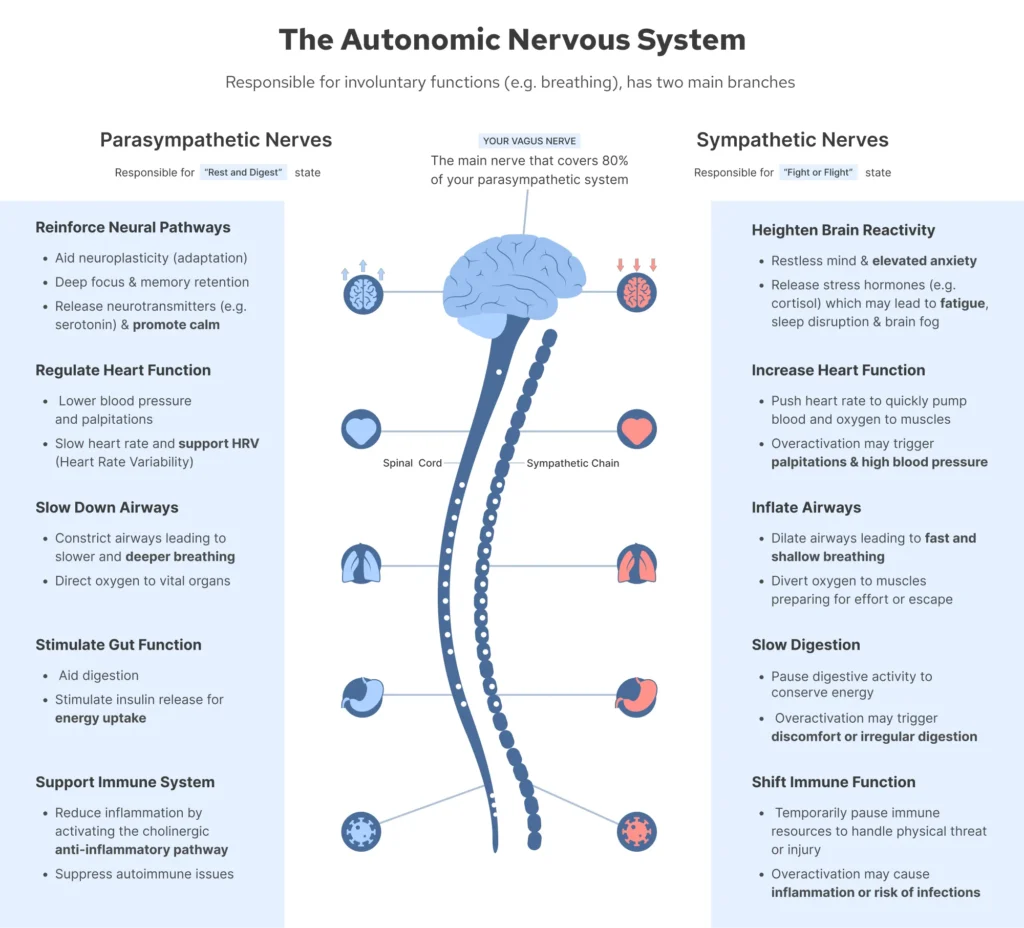
Two branches of your nervous system govern this:
- Sympathetic ("fight or flight"): activated by stress, threat, and intense exertion. Speeds the heart up and reduces beat-to-beat variation.
- Parasympathetic ("rest and digest"): activated by calm and recovery. Slows the heart and increases beat-to-beat variation.
High HRV means your parasympathetic system is engaged and your body is adaptable. On the contrary, persistently low HRV may indicate increased sympathetic activation or reduced parasympathetic recovery. And that is a sign your body is under strain, whether from stress, poor sleep, illness, or overtraining.
What is a Good HRV Score?
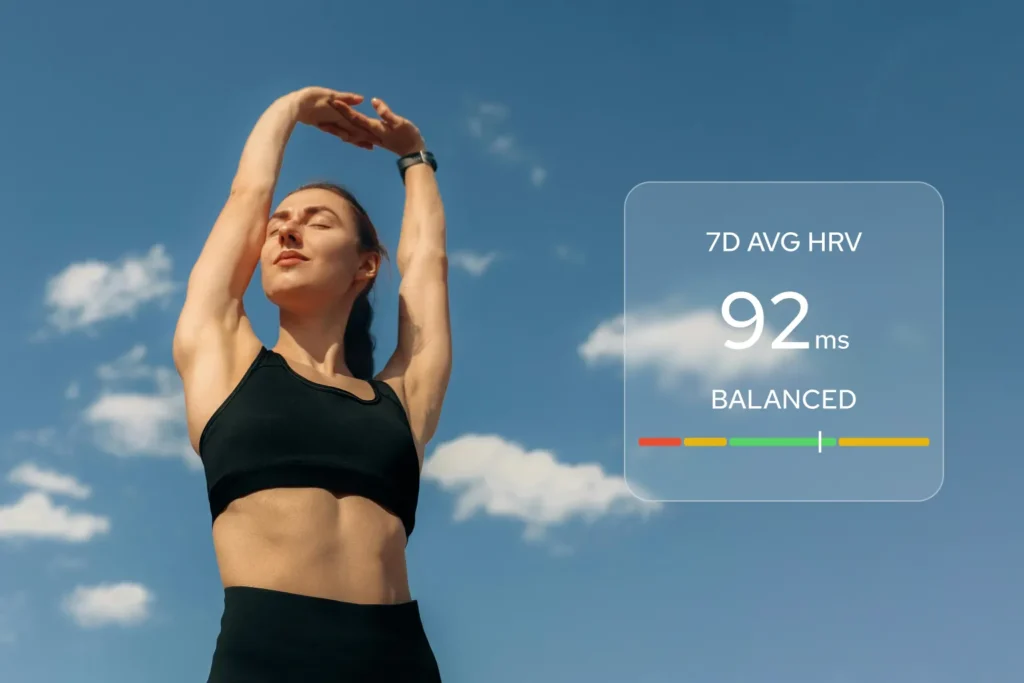
HRV is measured in milliseconds (ms) and varies significantly between individuals.
Age, sex, fitness, and genetics all influence your baseline.
What matters most is not how your HRV compares with population averages, but how it changes relative to your personal baseline.
Age group | Typical HRV range | Key takeaway |
20–29 | 55–105 ms | High baseline; lifestyle still shapes it significantly |
30–39 | 45–90 ms | Gradual decline begins; habits matter more |
40–49 | 35–75 ms | Targeted interventions produce the clearest results |
50–59 | 25–60 ms | Lower expected range; improvement is still very achievable |
60+ | 20–50 ms | The nervous system retains plasticity; training still works |
Track your own HRV daily for 2–4 weeks to establish a personal baseline, then watch for long-term trends rather than day-to-day fluctuations.
A sustained upward shift of even 5–10 ms may reflect meaningful improvement in recovery and autonomic balance.
Pro tip: Always measure HRV at the same time immediately on waking, before getting out of bed. This removes the noise of food, caffeine, posture, and activity, giving you a clean, comparable reading each day.
Why Does HRV Matter for Your Health?
HRV is not just a fitness metric.
A higher HRV consistently predicts better outcomes across multiple areas of health:
- Stress resilience: people with higher HRV recover from psychological and physical stressors faster and report lower perceived stress overall
- Sleep quality: HRV typically rises during deep, restorative sleep, making it a useful indicator of whether your body is recovering adequately overnight
- Physical recovery: athletes with higher HRV bounce back from training faster and sustain performance more consistently over time
- Cardiovascular health: low HRV is a recognized independent predictor of cardiac events and all-cause mortality
- Mental health: depressive thoughts, anxious thoughts, and trauma are all associated with chronically suppressed HRV
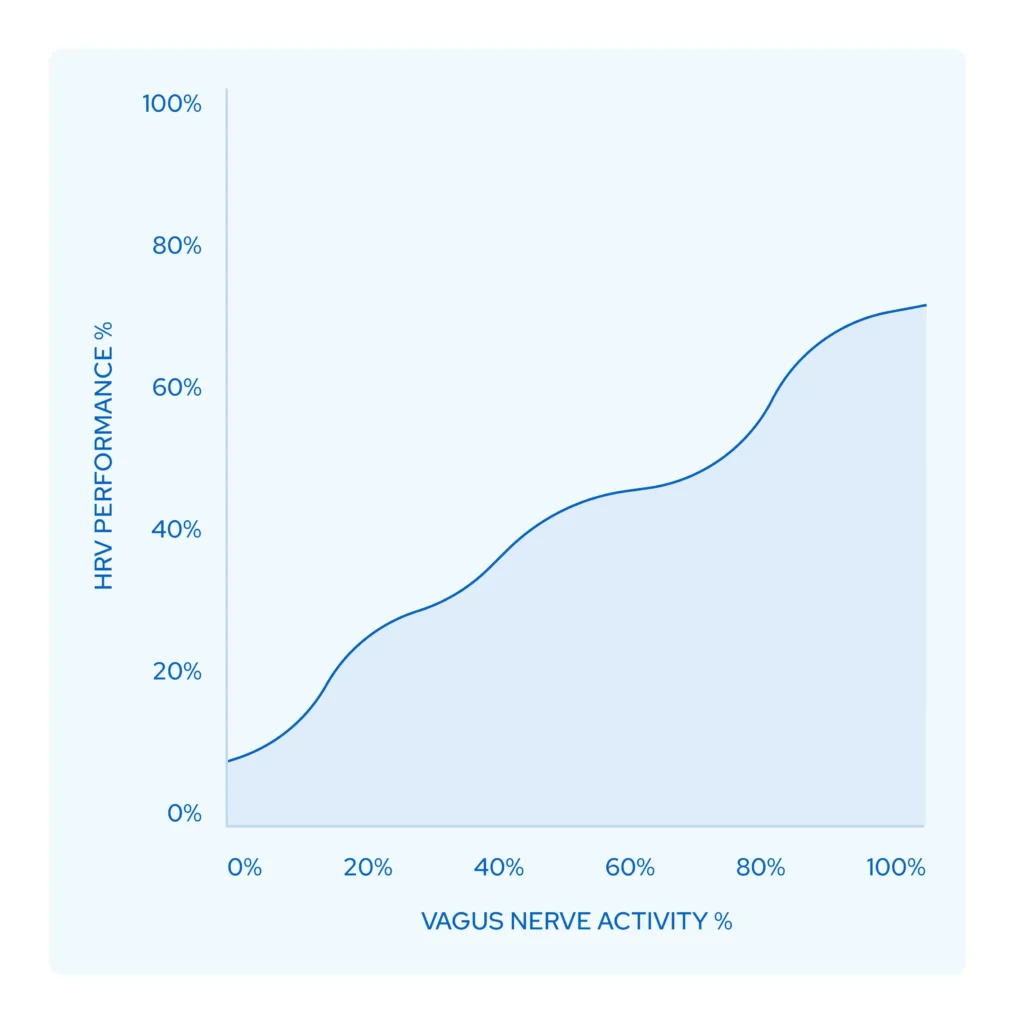
- Immune regulation: the vagus nerve, which governs parasympathetic tone and therefore HRV, also controls the body's inflammatory response
HRV is one of the most useful non-invasive metrics for monitoring recovery, stress resilience, and autonomic nervous system balance.
And unlike most health metrics, you can move it deliberately in the right direction.

How is HRV Measured?
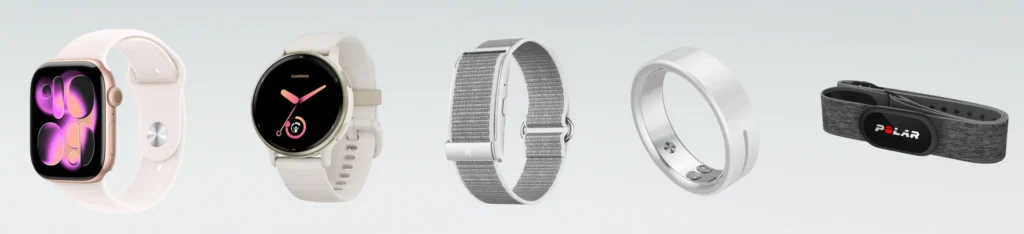
Many consumer devices can track HRV; you may already own:
Gerät | Method | Best for |
Apple Watch (Series 4+) | Optical sensor; overnight via Health app | Convenient daily tracking; best read on waking |
Oura Ring | Optical sensor on finger; nightly HRV | One of the most accurate consumer options |
Garmin (most models) | Optical wrist sensor; Body Battery + HRV status | Athletes tracking training load and recovery |
Whoop | Continuous wrist sensor; daily recovery score | HRV-based training and recovery coaching |
Polar chest strap | ECG-accurate; most precise consumer option | Highest accuracy; requires deliberate session |
Consumer wearables are generally reliable enough for tracking HRV trends over time, though less precise than an ECG.
For monitoring your own progress week-on-week, they are sufficiently accurate for personal trend monitoring, and consistency of measurement matters more than scientific precision.
What Causes Low HRV?
Low HRV is your body telling you it is under pressure. The causes are often obvious once you start tracking:
- Poor or insufficient sleep: even one bad night drops HRV measurably by the next morning
- Alcohol: suppresses parasympathetic activity and can significantly reduce HRV for 24–72 hours after consumption
- Overtraining: too much exercise without adequate recovery keeps HRV chronically suppressed
- Chronic psychological stress: sustained sympathetic activation prevents HRV from ever fully recovering
- Illness or infection: the immune response activates the sympathetic system, reducing HRV during and after being unwell
- Sedentary lifestyle: physical inactivity reduces vagal tone and lowers baseline HRV progressively over time
- Chronic inflammation: elevated inflammatory activity may impair vagus nerve function and contribute to persistently lower HRV
The Vagus Nerve: The Root of HRV
Every method for improving HRV works, in some way, through the vagus nerve. Understanding why makes the whole picture clearer.
HRV is, at its core, a measure of vagal tone, the activity of the vagus nerve’s parasympathetic fibers on the heart.
The vagus nerve runs from your brainstem through your neck, chest, and abdomen, connecting your brain directly to your heart, lungs, and gut.
It is the primary channel through which your body shifts from stress mode into recovery mode.
When vagal tone is strong, your heart rate responds flexibly to every moment: accelerating and decelerating in a rhythm that reflects real-time adaptability.
That flexibility is what registers as high HRV on your device.
When vagal tone is weak (suppressed by stress, inflammation, poor sleep, or alcohol), that flexibility disappears, and HRV falls.
The result is that everything downstream suffers: recovery slows, sleep becomes less restorative, stress tolerance drops, and inflammatory load rises.
This is why many HRV-focused interventions aim to improve vagal tone and parasympathetic regulation.
Vagus Nerve Stimulation – the most direct method for improving HRV
Non-invasive VNS devices deliver precisely calibrated electrical signals to the vagus nerve through the ear.
Several randomised controlled studies have reported measurable improvements in HRV metrics following auricular vagus nerve stimulation.
(Some users may notice changes in HRV trends on consumer wearables within several weeks of consistent use.
No surgery or prescription is required. It’s backed by 50+ scientific studies conducted at institutions including Stanford, Yale, and UCLA.
How to Improve HRV: 10 Evidence-Backed Methods
HRV is trainable, and these are the ten most effective levers, roughly in order of impact.
1. Train your vagus nerve directly
All other methods on this list work, in parts, by indirectly activating the vagus nerve. Auricular vagus nerve stimulation (VNS) does it directly: delivering calibrated electrical pulses to the vagus nerve through the ear. Randomized placebo-controlled studies show measurable increases in HRV metrics, including RMSSD and high-frequency HRV, compared with sham stimulation. Effects are visible on consumer wearables within 2–4 weeks.
Learn more: What is auricular VNS and how does it work?
2. Protect your sleep above everything else
HRV is often most stable and informative when measured overnight. Your nervous system recovers during deep sleep, particularly slow-wave and REM stages. Consistently getting 7–9 hours with a fixed wake time is the highest-return single habit for HRV. Track your overnight HRV: you will see the difference a good night makes the very next morning.
3. Practice slow, controlled breathing
Breathing at 5–6 breaths per minute (known as resonance frequency breathing) directly activates the parasympathetic system via the vagus nerve. Research shows that just 6 minutes of slow breathing daily can produce measurable improvements in HRV within weeks. Inhale for 4 seconds, rest briefly, exhale for 5–6 seconds.
4. Eliminate or drastically reduce alcohol
No single lifestyle factor tanks HRV more reliably than alcohol. Studies show that two or more drinks reduce HRV by 28–33% the following morning, with effects lingering for multiple days. Check your wearable score the morning after drinking. The reduction is often noticeable in wearable HRV data the following morning, and the recovery after cutting alcohol is one of the fastest HRV improvements most people experience.
5. Exercise consistently and recover harder
Regular aerobic exercise raises vagal tone and baseline HRV over months. But intense training temporarily suppresses HRV as the body recovers; this is normal.
If your weekly HRV average is persistently trending downward, your body needs more recovery, not more training. Recovery balance matters more than simply increasing training volume.
6. Manage chronic stress with intention
Sustained psychological stress keeps the sympathetic system chronically activated, suppressing HRV.
Meditation, mindfulness, and time in natural environments all consistently raise parasympathetic activity. Even brief daily stress-reduction practices may contribute to gradual improvements in autonomic regulation over time.
7. Use cold exposure
Cold showers and cold-water immersion activate the vagus nerve, triggering a parasympathetic recovery response after the initial sympathetic shock.
Regular cold exposure may improve autonomic flexibility and recovery responses over time. The effect is mild compared to direct VNS, but it is real and compounds over time.
8. Reduce inflammatory load through diet
Chronic inflammation suppresses vagus nerve function and keeps HRV depressed. Reducing ultra-processed food and excess added sugar (while increasing whole, nutrient-dense foods) may improve inflammatory balance and support healthier HRV over time.
9. Build consistent daily rhythms
Your autonomic nervous system is calmed by predictability. Fixed meal times, a consistent sleep schedule, and structured daily routines all reduce background sympathetic load, allowing parasympathetic tone (and therefore HRV) to recover and stabilize.
10. Address overtraining and recovery debt
If you train six or seven days per week and your HRV is persistently low, your body cannot keep up. Strategic rest days, deload weeks, and active recovery (walking, swimming, yoga) are not setbacks. They are what allow adaptation to consolidate and HRV to climb.
The most direct method: Non-invasive VNS
Auricular VNS devices train your parasympathetic system at its source through the vagus nerve. Most users report visible HRV improvements on their Apple Watch, Oura Ring, or Garmin within 2–4 weeks of daily use.
CE certified, non-invasive, no surgery required.
How Long Does It Take to Improve Heart Rate Variability?
It depends on where you are starting and which interventions you apply. Here is a realistic timeline:
Timeframe | What you can expect |
1–3 days | Cutting alcohol or improving one night’s sleep: immediate acute improvements visible on your device |
1–2 weeks | Consistent breathwork or VNS sessions: an early upward trend begins appearing in overnight averages |
3–4 weeks | Regular VNS use: measurable, sustained improvements in RMSSD and HF HRV reported by most users |
6–8 weeks | Combined lifestyle interventions: meaningful trend-level shift in weekly HRV average |
3–6 months | Compounded habits: significant, durable improvement in autonomic baseline and stress resilience |
The most important thing is to track consistently.
Your wearable data will tell you what actually works for your physiology, far more accurately than any generic recommendation.
Frequently Asked Questions About HRV
Q: Can you improve HRV at any age?
Yes. HRV naturally declines with age as parasympathetic function decreases, but the nervous system retains plasticity throughout life. Exercise, vagal tone training, and lifestyle interventions raise HRV at any age. The baseline may be lower, but the direction of travel is always controllable.
Q: Is a high HRV always better?
For most healthy people, yes. Higher HRV indicates greater autonomic flexibility and resilience. If you have an existing cardiac symptom, discuss HRV interpretation with your health professional. For general health and performance tracking, upward trends are generally associated with improved recovery and autonomic flexibility.
Q: How accurate is HRV on an Apple Watch or Oura Ring?
Consumer wearables use optical sensors, which are less precise than ECG chest straps. However, research shows they measure HRV with excellent accuracy for tracking trends over time. For monitoring your own progress week-on-week, they are more than adequate.
Q: Does alcohol really drop HRV that much?
Yes. Studies show that two or more drinks reduce HRV by 28–33% the morning after, with effects lasting multiple days. If you wear a tracking device, the impact is usually unmistakable and often improves after alcohol reduction or cessation.
Q: What is the fastest way to raise HRV?
Some of the fastest short-term improvements may come from cutting alcohol, fixing one night of sleep, and practicing slow diaphragmatic breathing. For sustained baseline improvement, regular aerobic exercise and direct vagal tone training (including auricular VNS) produce the most durable results over weeks and months.
Q: Does vagus nerve stimulation actually improve HRV?
Yes. Randomized, placebo-controlled studies demonstrate measurable increases in RMSSD, high-frequency HRV, and the LF/HF ratio with auricular VNS compared with sham stimulation. The effect is measurable in the same consumer wearables most people already own, which is one reason it has attracted significant global research interest.
Q: Can stress permanently lower HRV?
Chronic, unmanaged stress sustained over years can reduce vagal tone and lower baseline HRV durably. However, the nervous system retains the capacity for improvement. Breathing practice, VNS, exercise, and lifestyle change can restore parasympathetic tone even in people with chronically suppressed HRV.
Bottom Line
HRV is one of the most powerful, measurable signals of your overall health, and it is trainable at any age.
Sleep, consistent exercise, reduced alcohol intake, stress management, and slow breathing all raise it.
But the most direct route to higher HRV is training the vagus nerve itself, a major biological pathway that influences HRV and parasympathetic regulation.
Whether through daily breathwork, cold exposure, or vagus nerve stimulation, supporting vagal function may enhance stress resilience, recovery, and overall well-being.
Call to Action (CTA):
And with a device already on your wrist, you can track every step of the process.
This blog post aims to be informational and should not replace professional health advice. Always consult with a health professional for personalised advice.
Referenzen
- Balasubramanian, K., Harikumar, K., Nagaraj, N., & Pati, S. (2017). Vagus nerve stimulation modulates complexity of heart rate variability differently during sleep and wakefulness. Annals of Indian Academy of Neurology, 20(4), 403. https://pmc.ncbi.nlm.nih.gov/articles/PMC5682746/
- Genç, A., Tokuç, F. E. U., & Korucuk, M. (2024). Effects of vagal nerve stimulation parameters on heart rate variability in epilepsy patients. Frontiers in Neurology, 15. https://www.frontiersin.org/journals/neurology/articles/10.3389/fneur.2024.1490887/full
- Jensen, M. K., Andersen, S. S., Andersen, S. S., Liboriussen, C. H., Kristensen, S., & Jochumsen, M. (2022). Modulating Heart Rate Variability through Deep Breathing Exercises and Transcutaneous Auricular Vagus Nerve Stimulation: A Study in Healthy Participants and in Patients with Rheumatoid Arthritis or Systemic Lupus Erythematosus. Sensors, 22(20), 7884. https://vbn.aau.dk/en/publications/modulating-heart-rate-variability-through-deep-breathing-exercise/
- Wessel, C. R., Karakas, C., Haneef, Z., & Mutchnick, I. (2024). Vagus nerve stimulation and heart rate variability: A scoping review of a somatic oscillatory signal. Clinical Neurophysiology, 160, 95–107. https://www.binasss.sa.cr/bibliotecas/bhm/abr24/38.pdf
Teilen über:

 German
  English